.png)

4 Best Practices for Effective Ant Control in Your Yard
- Spring Touch Team

- 2 days ago
- 7 min read
Updated: 2 hours ago
Introduction
Many homeowners feel overwhelmed by the constant presence of ants in their yards, especially in southern Minnesota where various species thrive in the unique climate. Understanding the behaviors and nesting habits of common ants, like Carpenter, Pavement, and Odorous House Ants, can help you better equip yourself to manage them effectively.
But there are ways to take back control and create a safe, enjoyable outdoor space for your family. This article will guide you through best practices for ant control, providing practical solutions that empower you to reclaim your outdoor spaces and enjoy a pest-free yard.
Identify Common Ant Species in Your Yard
Managing insects, particularly ant control in yard, can feel overwhelming, especially when you’re unsure of what you’re dealing with. Start by identifying the common species in Southern Minnesota, including:
Carpenter varieties
Pavement varieties
Odorous House varieties
Each species has its own behaviors and nesting habits that influence how you can control them. Carpenter insects, measuring between 3/8 inch to ½ inch, often nest in wood, which can lead to the worry of discovering damage to your home caused by hidden pests. In contrast, Pavement insects, around 3 mm in size, typically build nests in soil under sidewalks or driveways, identifiable by small sandy piles. Odorous House Ants, about 1/10 inch long, are known for their sweet tooth and can invade kitchens, emitting a distinctive odor reminiscent of rotten coconut when crushed. Observing their feeding preferences and nesting locations can provide valuable insights for effective management. Ignoring these pests could lead to health issues for your family, making ant control in yard a priority.
To ensure effective ant control in yard and prevent infestations, homeowners should:
Eliminate moisture sources
Keep tree branches cut back from the house
Utilizing resources such as local extension services or pest identification guides can help accurately determine the species in your garden. This foundational step is essential for implementing effective control strategies tailored to the specific ant species, including the use of sugar-based baits for Odorous House Ants when they invade indoors. Taking these proactive steps not only protects your home but also ensures a healthier environment for your family.

Implement Preventive Measures to Deter Ants
Seeing ants in your home can be unsettling, but there are effective ways to reclaim your space. To keep ants at bay, start by removing what attracts them. Keep your yard clean by clearing away food sources like fallen fruit or pet food, and make sure your garbage bins are tightly sealed. Storing food in sealed, airtight containers can further prevent pests from entering your home.
It can be frustrating to see ants invade your space, disrupting your peace of mind. Caring for your landscaping is also important; prune excessive vegetation and consistently remove leaves, twigs, and litter where insects may settle. Sealing cracks and crevices in your home’s foundation and around windows, including applying weatherstripping to small gaps, can help keep ants out.
You might find natural deterrents like diatomaceous earth or essential oils helpful, as they can disrupt ant trails and prevent them from foraging in your garden. If infestations persist, professional pest management from Spring Touch Lawn & Pest Control may be a valuable option for long-term control. Our Ant Control program is designed to target and reduce ant populations before they become a bigger issue, creating a protective barrier around your home.
By staying vigilant and taking action, you can ensure your home remains a safe haven for your family and pets. Regularly monitoring your yard for signs of ant activity is essential for effective ant control in yard, helping you catch potential infestations early and ensuring a pest-free lawn for your family and pets.

Utilize Effective Control Methods for Ant Management
If you’re facing an ant infestation, it’s understandable to feel frustrated and uncertain about what ant control in yard measures to take next. Once you’ve identified the ant species and taken preventive measures, it’s time to focus on ant control in yard to tackle any existing infestations.
One effective method for ant control in yard is through baiting, which lures the ants to a toxin they carry back to their nest, helping to eliminate the source of the problem. Products like Terro Liquid Ant Baits are popular for their effectiveness.
For quick relief, you can implement ant control in yard by using insecticides directly on the ants or their nests. Just remember to be careful with any chemical treatments, especially if you have pets or children around.
You might also consider natural alternatives for ant control in yard, such as mixing borax with sugar, which can work wonders. This technique attracts the ants while the borax disrupts their digestive systems.
Always follow the instructions on the label, and think about using a combination of methods for the best results. By taking these steps, you can create a safer, more comfortable environment for your family.

Monitor and Maintain Your Ant Control Efforts
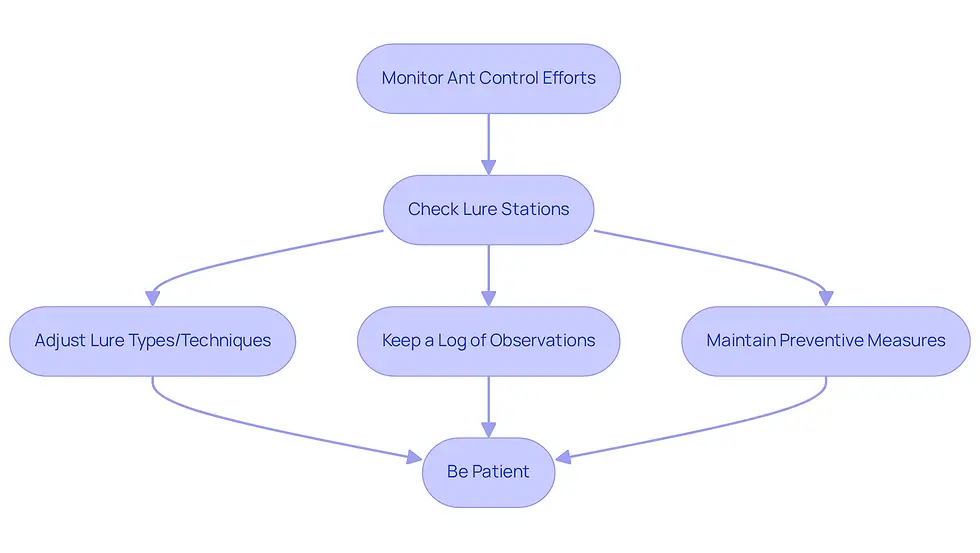
Ant control in yard can be a daunting task, especially when the ants seem to return despite your best efforts. After implementing control measures, it’s essential to keep a close watch for signs of ant activity. Regularly check lure stations and revisit areas where you’ve noticed insects before. Keeping an eye on your lure supplies and checking them regularly can help ensure they remain effective.
If you notice ants returning, consider adjusting your approach by trying different lure types or techniques to keep them at bay. Keeping a log of your observations can help identify patterns in ant activity, allowing for more targeted interventions. Additionally, maintaining preventive measures, such as regular outdoor clean-up and sealing entry points, will support your ongoing efforts to keep ants at bay.
Remember, lures can eradicate entire ant colonies, while most insecticides only eliminate workers that come into contact with them. By staying vigilant and patient, you can effectively achieve ant control in yard populations. Many ant attractants work slowly, so give them time to show results. Leave bait in place for 3-4 days after observing no signs of feeding to ensure its effectiveness. By staying vigilant and patient, you can reclaim your outdoor space from these persistent pests.
Conclusion
Ant infestations can be a source of stress and discomfort, but there are effective ways to reclaim your space. Taking control of ant populations in your yard is key to maintaining a comfortable and healthy home environment. By understanding the specific ant species that invade your space, you can implement preventive strategies and targeted control methods that truly make a difference.
Throughout this article, we’ve explored essential practices, like identifying common ant species in Southern Minnesota and eliminating food sources that attract them. Regular monitoring of ant activity and maintaining preventive measures are crucial steps in ensuring long-term success in managing these persistent pests. Remember, using baiting techniques and natural deterrents can enhance your efforts, providing a well-rounded approach to ant control.
By taking these steps, you can enjoy peace of mind knowing your home is protected from these persistent pests. With the right approach, you can create a safe haven for your family and pets, free from the worry of unwanted pests. If you find yourself needing extra help, Spring Touch Lawn & Pest Control is here to offer local expertise and tailored solutions to effectively manage ant populations, ensuring a pest-free environment.
Frequently Asked Questions
What are the common ant species found in Southern Minnesota?
The common ant species in Southern Minnesota include Carpenter ants, Pavement ants, and Odorous House ants.
How can I identify Carpenter ants?
Carpenter ants measure between 3/8 inch to ½ inch and typically nest in wood, which can lead to potential damage to your home.
What are the characteristics of Pavement ants?
Pavement ants are about 3 mm in size and usually build nests in soil under sidewalks or driveways, identifiable by small sandy piles.
What should I know about Odorous House ants?
Odorous House ants are approximately 1/10 inch long, have a sweet tooth, can invade kitchens, and emit a distinctive odor resembling rotten coconut when crushed.
Why is it important to identify the ant species in my yard?
Identifying the ant species is essential for implementing effective control strategies tailored to their specific behaviors and nesting habits.
What steps can I take to control ants in my yard?
To control ants, homeowners should eliminate moisture sources and keep tree branches cut back from the house.
How can local resources assist in ant identification?
Local extension services or pest identification guides can help accurately determine the species of ants in your garden.
What bait is effective for controlling Odorous House ants indoors?
Sugar-based baits are effective for controlling Odorous House ants when they invade indoors.
What are the potential health risks of ignoring ant infestations?
Ignoring ant infestations could lead to health issues for your family, making ant control a priority.
Who can I contact for professional pest control services in Southern Minnesota?
You can contact Spring Touch Lawn & Pest Control at 507-934-5296 for pest control services in Southern Minnesota.
List of Sources
Identify Common Ant Species in Your Yard
Identifying Common Ant Species in Minnesota | Rainbow Pest Experts (https://rainbowpestexperts.com/identifying-common-ant-species-in-minnesota)
Ant Control 101: Identify Types of Ants In Houses (https://pestworld.org/news-hub/pest-articles/ants-101)
Ant Identification and Behavior - BOGO Pest Control (https://bogopestcontrol.com/minnesota-ant-identification)
CSI News (https://controlsolutionsinc.com/csi-pest/blog/how-to-manage-the-three-most-common-ant-species)
The Sweet Tooth And Unique Scent Of Odorous House Ants (https://pbswisconsin.org/news-item/the-sweet-tooth-and-unique-scent-of-odorous-house-ants)
Implement Preventive Measures to Deter Ants
How to Prevent Ants From Invading Your Home | How to Keep Ants Away Naturally (https://missouri.bugoutservice.com/ant-exterminators/ant-prevention)
Ant prevention: Keeping the pest out of the house (https://kxnet.com/news/state-news/ant-prevention-keeping-the-pest-out-of-the-house)
Got Ants? Eliminate them with IPM. (https://extension.psu.edu/got-ants-eliminate-them-with-ipm)
Effective Control & Preventative Strategies for Ant Management (https://rockwelllabs.com/2023/11/06/effective-contro-preventative-strategies-for-ant-management)
Controlling ants the healthy way | Green Blog (https://ucanr.edu/blog/green-blog/article/controlling-ants-healthy-way)
Utilize Effective Control Methods for Ant Management
10 Effective Indoor Ant Killer Solutions for Homeowners (https://springtouchlawn.com/post/10-effective-indoor-ant-killer-solutions-for-homeowners)
The Best Ant Killer (https://nytimes.com/wirecutter/reviews/best-ant-killer)
Effective Control & Preventative Strategies for Ant Management (https://rockwelllabs.com/2023/11/06/effective-contro-preventative-strategies-for-ant-management)
Best Ant Bait | Win the War on Ants with Best Ant Bait Choices (https://theantvault.com/blogs/news/best-ant-bait)
Control Methods - Texas Imported Fire Ant Research and Management Project (https://fireant.tamu.edu/controlmethods)
Monitor and Maintain Your Ant Control Efforts
Improving Liquid Bait Programs for Argentine Ant Control: Bait Station Density (https://academic.oup.com/ee/article/36/6/1475/505491)
Tips for Effective Ant Baiting | NC State Extension Publications (https://content.ces.ncsu.edu/tips-for-effective-ant-baiting)
Case studies for using monitoring to meet TMDL permit requirements | Minnesota Stormwater Manual (https://stormwater.pca.state.mn.us/case_studies_for_using_monitoring_to_meet_tmdl_permit_requirements)


