.png)

10 Essential Lawn Care Tips for a Lush, Healthy Yard
- Spring Touch Team

- Apr 27
- 12 min read
Updated: 3 hours ago
Introduction
Creating a lush, vibrant lawn can feel like an uphill battle for many homeowners. Many homeowners feel overwhelmed by the challenges of creating and keeping a beautiful lawn. Without the right guidance, achieving that dream lawn can feel impossible. By implementing essential lawn care tips, you can unlock the secrets to a healthier yard, from understanding soil quality to selecting the right grass type for your region. With the right knowledge and support, your outdoor space can become the serene retreat you've always wanted.
Test Your Soil Quality for Optimal Lawn Health
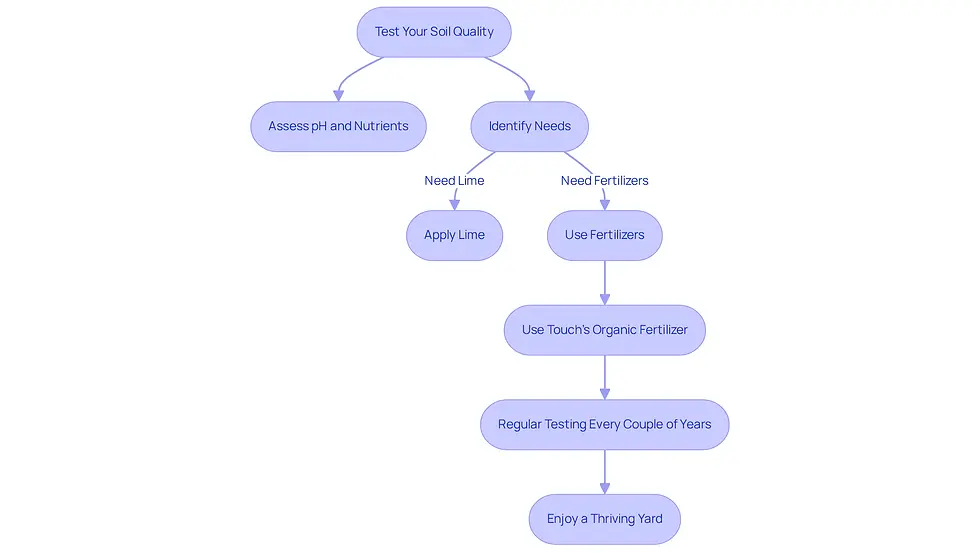
Have you ever wondered why your yard isn’t thriving as it should? Assessing your soil is the first step toward creating a vibrant outdoor space. Using a soil test kit can reveal pH levels and nutrient content, helping you identify what your yard needs. Whether it’s lime to balance acidity or fertilizers to address nutrient deficiencies, knowing your soil is key.
Using Touch's organic-based fertilizer can really help your yard thrive, as it replenishes nutrients and even helps keep pesky weeds at bay. Regular testing every couple of years is one of the important lawn care tips to ensure your grass gets the nutrients it needs, making it stronger against pests and diseases.
In the spring, Touch's second application targets dandelions and broadleaf weeds while incorporating grub control. With the right care and attention, imagine stepping into a lush, inviting yard that you can enjoy all season long.
Identify the Best Grass Type for Your Region
Choosing the right turf type can feel overwhelming, especially with the threat of lawn diseases lurking in Southern Minnesota. Selecting the appropriate turf is essential for nurturing a flourishing lawn, particularly given the different lawn diseases that can impact your yard. Cool-season plants, like Kentucky bluegrass and tall fescue, thrive in this region due to their resilience against cold winters and adaptability to moderate summer temperatures. Kentucky bluegrass is especially appreciated for its vivid hue and ability to bounce back from damage, while tall fescue offers remarkable drought resistance and extensive root systems, making it suitable for various ground types, especially loamy terrain.
As you choose your turf, think about local conditions like sun exposure and soil type. Don’t forget about foot traffic and the risk of lawn diseases like Dollar Spot and Brown Patch, which thrive in humid weather. For instance, fine fescues are ideal for shaded areas, while Kentucky bluegrass flourishes in full sun. Recommended seeding rates for Kentucky bluegrass and tall fescue range from 7 to 10 pounds per 1,000 square feet. Additionally, Kentucky bluegrass typically takes 14 to 28 days to germinate, while tall fescue germinates in about 7 to 12 days. Taking the time to learn about local varieties and their needs can lead to effective lawn care tips that help your lawn establish faster and require less upkeep.
As horticulturists emphasize, following lawn care tips like choosing a well-selected turf variety not only enhances the aesthetic appeal of your yard but also contributes to its overall health and sustainability, making it more resilient against diseases. For optimal results, consider planting seed one day before a rain shower to aid germination. By selecting the right turf, you’re not just planting grass; you’re investing in a healthier, more resilient lawn that can withstand the challenges ahead.

Mow Correctly to Promote Healthy Grass Growth
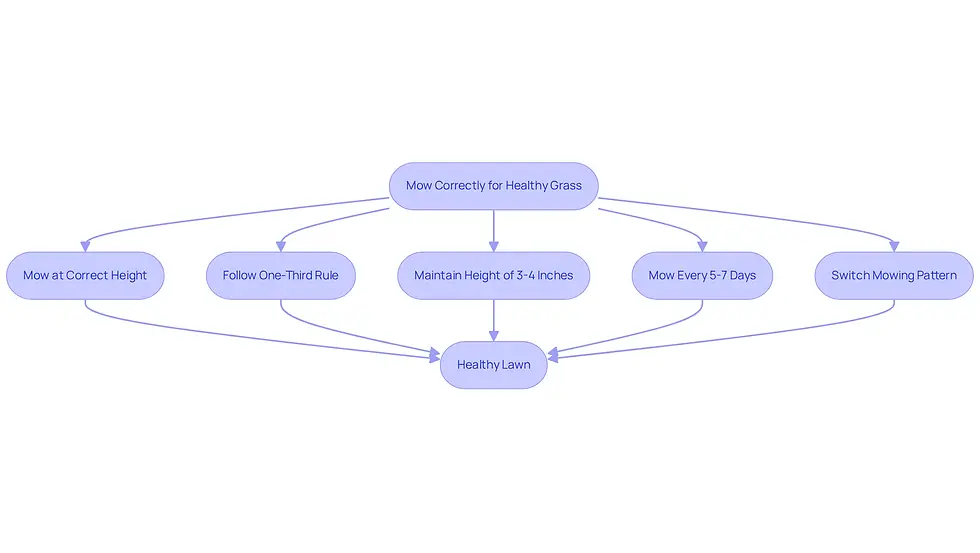
Are you worried that your lawn isn’t as healthy as it could be? One of the important lawn care tips is to mow at the correct height to promote lawn health. Cutting too much can stress your lawn, leaving it vulnerable and weak. To keep your grass thriving, adhere to the one-third rule by cutting no more than one-third of the blade during each mowing session. Keeping your grass at a height of 3 to 4 inches not only looks good but also helps it thrive, making it more resilient against weeds and pests.
Mowing every 5 to 7 days during the growing season can really help your lawn become denser and healthier. Additionally, switching up your mowing pattern can make a big difference, helping your lawn grow evenly and beautifully. By following these lawn care tips and simple mowing practices, you can cultivate a lawn that not only looks great but thrives year-round.
Water Wisely to Sustain Lawn Vitality
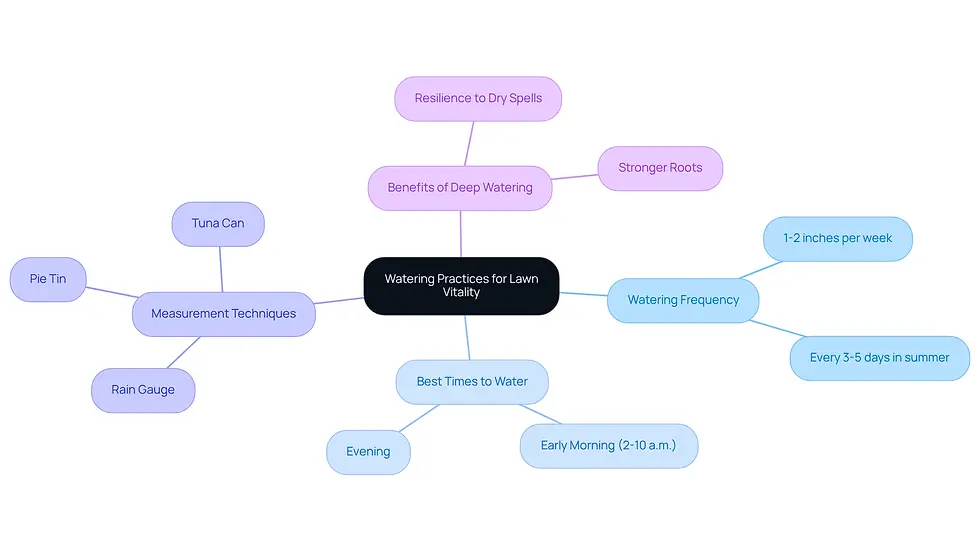
Keeping your lawn lush and healthy can feel overwhelming, especially when the weather doesn’t cooperate. Deep and infrequent watering is key to achieving that vibrant green space you desire. Aim to provide about 1 to 2 inches of water each week, whether from rainfall or irrigation. During the hot summer months, try to water every three to five days to keep the soil adequately moist.
To make the most of your watering efforts, aim for early morning, ideally between 2 and 10 a.m. This timing helps minimize evaporation and reduces the risk of fungal diseases. If mornings aren’t possible, watering in the evening is a good alternative. Using a rain gauge can help you measure how much water your garden receives, allowing you to adjust your schedule based on the weather. You can even use a pie tin or tuna can to gauge water application during your watering sessions.
When you water deeply, you’re helping your grass develop stronger roots, which makes it more resilient during dry spells and stressful conditions. Remember, frequent light watering can lead to shallow root systems, making your grass more susceptible to dry spells. By nurturing your lawn with these watering practices and applying lawn care tips, you’re not just maintaining grass; you’re cultivating a resilient and thriving outdoor space that can withstand the challenges of nature.
Fertilize Appropriately for Nutrient-Rich Grass
Are you struggling to maintain a healthy and vibrant lawn? Here are some helpful lawn care tips. Proper fertilization can feel overwhelming, but these lawn care tips, which include a balanced mix of nitrogen, phosphorus, and potassium (NPK), can make all the difference in nurturing your grass.
For established lawns, applying 32 lbs of fertilizer per 2,500 sq ft can support robust growth.
New lawns benefit from 64 lbs per 2,500 sq ft.
It’s easy to worry about over-fertilizing and harming the environment, but understanding the right amounts can help you protect both your lawn and the planet.
Using lawn care tips, such as applying fertilizer in both spring and autumn based on test results, is key to maintaining a healthy lawn. Choosing Touch's organic-based fertilizer not only nourishes your grass but also supports a healthier ecosystem, giving you peace of mind. This option includes bio-solids and crabgrass preventer, enhancing soil health and promoting deeper root development.
Furthermore, Touch's second application targets dandelions and broadleaf weeds while offering grub control, making it a successful solution for preserving a healthy yard. Research shows that organic fertilizers can greatly enhance grass resilience and overall health, making them a favored option for environmentally aware homeowners.
Cutting the yard before fertilizing can boost ground contact, and blending Spring Touch's organic fertilizer with seed during overseeding can improve growth and nutrient absorption. By choosing organic options, you’re not just nurturing your lawn; you’re also caring for the planet, which is a choice you can feel good about.

Combat Weeds to Maintain a Pristine Lawn
Weeds can quickly overwhelm your yard, leaving you feeling frustrated and helpless. Mowing your lawn regularly at the right height helps your grass grow strong. It also shades the soil, making it harder for weeds to take root.
It's important to apply pre-emergent herbicides in early spring to keep those pesky weeds at bay, especially in Southern Minnesota, where conditions can favor their growth. For small infestations, hand-pulling weeds can be a practical solution, while targeted herbicides work better for larger outbreaks.
Spring Touch offers an organic-based fertilizer that includes bio-solids and crabgrass preventer in their initial application, replenishing nutrients and stopping crabgrass from taking over your yard. Their second application effectively targets dandelions and broadleaf weeds while also controlling grubs, addressing these common turf issues.
Always follow label instructions for any chemical treatments and consider their environmental impact. By choosing organic solutions, you can promote a healthier ecosystem.
Consistent lawn care tips, including proper watering and fertilization, further enhance grass health, making it more resilient against weed competition. By embracing these practices, you can cultivate a thriving yard that stands strong against weeds, bringing you peace of mind and pride in your home.

Aerate Your Lawn to Enhance Soil Health
Is your yard struggling to thrive due to compacted soil? Aeration is one of the essential lawn care tips for revitalizing your lawn, especially in areas where the ground has become compacted. For homeowners seeking a reliable way to rejuvenate their lawns, Touch provides a liquid aeration service that penetrates deep into the soil, covering your entire yard without leaving behind unsightly plugs or damaging any buried wires. This innovative method not only alleviates compaction but also breathes new life into your lawn, promoting lush growth and vitality.
Regular aeration can lead to deeper root systems, making your vegetation more resilient to drought and environmental stress. It also helps prevent runoff and puddling issues after rain, enhancing overall drainage. To keep your lawn thriving, you should follow some lawn care tips, including:
Aerating annually during the active growing seasons of spring or fall.
Maintaining an optimal soil pH of around 6.5, which is essential for turf health as it enhances nutrient availability.
Following lawn care tips like regular aeration, which can boost grass density by up to 30%, making it a vital practice for enhancing your greenery.
For the best results, pair aeration with overseeding to cultivate a denser, more vibrant lawn that you can be proud of. By prioritizing aeration, you're not just improving your lawn; you're investing in a vibrant outdoor space that can withstand the test of time.

Follow a Seasonal Lawn Care Calendar
Are you feeling overwhelmed by the demands of yard care throughout the seasons? Using lawn care tips, a well-organized seasonal garden care calendar can help you maintain a lush, healthy yard. In spring, many homeowners struggle to keep their yards thriving amidst their hectic schedules, leading to feelings of frustration and disappointment. Implementing lawn care tips like clearing debris, aerating the soil, and using Spring Touch's organic-based fertilizer with bio-solids and crabgrass preventer can help stimulate growth and prevent crabgrass from taking over your yard.
As summer rolls in, it's essential to follow lawn care tips that include regular mowing and watering. Aim to provide about one inch of water per week, but no more than three inches total, to avoid drought stress. This simple practice, along with lawn care tips, can make a significant difference in keeping your yard vibrant and healthy.
As autumn approaches, lawn care tips like overseeding become crucial for thickening the grass and preparing it for winter. During winter, keep an eye out for pests like grubs, and consider preventive measures to ensure a smooth transition into spring. Using lawn care tips, implementing Touch's second application for dandelions and broadleaf weeds in late spring or early summer can help you maintain a seamless shift into the season.
Embracing a seasonal approach not only simplifies your lawn care tips but also turns your outdoor space into a source of pride and joy.

Manage Pests to Protect Your Lawn
While a vibrant yard brings joy, the lurking threat of grass diseases can be a source of worry for homeowners. In Minnesota, it's essential to be aware of common fungal problems like:
Red Thread
Dollar Spot
Brown Patch
These diseases can quickly turn a lush lawn into a patchy mess, causing frustration for homeowners. Regular inspections for pests like:
Grubs
Chinch bugs
Beetles
are important, as well as for signs of these diseases. You can significantly improve your turf's health by implementing integrated pest management (IPM) strategies. These strategies include cultural practices such as suitable watering and mowing, which create an environment less favorable to pest invasions and grass diseases. Biological controls can also help manage pest populations naturally. When necessary, targeted insecticides may be used; however, it's vital to follow label instructions closely and consider the potential impact on beneficial insects. When you adopt these practices, you not only protect your garden but also nurture the ecological balance around you. Furthermore, studies indicate that IPM practices can lead to substantial economic benefits, contributing over $12 billion to the developing world. By embracing these strategies, you can ensure your garden thrives, creating a sanctuary for both you and the environment.

Consider Professional Lawn Care Services from Spring Touch
Many homeowners struggle to keep their yards lush and healthy, often feeling overwhelmed by the effort it requires. The thought of maintaining a vibrant outdoor space can be daunting, leading to frustration and disappointment when results don’t meet expectations.
But there’s a solution. Spring Touch, with over 50 years of experience and more than 1,320 five-star reviews, offers professional care services that can transform your yard. With services like aeration, fertilization, and pest control, they help restore grass vitality and health, making yard care manageable and effective. Homeowners often find that visible improvements come quickly, bringing relief and satisfaction after just a few applications.
And with a complimentary initial application for new clients, experiencing the benefits of professional yard care has never been easier. By scheduling a consultation, you can share your lawn care needs and discover personalized lawn care tips that will keep your outdoor space vibrant and inviting. By taking this step, you can transform your outdoor space into a vibrant oasis that brings joy and peace of mind.
Conclusion
Many homeowners find themselves overwhelmed by the challenges of maintaining a beautiful lawn, unsure of where to start. Understanding the essential practices of lawn care can feel daunting, especially when faced with the many choices and challenges that come with it. However, the journey to achieving a lush, vibrant yard is entirely possible with the right knowledge and approach.
Key insights discussed include:
The importance of soil testing for nutrient balance
The selection of appropriate grass varieties for specific climates
The necessity of proper mowing and watering techniques
Effective fertilization
Weed management
Pest control strategies
By implementing these practices, you can enjoy a thriving outdoor space that not only looks good but also promotes ecological balance.
By embracing these essential lawn care tips, you can cultivate a space that not only enhances your home but also nurtures your well-being and peace of mind. Whether through DIY efforts or by seeking professional services, your commitment to nurturing a lawn will pay off in the form of a lush, inviting yard that brings joy and satisfaction for years to come.
Frequently Asked Questions
Why is testing soil quality important for lawn health?
Testing soil quality is crucial because it reveals pH levels and nutrient content, helping you identify what your yard needs for optimal growth, such as lime for acidity balance or fertilizers for nutrient deficiencies.
How often should I test my soil?
It is recommended to test your soil every couple of years to ensure your grass receives the necessary nutrients, making it stronger against pests and diseases.
What type of fertilizer is suggested for lawn care?
Touch's organic-based fertilizer is suggested as it replenishes nutrients and helps keep weeds at bay, promoting a thriving yard.
What grass types are best for Southern Minnesota?
Cool-season plants like Kentucky bluegrass and tall fescue are best for Southern Minnesota due to their resilience against cold winters and adaptability to moderate summer temperatures.
What are the characteristics of Kentucky bluegrass?
Kentucky bluegrass is appreciated for its vivid hue and ability to recover from damage, making it a popular choice for lawns.
What advantages does tall fescue offer?
Tall fescue offers remarkable drought resistance and has extensive root systems, making it suitable for various ground types, especially loamy terrain.
How should I consider local conditions when choosing grass?
When choosing grass, consider local conditions such as sun exposure, soil type, foot traffic, and the risk of lawn diseases that may thrive in humid weather.
What are the recommended seeding rates for Kentucky bluegrass and tall fescue?
The recommended seeding rates are 7 to 10 pounds per 1,000 square feet for both Kentucky bluegrass and tall fescue.
How long does it take for Kentucky bluegrass and tall fescue to germinate?
Kentucky bluegrass typically takes 14 to 28 days to germinate, while tall fescue germinates in about 7 to 12 days.
What mowing practices promote healthy grass growth?
To promote healthy grass growth, mow at the correct height, adhering to the one-third rule by cutting no more than one-third of the blade, and maintain a grass height of 3 to 4 inches.
How often should I mow my lawn during the growing season?
Mowing every 5 to 7 days during the growing season is recommended to help your lawn become denser and healthier.
Why is it beneficial to switch up my mowing pattern?
Switching up your mowing pattern helps your lawn grow evenly and beautifully, contributing to its overall health and appearance.
List of Sources
Test Your Soil Quality for Optimal Lawn Health lawnbuddies.com (https://lawnbuddies.com/blog/how-soil-testing-determines-lawn-ph-lawn-care-programs) goodhousekeeping.com (https://goodhousekeeping.com/home/renovation/a70868867/why-you-need-a-soil-test-for-your-lawn) purdue.edu (https://purdue.edu/fnr/extension/landscape-report-shares-importance-of-soil-testing) brownfieldagnews.com (https://brownfieldagnews.com/news/fall-soil-tests-are-key-to-optimize-fertility-in-2026) wcvb.com (https://wcvb.com/article/umass-amherst-soil-tests-offer-custom-garden-advice/70987679)
Identify the Best Grass Type for Your Region 4 Best Grass Seeds for Minnesota Lawns (https://lawnstarter.com/blog/minnesota/best-grass-seed-mn) Best Grass for Southern Minnesota (https://lawnlove.com/blog/best-grass-seed-southern-minnesota) Selecting the Best Grass Seed for Your Minnesota Lawn (https://groundfxmn.com/blog/selecting-the-best-grass-seed-for-your-minnesota-lawn) naturesseed.com (https://naturesseed.com/resources/lawn-turf/minnesota?srsltid=AfmBOoorCIw0jKSEdrYnJrVuCYuEsiBF8ENB8eHTOkmtJn-ASacUDdO_) Buying turfgrass seed for Minnesota lawns (https://extension.umn.edu/lawn-care/buying-turfgrass-seed-minnesota-lawns)
Mow Correctly to Promote Healthy Grass Growth virginiagreen.com (https://virginiagreen.com/news/mowing-practices) pjcorganic.com (https://pjcorganic.com/2025/05/05/how-to-mow-grass-in-spring-7-lawn-mowing-tips-for-healthy-turf) hgtv.com (https://hgtv.com/gardening/lawns/get-a-great-looking-lawn-with-these-mowing-tips-pictures) yourgreenpal.com (https://yourgreenpal.com/blog/professional-lawn-mowing-tips) milorganite.com (https://milorganite.com/blog/Lawn/six-tips-lawn-mowing)
Water Wisely to Sustain Lawn Vitality news8000.com (https://news8000.com/lifestyle/water-your-lawn-the-right-way-with-these-tips/article_e2e76021-a404-5f08-8183-0535a87fcb25.html) 9news.com (https://9news.com/article/news/local/denver-cost-lawn-summer/73-cc056dbc-9146-4139-97ba-90d570dfcd99) 9news.com (https://9news.com/video/news/local/next/next-with-kyle-clark/how-much-will-it-cost-to-keep-your-lawn-alive-this-summer/73-85c32766-ccf7-4fd6-9930-721363c2ae0f) lakevillemn.gov (https://lakevillemn.gov/277/Lawn-Watering-Facts-Tips) Are You Watering Correctly? (https://fertilawnmn.com/are-you-watering-correctly)
Fertilize Appropriately for Nutrient-Rich Grass experigreen.com (https://experigreen.com/how-much-fertilizer-does-my-lawn-need) When To Fertilize Lawn: Schedule & Application Rates | Milorganite (https://milorganite.com/what-is-milorganite/rates-and-schedule) heraldtribune.com (https://heraldtribune.com/press-release/story/149109/new-jersey-homeowners-are-rethinking-lawn-care-organic-fertilizer-and-natural-weed-control-gain-ground-over-chemicals) mensjournal.com (https://mensjournal.com/home-living/best-lawn-fertilizers) 27east.com (https://27east.com/residence/home-garden/article_f464f895-ea95-4b56-9fd8-53f0d65a9ff6.html)
Combat Weeds to Maintain a Pristine Lawn expressnews.com (https://expressnews.com/lifestyle/home-garden/article/kill-weeds-san-antonio-lawns-19419384.php) trugreen.com (https://trugreen.com/lawn-care-101/blog/lawn-care-tips/ultimate-guide-controlling-weeds-your-lawn) Options for controlling weeds in your lawn this summer | Turfgrass Science (https://turf.umn.edu/news/options-controlling-weeds-your-lawn-summer) winfieldunited.com (https://winfieldunited.com/news-and-insights/5-strategies-for-effective-grass-weed-control) lsuagcenter.com (https://lsuagcenter.com/articles/page1744311041612)
Aerate Your Lawn to Enhance Soil Health wisfarmer.com (https://wisfarmer.com/press-release/story/50672/new-exmark-video-explains-the-benefits-of-lawn-aeration) trugreen.com (https://trugreen.com/lawn-care-101/blog/lawn-care-tips/7-benefits-lawn-aeration-why-you-should-core-aerate-your-lawn) greensleeves-uk.com (https://greensleeves-uk.com/blog/top-5-benefits-of-a-lawn-aeration) yarbo.com (https://yarbo.com/blog/benefits-of-aerating-lawn?srsltid=AfmBOooOu8JSIUWpR76pXANFdfBpL1opC_teceHpsElA9lASjKXOTDfG) thegrassoutlet.com (https://thegrassoutlet.com/benefits-lawn-aeration?srsltid=AfmBOopD-8sUZTcvQ6HjMOY2ClQbxqerOAfEav1t7Q0O1QuTBG0A7qzs)
Follow a Seasonal Lawn Care Calendar cdapress.com (https://cdapress.com/news/2026/mar/24/spring-is-here-and-a-solid-lawn-care-schedule-makes-all-the-difference) yourgreenpal.com (https://yourgreenpal.com/blog/your-season-by-season-lawn-care-gameplan) lawnstarter.com (https://lawnstarter.com/blog/statistics/lawn-care-and-landscaping-industry-statistics) destinylandscape.com (https://destinylandscape.com/year-round-lawn-care-calendar) jonathangreen.com (https://jonathangreen.com/resources/annual-lawn-care-guide-schedules-by-season-year-round-tips)
Manage Pests to Protect Your Lawn pctonline.com (https://pctonline.com/news) pnas.org (https://pnas.org/doi/10.1073/pnas.2108429118) naturalawn.com (https://naturalawn.com/news) news.cornell.edu (https://news.cornell.edu/stories/2025/02/limiting-lawn-management-benefits-soil-ecosystems) news.vt.edu (https://news.vt.edu/articles/2020/07/outreach-economicimpactsofIPM.html)
Consider Professional Lawn Care Services from Spring Touch
Spring Touch | Lawn Care & Mosquito Control (https://springtouchlawn.com)
lawnstarter.com (https://lawnstarter.com/blog/statistics/lawn-care-and-landscaping-industry-statistics)
pestfacts.org (https://pestfacts.org/rise-collaborates-with-national-association-of-landscape-professionals-in-lawn-care-survey)


