.png)

How to Get Rid of Wasp Nests: A Step-by-Step Guide for Homeowners
- Spring Touch Team

- May 1
- 7 min read
Updated: 3 days ago
Introduction
Wasp nests can pose a serious threat to your safety, leaving many homeowners feeling anxious and uncertain about how to handle them. With the potential for aggressive behavior and painful stings, it’s important to know how to approach removal safely and effectively to protect yourself and your loved ones. Together, we’ll explore the right strategies and precautions to help you reclaim your space and enjoy peace of mind.
Evaluate the Need for Wasp Nest Removal
Before figuring out how to get rid of a wasps nest, it’s important to carefully evaluate the situation. Consider these factors:
Location: If the nest is near high-traffic areas where people frequently pass, it’s wise to consider removal to ensure everyone’s safety from potential stings. These colonies can pose serious risks, with numerous incidents reported over the years.
Size of the Structure: Larger nests often indicate a more established colony, which may exhibit aggressive behavior. As pest control specialist Jeromy Smith notes, "Hornet colonies become hazardous near your residence when the population increases, the insects become more defensive, and human presence brings individuals too near to the colony." If the nest is small and not causing any problems, it’s often best to let nature take its course.
Type of Wasp: Identifying the species can provide valuable insight into the potential risks involved. Some species, like yellow jackets, are known for their aggressive tendencies.
Season: Choosing the right time for removal is essential for safety and effectiveness. Early spring is often safer for removal, as nests are smaller and less populated. In contrast, late summer or autumn sees larger, more active colonies, significantly increasing the chance of stings. Smith emphasizes that this danger grows as the season advances, particularly during late summer and early fall.
By assessing these elements, homeowners can make informed decisions about whether to proceed with extraction or leave the habitat undisturbed. For peace of mind, it’s best to rely on professionals who have the expertise and tools to handle these situations safely.

Understand the Seasonal Life Cycle of Wasps
Understanding the life cycle of wasps can help homeowners navigate their behavior and activity levels throughout the year.
Spring: As temperatures rise above 10-13°C, queen wasps emerge from diapause and begin constructing nests. Spring offers a unique opportunity for homeowners to learn how to get rid of wasps nest, as the nests are still small and manageable, making it a safer time for removal. Experts indicate that a queen insect in March can result in a colony of 3,000 to 5,000 individuals by August if not addressed early.
Summer: During summer, as the colonies grow, wasps can become more protective, which is why it’s important to approach removal with caution and care. Statistics show that several thousand individuals are stung by these insects each year, with around 100 deaths resulting from allergic reactions, underscoring the importance of taking proactive measures to ensure safety during this time.
As fall approaches, it’s wise for homeowners to learn how to get rid of wasps nest, particularly if nests are close to living spaces, to ensure safety during this time. The actions of these insects during this season are affected by the presence of food and the size of their colonies, which can hold thousands of individuals.
As winter arrives, the majority of wasps will not survive, leaving only the fertilized queens to hibernate, which means this quiet period is ideal for learning how to get rid of wasps nest safely. A mild winter can lead to higher survival rates for new colonies, making early action in spring essential.
By recognizing these seasonal patterns, homeowners can take timely action to ensure their safety and effectively manage hornet populations.

Follow Step-by-Step Removal Techniques for Different Wasp Nests
Different types of wasp nests require specific removal techniques, and understanding these can help you feel more at ease when dealing with them.
Aerial Nests:
Consider waiting until evening when these insects are less active, which can help you feel more at ease during the process.
It’s a good idea to wear protective clothing, like gloves and a face mask, to help you feel secure while you work.
Gently use a long pole to guide the structure into a container, keeping a safe distance to help you feel more comfortable.
Once you’ve secured the container, dispose of it carefully to ensure no insects can escape, giving you peace of mind.
Ground Nests:
When approaching the nest, try to do so gently at dusk, as the insects will be returning home, which can help you feel more in control.
Consider using a dust insecticide or a simple mix of soap and water to treat the entrance, which can help you feel more confident in managing the situation.
Gently cover the entrance with a cloth to help capture any insects inside, ensuring they can’t escape and allowing you to feel more secure.
It’s best to wait until the next day to check for any activity before removing the hive, giving you peace of mind that all insects are gone.
Take a moment to observe the area for a few days after treatment, which can help you feel reassured that no stinging insects are still around.
Paper Nests:
Consider using a spray insecticide designed for hornets, ensuring it’s suitable for the structure you’re dealing with, which can help you feel more confident.
Gently spray into the entrance from a safe distance, saturating the area to help ensure it works effectively, giving you peace of mind.
After a few hours, you can approach the hive to check that all insects are gone, helping you feel more secure in your efforts.
When you’re ready, gently remove the structure and dispose of it properly to help eliminate any lingering concerns.
By applying these customized methods, you can efficiently and securely eliminate insect colonies, lowering the chances of stings and creating a safer outdoor setting. If the hive is in a busy location or if you have an allergy to stinging insects, reaching out to an expert can provide you with the reassurance you need.
Follow the arrows to see the steps for removing each type of wasp nest. Each branch represents a different nest type, and the numbered steps guide you through the process safely and effectively.
Implement Safety Precautions During Wasp Nest Removal
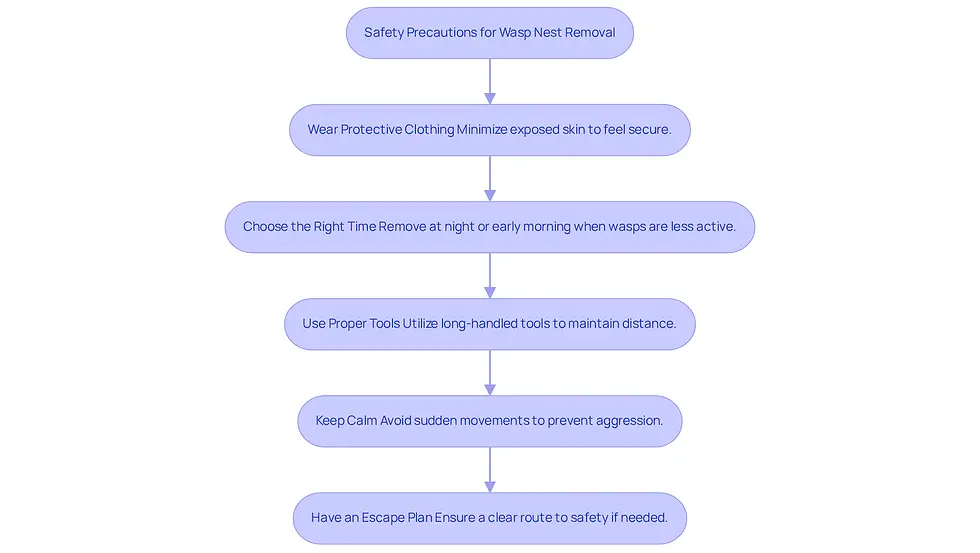
Removing an insect nest can be a daunting task, but knowing how to get rid of wasps nest with the right precautions allows you to approach it with confidence and peace of mind. Safety should be your top priority when tackling this challenge.
Wear Protective Clothing: Imagine feeling a wave of relief as you put on long sleeves, pants, gloves, and a face mask to minimize exposed skin. Many homeowners dread the thought of facing aggressive insects, which can lead to anxiety and hesitation. However, statistics show that roughly 80% of homeowners who wear protective clothing during insect extraction feel more secure and prepared when learning how to get rid of wasps nest. This simple step can significantly decrease your anxiety during the process.
Choose the Right Time: Conducting the removal at night or early morning, when these insects are less active, is vital. These insects are most defensive during the day, and knowing the right time to act can make all the difference.
It's essential to have a plan and know how to get rid of wasps nest in case they become aggressive. Without a clear escape route, you could find yourself in a perilous situation. Make sure children and pets are indoors to avoid unnecessary risks.
Use Proper Tools: Utilizing long-handled tools helps maintain distance from the nest and avoids direct contact. Pest control experts recommend this method for how to get rid of wasps nest to enhance safety, giving you peace of mind as you work.
Keep Calm: Staying calm is crucial. Avoid sudden movements or loud noises that may irritate the insects. When you remain composed, you can help prevent aggressive behavior from the colony.
Taking these precautions not only protects you but also empowers you to handle the situation with assurance and calmness. The potential for severe allergic reactions or fatalities from wasp stings underscores the importance of these precautions.
Conclusion
Deciding whether to remove a wasp nest can be a daunting task, especially when safety is at stake. By understanding the risks associated with location, size, type of wasp, and timing, homeowners can approach wasp management with confidence and peace of mind. This careful assessment empowers you to make informed decisions about whether to take action or allow nature to take its course.
The article outlines essential steps for removing various types of wasp nests, emphasizing the importance of safety precautions throughout the process. From wearing protective clothing to choosing the right time for removal, each technique is designed to minimize risk and increase your confidence. Additionally, recognizing the seasonal life cycle of wasps aids homeowners in determining the best times for action, further enhancing safety measures during removal.
Ultimately, managing wasp nests means creating a safe haven for your family and pets, allowing you to enjoy your home without worry. By following the outlined strategies and prioritizing safety, you can tackle this challenge effectively. By taking these steps, you’re not just protecting your home; you’re creating a safer space for your loved ones and fostering a respectful relationship with nature.
Frequently Asked Questions
Why is it important to evaluate the need for wasp nest removal?
Evaluating the need for wasp nest removal is crucial for ensuring safety from potential stings, especially if the nest is located near high-traffic areas.
What factors should be considered when assessing a wasp nest?
Key factors include the location of the nest, the size of the structure, the type of wasp, and the season in which removal is being considered.
How does the location of a wasp nest affect the decision to remove it?
If the nest is near areas where people frequently pass, it poses a greater risk of stings, making removal a wise choice for safety.
What does the size of a wasp nest indicate about the colony?
Larger nests often indicate a more established colony, which may exhibit aggressive behavior, particularly as the population increases.
Why is it important to identify the type of wasp?
Identifying the species can provide insight into the potential risks involved, as some species, like yellow jackets, are known for their aggressive tendencies.
When is the best time to consider wasp nest removal?
Early spring is often the safest time for removal, as nests are smaller and less populated, whereas late summer or autumn sees larger, more active colonies, increasing the risk of stings.
What should homeowners do if they are unsure about removing a wasp nest?
Homeowners are advised to rely on professionals who have the expertise and tools to handle wasp nest removal safely.
List of Sources
Evaluate the Need for Wasp Nest Removal
cdc.gov (https://cdc.gov/mmwr/volumes/72/wr/mm7227a6.htm)
coactionspecialty.safetynow.com (https://coactionspecialty.safetynow.com/bees-wasps-stats-facts?print=pdf)
bpca.org.uk (https://bpca.org.uk/news-and-blog/wasp-control-in-2025-identification-safety-and-treatment-options/279076)
smithipm.com (https://smithipm.com/when-wasp-nests-become-dangerous)
nbcnews.com (https://nbcnews.com/news/us-news/radioactive-wasp-nest-found-site-us-made-nuclear-bombs-rcna222420)
Understand the Seasonal Life Cycle of Wasps
pestpatrol.be (https://pestpatrol.be/en/2026/03/13/guepes-2026-forecasts-and-tips-for-anticipating-the-season)
Wasps are back this summer in the UK – a lot of them (https://bbc.com/news/articles/cz7ld2jgqz2o)
aarp.org (https://aarp.org/home-living/hornets-aggressive-early-autumn-fd)
globalnews.ca (https://globalnews.ca/news/10734346/wasps-activity-canada-stung)
dailymail.co.uk (https://dailymail.co.uk/sciencetech/article-14951339/Urgent-warning-Brits-influx-angry-WASPS.html)
Follow Step-by-Step Removal Techniques for Different Wasp Nests
trutechinc.com (https://trutechinc.com/expert-tips-on-wasp-nest-removal)
thehoneyladies.com (https://thehoneyladies.com/remove-a-ground-wasp-nest)
cristtermite.com (https://cristtermite.com/blog/how-remove-wasp-nests-safely)
rovepestcontrol.com (https://rovepestcontrol.com/blog/5-steps-to-getting-rid-of-a-wasp-nest)
beesmartcolorado.com (https://beesmartcolorado.com/how-to-safely-remove-a-wasp-nest-step-by-step-guide)
Implement Safety Precautions During Wasp Nest Removal
cdc.gov (https://cdc.gov/mmwr/volumes/72/wr/mm7227a6.htm)
westernexterminator.com (https://westernexterminator.com/western-answers/when-is-it-safe-to-remove-a-wasp-nest)
masseyservices.com (https://masseyservices.com/dealing-with-wasp-nests-diy-removal-techniques-and-safety-tips)
mdpi.com (https://mdpi.com/2079-7737/10/2/73?ref=goodoil.news)
cdc.gov (https://cdc.gov/mmwr/volumes/68/wr/mm6829a5.htm)


