.png)
How to Kill Monkey Grass: Steps for Effective Lawn Care
- Spring Touch Team

- May 1
- 6 min read
Updated: 2 hours ago
Introduction
Managing monkey grass can feel overwhelming for any lawn enthusiast, especially when its vibrant green presence starts to invade your cherished garden spaces. This guide is here to help you tackle Liriope, a resilient ground cover that can quickly take over if not addressed. Are you wondering how to reclaim your lawn and prevent this persistent plant from returning? By diving into identification techniques, removal methods, and post-removal care, you’ll find a comprehensive approach to restoring your outdoor spaces and encouraging healthy growth.
Identify Monkey Grass in Your Lawn
Managing monkey grass, or Liriope, can feel daunting, but it can bring you peace of mind. Let’s explore what to look for:
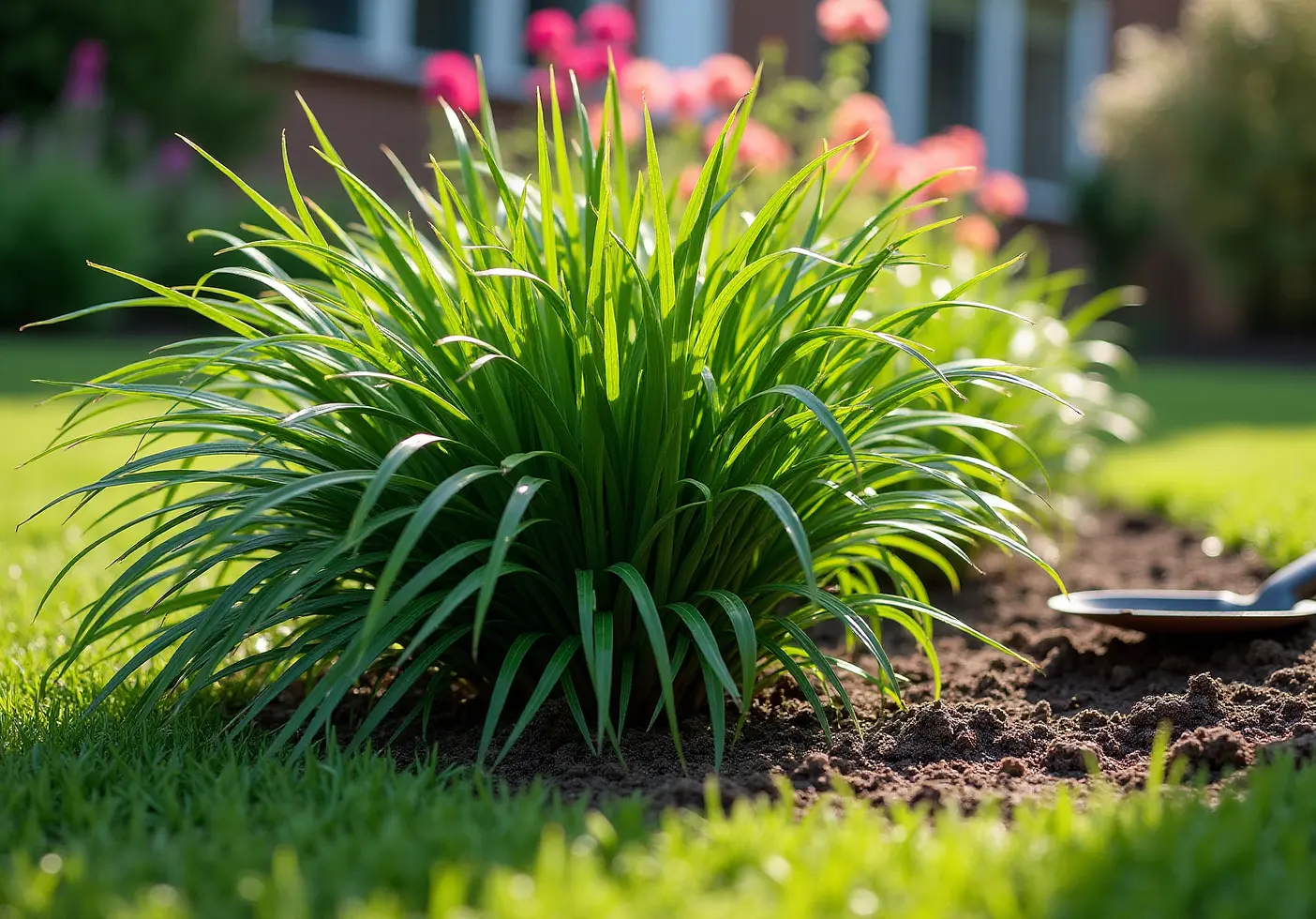
Leaf Structure: Leaves that can grow between 12 to 18 inches tall. Its dark green, glossy foliage stands out beautifully in any landscape, making it easier to spot.
Growth Habit: This resilient plant forms dense clumps or mats, spreading through underground rhizomes. Its vigorous growth can quickly take over garden spaces, which is why removal is so important. As Dr. Gary Bachman wisely points out, "Liriope is a versatile groundcover that is very effective under large trees with reduced light or mass-planted on slopes."
Flowers: In late summer, flowers that bloom in shades of purple, white, or lavender. These flowers are particularly attractive, especially when the plant is in full bloom.
Root System: Liriope has an extensive fibrous root system, which can complicate removal if not handled correctly. It's also crucial to remember that proper techniques are necessary, highlighting the need for careful management.
By familiarizing yourself with these characteristics, you can confidently identify Liriope in your lawn and understand how to kill monkey grass effectively. Remember, understanding is the first step toward managing this plant successfully.

Choose Effective Removal Methods
Recognizing ground cover is just the first step; choosing the right removal method is crucial for success. Let’s explore some methods together:
Digging: This method involves digging up the vegetation entirely. Using a spade or a specialized weeding tool, you can extract the entire root system, ensuring that all rhizomes are removed to prevent regrowth. While it may require some effort, this approach is labor-intensive and can be quite effective.
Mowing: If the monkey grass is particularly thick, mowing by cutting it down to ground level can weaken the vegetation. Following this, mulching or reseeding can help ensure recovery. It’s a straightforward way to start tackling the problem.
Herbicides: For those looking for a quicker solution on large areas, consider using a non-selective herbicide containing glyphosate. Applying it directly to the foliage on a warm, sunny day can enhance its effectiveness. Just be cautious to avoid contact with your preferred plants, as glyphosate can harm them too.
Combination Approach: For the best results, think about combining methods. Start by excavating as much of the vegetation as you can, then apply herbicide to any remaining roots or new growth. This dual strategy can significantly increase your chances of success.
Choose the method that aligns with your goals and the severity of the infestation. Remember, persistence is key; multiple treatments may be necessary to fully eliminate this invasive plant.

Implement Post-Removal Lawn Care
is just the first step; knowing effective lawn care is vital for ensuring it doesn’t come back and that your lawn remains healthy.
First, let’s talk about soil preparation. Loosening the soil where the monkey turf was removed is essential. This aeration not only prepares the ground for new growth but also improves drainage, setting a solid foundation for what’s to come.
Next up is reseeding. Choose a grass type that thrives in Southern Minnesota’s climate. Selecting the right turf is key to achieving a lush and resilient lawn that can withstand the elements.
Don’t forget about mulching! Applying mulch can be a game-changer. It helps suppress any lingering seeds and prevents new growth. Plus, as it breaks down, it enriches the soil, giving your plants a boost.
Monitoring the area is crucial, too. Keep an eye on the area for any signs of regrowth. If you spot new shoots, act quickly to remove them. This proactive approach will help stop the invasive plant from re-establishing itself.
Finally, after a few weeks, consider fertilization. Applying fertilizer will support the healthy growth of your new turf or plants, helping them compete against any remaining invasive roots.
By following these steps, you can cultivate a thriving lawn and significantly reduce the chances of unwanted weeds making a comeback.

Utilize Tools and Resources for Success
Eliminating ground cover can feel overwhelming, especially when you need to know what to do. But don’t worry; with the right tools and resources, you can tackle this challenge effectively.
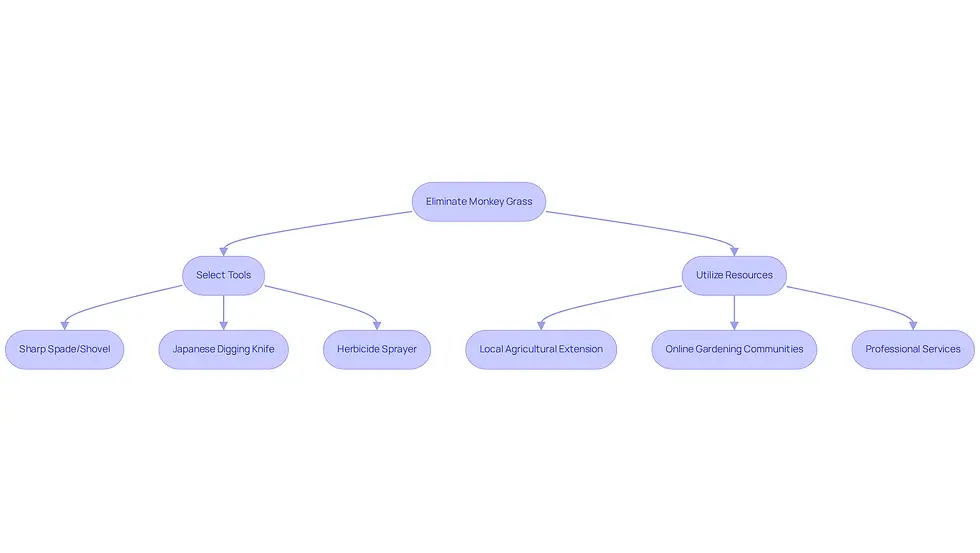
First, let’s talk about the tools you’ll need. A sharp spade or shovel is essential for digging. Look for one with a pointed edge to make it easier to penetrate the soil. Additionally, a hand trowel can help you remove the plant with precision, particularly in those tight spots where it tends to thrive. If you decide to use herbicides, a sprayer will ensure that you apply the product evenly and effectively.
Now, consider the resources available to you. Local gardening centers can be a great starting point. They provide tailored advice for your region, assisting you in selecting the right products. Online communities can also provide valuable insights. Websites like Reddit and various gardening forums are filled with tips and shared experiences that can guide you through this process. If the infestation is severe, don’t hesitate to reach out to professional landscapers. They specialize in weed removal, ensuring that the job is done right. Their expertise includes using organic-based fertilizers and targeted weed control solutions, all aimed at preserving a healthy landscape.
By utilizing the right tools and resources, you can enhance your chances of successfully understanding and maintaining a vibrant lawn. Remember, you’re not alone in this; with the right support, you can achieve the results you desire.
Conclusion
Dealing with monkey grass can feel overwhelming, but understanding how to effectively eliminate it is key to nurturing a healthy, vibrant lawn. This invasive plant, known as Liriope, can quickly take over your garden spaces if not addressed. It’s crucial to not only focus on removing monkey grass but also to implement proper post-removal care, ensuring long-term success in your lawn care journey.
Key strategies for tackling this issue include:
Manual removal
Mowing
Careful application of herbicides
Each method has its own set of benefits and considerations, which can be tailored to your specific situation. Beyond removal, the importance of soil preparation, reseeding, mulching, and ongoing maintenance cannot be overstated. These practices help cultivate a resilient lawn that can withstand future invasions. By utilizing the right tools and resources, you significantly enhance your chances of successful eradication and restoration.
Taking proactive steps against monkey grass not only beautifies your lawn but also fosters a healthier ecosystem. Whether you choose environmentally friendly methods or seek professional assistance, your commitment to effective lawn care will lead to rewarding results. Embrace these practices, and reclaim your outdoor space from invasive species, paving the way for a thriving landscape.
Frequently Asked Questions
What is monkey grass?
Monkey grass is another name for Liriope, a resilient plant known for its long, narrow, arching leaves and dense growth habit.
What does Liriope look like?
Liriope features long, narrow, arching leaves that can grow between 12 to 18 inches tall, with dark green, glossy foliage.
How does Liriope grow?
Liriope forms dense clumps or mats and spreads through underground rhizomes, which can lead to it quickly taking over garden spaces.
When does Liriope flower, and what do the flowers look like?
Liriope blooms in late summer, producing small, spike-like flowers that can be purple, white, or lavender in color.
What type of root system does Liriope have?
Liriope has an extensive fibrous root system, which can complicate removal if not managed properly.
Is Liriope considered invasive?
Yes, Liriope muscari is considered invasive in several states, making effective management strategies important.
Why is it important to identify Liriope early?
Early identification is crucial because Liriope's vigorous growth can quickly dominate garden spaces, making management more difficult.
List of Sources
Identify Monkey Grass in Your Lawn
cdispatch.com (https://cdispatch.com/lifestyles/southern-gardening-old-fashioned-liriope-is-current-garden-staple)
lsuagcenter.com (https://lsuagcenter.com/portals/communications/publications/agmag/archive/2010/winter/new-liriope-and-monkey-grass-groundcover-varieties-for-louisiana)
spring-green.com (https://spring-green.com/learn/blogs/blog-trying-decide-want-monkey-grass)
missouribotanicalgarden.org (https://missouribotanicalgarden.org/PlantFinder/PlantFinderDetails.aspx?kempercode=l100)
eddmaps.org (https://eddmaps.org/species/subject.cfm?sub=11612)
Choose Effective Removal Methods
treesatlanta.org (https://treesatlanta.org/how-to-remove-mondo-and-monkey-grass)
gardeningknowhow.com (https://gardeningknowhow.com/ornamental/groundcover/monkey-grass/removing-monkey-grass.htm)
bioone.org (https://bioone.org/journals/natural-areas-journal/volume-37/issue-4/043.037.0409/Effects-of-Long-Term-Manual-Invasive-Plant-Removal-on-Forest/10.3375/043.037.0409.full)
spring-green.com (https://spring-green.com/learn/blogs/blog-get-rid-monkey-grass)
ask.extension.org (https://ask.extension.org/kb/faq.php?id=914224)
Implement Post-Removal Lawn Care
highergroundlm.com (https://highergroundlm.com/soil-testing-the-foundation-of-effective-lawn-management)
order.siterecon.ai (https://order.siterecon.ai/blog/lawn-care-industry-statistics-and-trends-for-2025)
walterreeves.com (https://walterreeves.com/landscaping/monkey-grass-prevention)
gardeningknowhow.com (https://gardeningknowhow.com/ornamental/groundcover/monkey-grass/monkey-grass-a-spectacular-groundcover-for-the-lawn.htm)
Utilize Tools and Resources for Success
gardeningknowhow.com (https://gardeningknowhow.com/ornamental/groundcover/monkey-grass/removing-monkey-grass.htm)
statista.com (https://statista.com/topics/8780/garden-equipment-and-plants-in-the-united-states?srsltid=AfmBOopFBaBRojWFh1VGmunu25xUWw_dteh7O0g4HM0n-9TUxkLgdXdh)
Gardening Statistics (2026) (https://rubyhome.com/blog/gardening-stats)
spring-green.com (https://spring-green.com/learn/blogs/blog-get-rid-monkey-grass)


