.png)

Master Broadleaf Weed Control: Essential Practices for Homeowners
- Spring Touch Team

- 14 hours ago
- 8 min read
Updated: 2 hours ago
Introduction
Homeowners often feel overwhelmed as their beautiful lawns become overrun with weeds. Broadleaf weeds can swiftly transform a once-pristine lawn into a tangled mess, leaving homeowners in southern Minnesota grappling with frustration and uncertainty. Knowing how to spot and deal with these weeds is key to keeping your lawn healthy.
So, what can you do to fight back against these weeds and help your lawn flourish all year long? Let’s look at some simple yet effective ways to take back your yard and enjoy a lush, green space.
Identify Common Broadleaf Weeds in Your Lawn
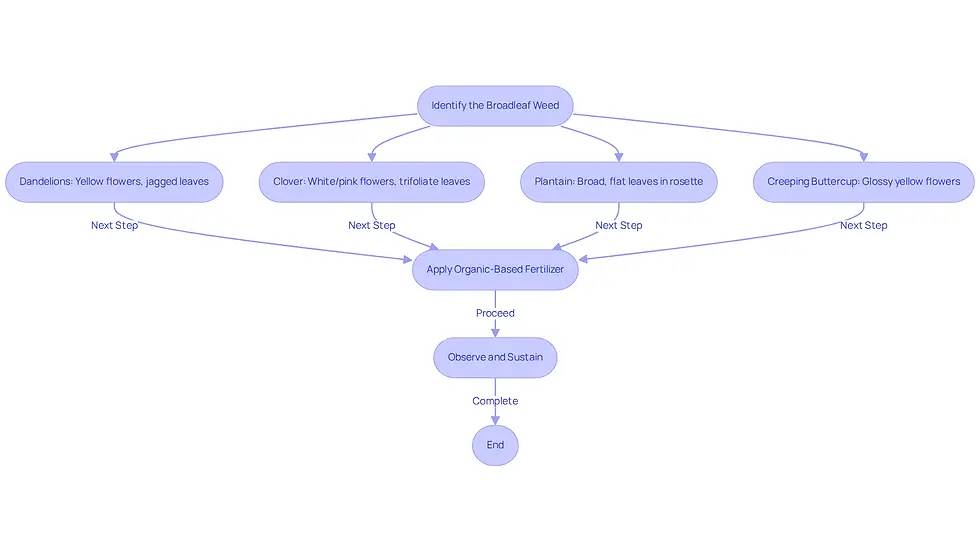
Weeds can quickly take over your yard, leaving you feeling overwhelmed and frustrated. Common broadleaf weeds found in southern Minnesota yards include dandelions, clover, plantain, and creeping buttercup, each possessing unique identifying characteristics. Dandelions are easily recognized by their bright yellow flowers and rosette of jagged leaves. Clover showcases small white or pink flowers along with trifoliate leaves. Plantain presents broad, flat leaves that form a rosette close to the ground, while creeping buttercup is identifiable by its glossy yellow flowers and sprawling growth habit.
Start by getting to know these plants and what makes them unique. Frequent grass evaluations are essential for early detection, which can stop these plants from spreading and dominating the area. Utilizing local extension services or online resources that provide images and descriptions can further aid in accurate identification.
For effective weed control, follow these steps:
Identify the broadleaf weed: Regularly inspect your garden for dandelions, clover, plantain, and creeping buttercup.
Apply Organic-Based Fertilizer: Use Spring Touch's organic-based fertilizer with bio-solids and crabgrass preventer to restore nutrients and prevent crabgrass. This treatment should be applied in early spring for optimal results.
Observe and Sustain: After application, continue to observe your yard for any new weed growth and address it promptly.
Stay vigilant and take action, and you’ll keep your yard healthy and vibrant. As a new customer, you can take advantage of a free first application when signing up for our complete lawn care program. Spring Touch Lawn & Pest Control offers a 100% satisfaction guarantee, ensuring that if issues are reported within 15 days after application, free retreatment will be provided. With the right approach, you can reclaim your yard and enjoy a beautiful outdoor space once again.
Understand Growth Patterns and Life Cycles of Broadleaf Weeds
Managing your lawn can feel daunting, especially when faced with the different types of broadleaf weed that can take over your yard. Yearly plants, like annual grasses, can seem to vanish before you know it, completing their life cycle in just one year. They sprout in spring, flourish through summer, and by fall, they’re gone, leaving behind seeds that wait for the right moment to germinate again. But don’t worry; there’s a way to manage them. Spring Touch Lawn & Pest Control recommends using organic-based fertilizer with a preventer for unwanted grasses in early spring. This treatment not only replenishes your lawn’s nutrients but also helps keep crabgrass at bay during the summer months.
On the other hand, biennial plants, like common mullein and burdock, take their time, maturing over two years before they bloom. They develop roots and leaves in the first year and then flower in the second, producing seeds before they die. Meanwhile, persistent plants, including broadleaf weeds like clover and dandelion, can stick around for several years, coming back each season from the same root system. Understanding these growth patterns can make all the difference in managing your lawn effectively. For instance, applying pre-emergent herbicides in early spring can significantly reduce the sprouting of annual plants, while preventing winter annuals is best achieved by treating in late summer to early fall.
As a homeowner in southern Minnesota, staying vigilant throughout the year can help you spot these plants and know when to act. It’s also essential to prevent seed production to manage plant infestations effectively. Using products like Preen Extended Control Preventer can provide season-long protection against over 125 varieties of unwanted plants, making it a valuable ally for homeowners. Additionally, don’t underestimate the importance of aeration; it ensures that grass seed has direct contact with the soil, which is vital for germination, especially in the compacted clay soils common in Minnesota. By choosing Spring Touch Lawn & Pest Control, you gain access to local expertise, a commitment to using organic, pet- and family-safe treatments, and a 100% satisfaction guarantee, including a free first treatment for new customers who sign up for a complete program. By understanding these plants and taking proactive steps, you can reclaim your lawn and enjoy a thriving outdoor space all year round.

Implement Effective Control Methods for Broadleaf Weeds
Many homeowners struggle with the persistent invasion of broadleaf weeds, which can undermine the beauty and health of their lawns. Effective control methods can help you reclaim your outdoor space. Cultivating a strong lawn is key to keeping unwanted plants like dandelions and clover at bay. By focusing on proper mowing, watering, and fertilization, you can help your grass thrive and outcompete these invaders.
At Spring Touch Lawn & Pest Control, we believe in the power of organic treatments. Starting with organic fertilizer that includes crabgrass preventer not only replenishes nutrients but also helps keep those pesky plants from taking hold. For smaller infestations, you can take matters into your own hands with mechanical removal techniques like hand-pulling or using a hoe. It’s a simple yet effective way to manage the problem before it escalates.
If you’re facing a larger issue, don’t worry-selective herbicides can help. These products target broadleaf weeds while keeping your grass safe, giving you peace of mind as you tackle the problem. Many homeowners find success with products that combine 2,4-D, MCPP, and dicamba. These effective solutions can help you regain control of your lawn. Remember, following the label instructions for application rates and timing is essential. This ensures you get the best results while keeping your lawn safe.
Core aeration is another important step. It improves seed germination and soil vitality, helping to control unwanted plants and prevent them from coming back. With regular maintenance practices and the support of Spring Touch's expertise, you can ensure your lawn remains healthy and vibrant. With the right approach, you can reclaim your lawn and enjoy a vibrant, healthy outdoor space that brings you peace of mind.

Adopt Preventive Practices to Minimize Weed Growth
Many homeowners feel overwhelmed when faced with the challenge of maintaining a healthy lawn amidst persistent weeds. Preventive practices are essential for nurturing a lush, vibrant turf that naturally keeps unwanted plants at bay.
Mowing at a height of 3 inches or higher encourages dense grass growth, which helps shade the soil and reduces the chances of weed seed germination.
Regular aeration, especially in areas with heavy clay soils, is crucial.
Aerating multiple times a year and overseeding can significantly enhance grass health and resilience, particularly in Minnesota's cool-season climate.
Using Spring Touch's organic-based fertilizer with bio-solids and a preventer in early spring can effectively restore nutrients and keep unwanted grass from taking over your lawn during the summer months. This treatment works best when soil temperatures reach 55ºF and before accumulating 200 growing degree days (GDD), as it helps prevent common invaders like crabgrass and dandelions from germinating.
Additionally, mulching around garden beds can block sunlight and retain soil moisture, further inhibiting unwanted plants.
Keeping an eye on your grass health is really important. Homeowners should check for soil compaction and nutrient deficiencies, as addressing these issues can significantly reduce the likelihood of plant infestations. By embracing these practices, you can cultivate a lawn that not only looks beautiful but also brings you peace of mind throughout the seasons.

Conclusion
Are you tired of battling stubborn weeds that threaten the beauty of your lawn? Maintaining a healthy lawn free from broadleaf weeds is essential for homeowners seeking to enhance their outdoor spaces. It all starts with recognizing the weeds that invade your space. By understanding the unique characteristics of common weeds like dandelions, clover, and plantain, and implementing effective control methods, you can reclaim your yard.
The frustration of dealing with persistent weeds can feel overwhelming, but there’s hope. By applying organic-based fertilizers and adopting preventive practices that promote robust grass growth, you can create an environment less conducive to weed proliferation. Key strategies include:
Regular lawn evaluations
Using organic fertilizers with crabgrass preventers
Understanding the growth patterns of various weeds
You don’t have to do this alone; with Spring Touch Lawn & Pest Control by your side, you’ll have the support you need to create a beautiful, safe space for your family. Homeowners are encouraged to take a proactive approach that incorporates mechanical removal techniques and selective herbicides when necessary. Moreover, aerating the soil and maintaining optimal mowing heights can significantly contribute to the overall health of your lawn, making it more competitive against unwanted plants.
By taking these steps, you’ll not only see a healthier lawn but also feel a renewed sense of pride in your outdoor haven. Imagine stepping outside to a lush, vibrant lawn that brings you joy and peace of mind every day.
Frequently Asked Questions
What are common broadleaf weeds found in southern Minnesota yards?
Common broadleaf weeds include dandelions, clover, plantain, and creeping buttercup.
How can I identify dandelions?
Dandelions are recognizable by their bright yellow flowers and a rosette of jagged leaves.
What does clover look like?
Clover features small white or pink flowers and has trifoliate leaves.
How can I identify plantain?
Plantain has broad, flat leaves that form a rosette close to the ground.
What are the identifying characteristics of creeping buttercup?
Creeping buttercup is identifiable by its glossy yellow flowers and sprawling growth habit.
Why is it important to regularly inspect my lawn for weeds?
Frequent evaluations of your lawn are essential for early detection of weeds, which can help prevent them from spreading and dominating the area.
How can I effectively control broadleaf weeds in my lawn?
To control broadleaf weeds, regularly inspect your garden, apply organic-based fertilizer in early spring, and observe for new weed growth to address it promptly.
What type of fertilizer is recommended for lawn care?
Spring Touch recommends using an organic-based fertilizer with bio-solids and crabgrass preventer to restore nutrients and prevent crabgrass.
What should I do after applying fertilizer?
After application, continue to observe your yard for any new weed growth and address it promptly.
Is there a satisfaction guarantee offered by Spring Touch Lawn & Pest Control?
Yes, Spring Touch Lawn & Pest Control offers a 100% satisfaction guarantee, providing free retreatment if issues are reported within 15 days after application.
What is the promotion for new customers at Spring Touch Lawn & Pest Control?
New customers can take advantage of a free first application when signing up for the complete lawn care program.
List of Sources
Identify Common Broadleaf Weeds in Your Lawn
Common Broadleaf Weeds for the MN Area (https://fertilawnmn.com/broadleaf-weeds-in-mn)
Common Broadleaf Weeds Found in Your Yard (https://lawnlove.com/blog/landscaping-common-broadleaf-weeds-found-in-your-yard)
Broadleaf Weeds in Lawns (https://solvepestproblems.oregonstate.edu/lawn-problems/broadleaf-weeds)
Weeds, Begone: 42 Common Weeds You Might Find in Your Yard & How to Control Them (https://thespruce.com/pictures-of-weeds-4069715)
Common BroadLeaf Weeds in Late Spring | The Lawn Care Nut (https://thelawncarenut.com/blogs/news/common-broadleaf-weeds-in-late-spring?srsltid=AfmBOorJWAAXEinmHTgKbqeERvNc4_4KUOsn282LO2m8FdTC0qayrH0a)
Understand Growth Patterns and Life Cycles of Broadleaf Weeds
Weed Season Opens Soon! (Allegheny County) (https://extension.psu.edu/programs/master-gardener/counties/allegheny/news/weed-season-opens-soon)
Noxious weed life cycles (https://columbiabasinherald.com/news/2018/jun/22/noxious-weed-life-cycles-2)
Weed Control and the Life Cycles of Weeds (https://preen.com/learn/lawn-garden-tips/weed-control/get-rid-of-weeds/weed-control-and-the-life-cycles-of-weeds)
Understanding weed life cycles (https://umass.edu/agriculture-food-environment/book/export/html/9736)
Perennial Broadleaf Weeds in Lawns (https://missouribotanicalgarden.org/gardens-gardening/your-garden/help-for-the-home-gardener/advice-tips-resources/insects-pests-and-problems/weeds/broadleaf-weeds)
Implement Effective Control Methods for Broadleaf Weeds
Broadleaf Weed Control: How to Prevent and Eliminate Lawn Weeds | TruGreen (https://trugreen.com/lawn-care-101/blog/lawn-care-tips/best-methods-broadleaf-weed-control)
Broadleaf Weed Chemical Control (https://k-state.edu/turf/resources/lawn-problem-solver/problem-solver/weeds/broadleaf/chemical-control.html)
Minnesota farmers talk weed control (https://farmprogress.com/farming-equipment/minnesota-farmers-talk-weed-control)
Options for controlling weeds in your lawn this summer | Turfgrass Science (https://turf.umn.edu/news/options-controlling-weeds-your-lawn-summer)
Adopt Preventive Practices to Minimize Weed Growth
How To Control Weeds in Your Lawn (https://usga.org/content/usga/home-page/course-care/green-section-record/63/issue-04/how-to-control-weeds-in-your-lawn-.html)
Master Summer Lawn Weed Control: Key Practices for Homeowners (https://springtouchlawn.com/post/master-summer-lawn-weed-control-key-practices-for-homeowners)
Weed Management in Lawns / Home and Landscape / UC Statewide IPM Program (UC IPM) (https://ipm.ucanr.edu/home-and-landscape/weed-management-in-lawns)
How to Prevent Weeds in Your Minnesota Lawn | Lawn Care Tips (https://alexslawnandturf.com/how-to-prevent-weeds-in-your-minnesota-lawn)
Healthy Lawns for Healthy Water - MWMO (https://mwmo.org/news/healthy-lawns-for-healthy-water)


