.png)

What Causes Fairy Rings? Understanding Their Formation and Significance
- Spring Touch Team

- 2 hours ago
- 6 min read
Introduction
Fairy rings, those mysterious circles of mushrooms that pop up in yards, often leave homeowners wondering what they mean for their lawns. These circles, formed by a network of fungi, can actually tell us a lot about the health of our soil and the environment. Homeowners often worry that these unexpected circles might ruin the beauty of their lawns. But understanding these fascinating formations can empower homeowners to embrace their lawns' natural beauty rather than fear it.
Define Fairy Rings: Characteristics and Formation
Have you ever noticed unusual circles of mushrooms in your yard and wondered what they mean? Fairy circles, also known as fairy formations or elf circles, are intriguing natural structures that lead to curiosity about what causes fairy rings, which are formed by specific fungi. These mushrooms grow from a hidden network of threads beneath the soil, thriving on decomposing material, which creates those enchanting circles we see above ground. They can vary in size, sometimes stretching from 3 feet to over 100 feet in diameter, and are characterized by a unique pattern of mushroom growth at the edges of this fungal network.
As the mycelium spreads outward, it forms a noticeable circle of mushrooms, often accompanied by a band of greener grass due to the nutrient release from the decomposing organic material. While these formations can be captivating, they may also raise concerns for homeowners about lawn aesthetics. But there's no need to worry! Experts like Margot Cumming from the University of Wisconsin Turf Diagnostic Lab reassure us that fairy circles are typically just cosmetic issues and won't harm your lawn.
Interestingly, these mushroom circles can be centuries old, with some lasting over 700 years, showcasing the enduring nature of these captivating formations. Recent observations have noted that magical circles can emerge following specific environmental conditions, such as increased moisture from rainfall, further highlighting their connection to local climate patterns. For homeowners tending to their lawns, core aeration can assist in minimizing thatch accumulation, which may host fairy circle fungi, while applying nitrogen fertilizer can improve the surrounding grass's color to align with that of Type 2 fairy circles. Understanding what causes fairy rings can enhance your appreciation of their beauty while maintaining a healthy lawn.

Explore the Science: How Fairy Rings Form
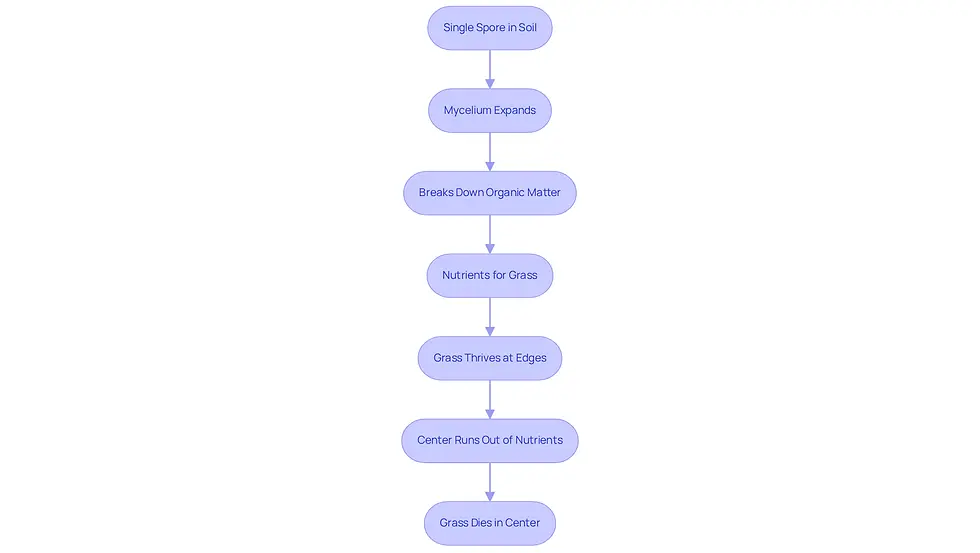
Have you ever noticed a circle of vibrant grass surrounded by patches of brown? This phenomenon, known as fairy rings, begins with a single spore that finds a welcoming home in the soil. As the fungal network expands, it breaks down organic matter, providing essential nutrients for the surrounding grass. However, as the mycelium continues to grow, the center eventually runs out of nutrients, leading to the unfortunate death of the grass in that area. It’s disheartening to see how the lush green grass at the edges stands in stark contrast to the brown patches in the center, isn’t it?
Factors like soil quality, moisture, and even the presence of decaying leaves are essential in determining what causes fairy rings to appear in your yard. You’ll often find these enchanting circles thriving in nutrient-rich, moist areas like your lawn or nearby woodlands. By understanding these factors, you can nurture your lawn and prevent the unsightly effects of fairy rings.
Examine Environmental Influences: Conditions Favoring Fairy Rings
Have you ever wondered what causes fairy rings, which make some lawns seem to come alive with magical circles while others remain dull and lifeless? Understanding what causes fairy rings involves recognizing how they flourish in certain spots due to the right mix of soil type, moisture, and organic matter. When conditions are just right, these enchanting formations can thrive, creating a captivating sight. However, imagine the disappointment of seeing your once vibrant lawn turn dull and lifeless due to dry spells that stifle the growth of what causes fairy rings. Dry conditions can hinder fungal activity, which is what causes fairy rings that bring joy to your outdoor space.
During the moist seasons, these circles seem to spring to life, captivating our attention and reminding us of nature's wonders. Yet, symptoms of fungal formations can be most noticeable during hot, dry summer conditions, which can worsen their appearance. If you live in southern Minnesota, you might find these magical circles popping up in your yard, especially if your lawn is rich in organic matter and moisture. Additionally, mushrooms may appear at the edges of discolored grass during wet weather, particularly in the fall, further indicating fungal activity.
A case study on Type 2 mushroom circles illustrates how lush, dark green grass can emerge due to nitrogen released from decomposed organic matter, indicating a nutrient deficiency in the turf. This phenomenon emphasizes the significance of soil health and moisture management in preventing and addressing fungal circles, which relates to what causes fairy rings. Understanding these conditions not only helps you appreciate the beauty of these formations but also empowers you to nurture a healthier lawn.

Uncover Folklore: Myths and Cultural Significance of Fairy Rings
Fairy circles, with their enchanting allure, stir both wonder and caution in those who encounter them. For centuries, these mysterious formations have inspired a rich tapestry of folklore and myths across various cultures. Many believe these circles are the result of magical beings or elves dancing in sacred spaces. In Celtic mythology, stepping into a magical circle could lead to being caught in a fae dance, while in German tradition, they are known as 'Hexenringe' or witches' circles, thought to be gathering spots for witches. Some cultures associate these enchanted circles with good fortune or fertility, while others warn against entering them due to potential curses.
This blend of science and myth highlights our enduring fascination with fairy circles. Scientifically, what causes fairy rings are these magical formations created by fungi, particularly species like Marasmius oreades, which grow in a circular pattern as they decompose organic material. The mycelium, or underground fungal network, expands outward, forming the distinctive circular shape. By exploring both the myths and the science, we can find a deeper appreciation for these natural wonders that reflect our own beliefs and fears.

Conclusion
Fairy rings may seem like a charming mystery, but they often leave homeowners puzzled about their impact on lawns. These natural formations might look alarming, but they’re mostly harmless and can be easily managed with the right lawn care. Understanding their formation can be challenging, as it reveals the intricate relationship between soil health, moisture, and organic matter. Many homeowners struggle to grasp these complexities, which can lead to confusion and concern.
As we explored, fairy rings develop from a single spore into a sprawling mycelium network, breaking down organic material and influencing the surrounding grass. Environmental factors like soil quality and moisture levels play a crucial role in their appearance, especially in regions like southern Minnesota, where conditions can vary significantly. This knowledge empowers homeowners to take control of their lawn care, transforming uncertainty into confidence.
Ultimately, understanding fairy rings can help homeowners feel more connected to their lawns and confident in their care. For those looking to improve their lawn care, local experts at Spring Touch Lawn & Pest Control can offer personalized solutions to keep your lawn healthy and beautiful. With the right knowledge and support, your lawn can thrive, turning these enchanting formations into a source of pride rather than concern.
Frequently Asked Questions
What are fairy rings?
Fairy rings, also known as fairy circles or elf circles, are natural structures formed by specific fungi that create unusual circles of mushrooms in the ground.
How are fairy rings formed?
Fairy rings are formed by a hidden network of threads, called mycelium, beneath the soil that thrives on decomposing material, leading to the growth of mushrooms in a circular pattern above ground.
What are the characteristics of fairy rings?
Fairy rings can vary in size from 3 feet to over 100 feet in diameter and are characterized by a unique pattern of mushroom growth at their edges, often accompanied by a band of greener grass due to nutrient release from decomposing organic material.
Are fairy rings harmful to lawns?
No, fairy rings are typically cosmetic issues and do not harm your lawn, according to experts like Margot Cumming from the University of Wisconsin Turf Diagnostic Lab.
How long can fairy rings last?
Some fairy rings can be centuries old, with certain formations lasting over 700 years.
What environmental conditions contribute to the formation of fairy rings?
Fairy rings can emerge following specific environmental conditions, such as increased moisture from rainfall, which highlights their connection to local climate patterns.
What can homeowners do to manage fairy rings in their lawns?
Homeowners can minimize thatch accumulation, which may host fairy circle fungi, through core aeration and can apply nitrogen fertilizer to improve the surrounding grass's color.
How can understanding fairy rings enhance appreciation for them?
Understanding the causes and characteristics of fairy rings can help homeowners appreciate their beauty while maintaining a healthy lawn.
List of Sources
Define Fairy Rings: Characteristics and Formation
Fairy Rings - Judith Basin County Extension | Montana State University (https://montana.edu/extension/judithbasin/crops-and-livestock/news-and-alerts/june-fairy-rings.html)
'Fairy rings' common, but not at all magical (https://myjournalcourier.com/features/article/fairy-rings-common-not-magical-22271109.php)
What are ‘fairy rings,’ and are those mushrooms dangerous? Expert explains (https://fox59.com/news/national-world/what-are-fairy-rings-and-are-those-mushrooms-dangerous-expert-explains)
Fairy Rings (https://hort.extension.wisc.edu/articles/fairy-rings)
Fairy rings: Curious product of mushrooms decomposing clippings, debris (https://uaex.uada.edu/media-resources/news/2020/september2020/09-04-2020-Ark-fairy-rings.aspx)
Examine Environmental Influences: Conditions Favoring Fairy Rings
Fairy Ring in Turfgrass: Identification and Control in Georgia | CAES Field Report (https://fieldreport.caes.uga.edu/publications/C1346/fairy-ring-in-turfgrass-identification-and-control-in-georgia)
Fairy Rings (https://hort.extension.wisc.edu/articles/fairy-rings)
Wet fall weather can cause abundance of fungus | CAES Field Report (https://fieldreport.caes.uga.edu/news/wet-fall-weather-can-cause-abundance-of-fungus)
Uncover Folklore: Myths and Cultural Significance of Fairy Rings
Myths and magic of fairy rings | Norfolk Wildlife Trust (https://norfolkwildlifetrust.org.uk/blog/guest-blog/myths-and-magic-fairy-rings)
Fairy ring - Wikipedia (https://en.wikipedia.org/wiki/Fairy_ring)
The Outside Story: Of fungi and fairy rings - Concord Monitor (https://concordmonitor.com/2021/10/24/the-outside-story-43095178)
Redwood Fairy Rings and the Magic of Science - Sempervirens Fund (https://sempervirens.org/news/redwood-fairy-rings-and-the-magic-of-science)
Do you dare enter a fairy ring? The mythical mushroom portals of the supernatural | Ancient Origins (https://ancient-origins.net/human-origins-folklore/do-you-dare-enter-fairy-ring-mythical-mushroom-portals-supernatural-003677)


