.png)

Master Dollar Spot Fungus: Identify, Treat, and Troubleshoot
- Spring Touch Team

- Jun 2
- 7 min read
Updated: 8 hours ago
Introduction
Many homeowners worry when they notice patches on their lawn, especially if they suspect dollar spot fungus might be the cause. This common issue, identifiable by its distinct circular spots and bleached appearance, can leave homeowners feeling overwhelmed when they see their once lush lawn deteriorating.
But with the right knowledge and tools, restoring your lawn is entirely achievable. With the right strategies, you can reclaim your lawn's beauty and health, ensuring it remains a source of pride and enjoyment.
Understand Dollar Spot Fungus: Identification and Symptoms
Have you noticed unsightly patches on your lawn that seem to appear overnight? This could be dollar spot fungus, a common issue that can quickly turn your vibrant lawn into a patchy mess. The dollar spot fungus, scientifically known as Sclerotinia homoeocarpa, manifests as small, circular patches of bleached turf, typically ranging from 1 to 5 inches in diameter. These spots often take on a tan or straw-colored hue, bordered by a distinct reddish-brown edge. In the early morning, you might even see white mycelium (fungal threads) on the grass blades, especially after heavy dew. It's a good idea to regularly check your lawn for these signs, particularly during warm, humid weather, as this is when the fungus thrives. Early identification is crucial for effective management, so keep an eye out for the following symptoms:
Small, circular patches: Initially, the spots are about the size of a silver dollar, but they can merge to form larger areas if left untreated.
Bleached appearance: Affected blades will appear lighter in color, often with a sunken center.
Reddish-brown margins: The edges of the marks typically exhibit a reddish-brown hue, making them easier to identify against the green grass.
To prevent the spread of the fungus, keep your mower blades sharp and avoid mowing when the grass is wet. Additionally, watering in the morning rather than the evening can help reduce the risk of fungus by allowing the grass to dry during the day. Core aeration is also essential, as it improves soil health and enhances seed germination, particularly in Minnesota's clay soils. If you spot these telltale signs, don’t worry - applying a targeted fungicide to the most affected areas can help restore your lawn's health. By familiarizing yourself with these symptoms and preventive measures, you can take prompt action to address the issue before it escalates, ensuring your garden remains healthy and vibrant. Taking these proactive steps not only safeguards your lawn but also brings peace of mind, knowing you're doing everything you can to maintain its beauty.

Recognize Contributing Factors: Conditions Favoring Dollar Spot Development
Several environmental and cultural factors can lead to the development of dollar spot fungus, and identifying these conditions can assist homeowners in managing their lawns effectively.
High humidity and moisture create a perfect environment for dollar spot fungus to thrive. You can help keep your lawn healthy by ensuring proper drainage and being mindful of watering practices.
The fungus prefers moderate temperatures, typically between 60°F and 80°F, where infections can develop quickly. Keep an eye on your lawn during warm, humid days, as these are the times when dollar spot fungus can thrive.
Lawns that are under-fertilized are more susceptible to the dollar spot fungus. Testing your soil for nitrogen levels and using the right fertilizers can really help your grass grow strong and healthy.
Mowing too low can stress the grass, making it more vulnerable to disease. Keeping your grass at a height of at least 3 inches helps it thrive and stay resilient.
Excessive thatch can retain moisture and create a welcoming environment for fungal disease. Consider regular aeration and dethatching to keep your lawn in great shape and prevent issues like the dollar spot fungus.
By identifying and addressing these contributing factors, homeowners can create a less inviting environment for the fungus, leading to a healthier and more vibrant lawn.

Implement Treatment Strategies: Cultural and Chemical Control Methods
Dealing with the dollar spot fungus can be frustrating for homeowners, particularly when it jeopardizes the beauty of their lawns. This pesky fungus can leave unsightly patches that disrupt the lush green appearance we all desire. But don’t worry; there are effective ways to tackle this issue and restore your lawn's health.
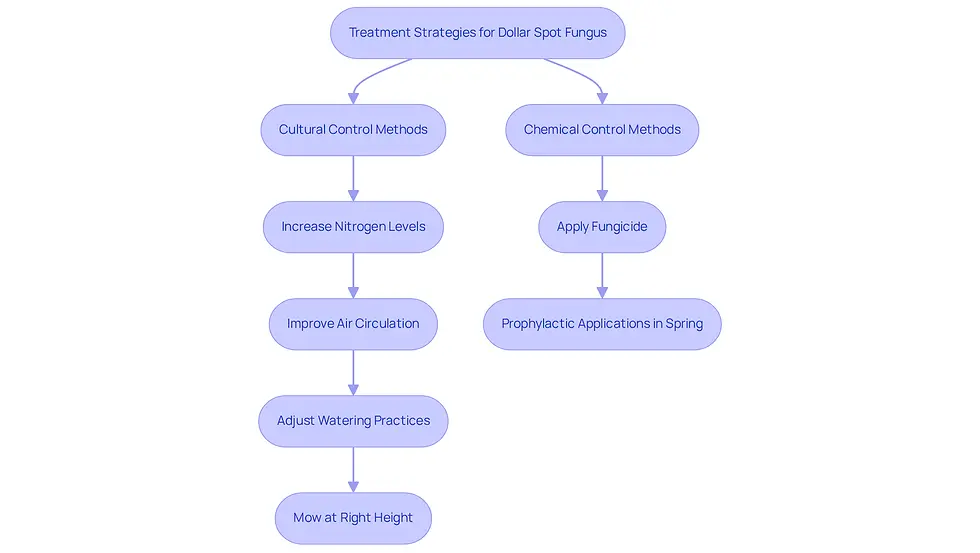
First, let’s look at some cultural control methods that can make a significant difference.
Increasing nitrogen levels is a great start. Applying a nitrogen-rich fertilizer can promote healthy grass growth, helping your lawn recover from the dollar spot fungus. Aim for a balanced fertilizer with a higher nitrogen ratio to give your grass the boost it needs.
Improving air circulation is crucial. Trimming back overhanging branches and dense shrubs can enhance airflow around your lawn, reducing the humidity that fosters fungal growth.
Adjusting your watering practices can help. Watering early in the morning allows the blades of turf to dry throughout the day, while avoiding evening watering can prevent prolonged leaf wetness, which increases the risk of disease.
Mowing at the right height is another important step. Keeping your mowing height at least 3 inches can reduce stress on the grass and promote healthier growth, making it less susceptible to dollar spot fungus.
If cultural methods don’t yield the desired results, consider chemical control methods.
Applying a fungicide specifically designed for the treatment of dollar spot fungus can be effective. Options like chlorothalonil and propiconazole are worth considering, but always follow the manufacturer's instructions for application rates and timing.
For areas prone to this issue, prophylactic fungicide applications in early spring can be a proactive approach. This can help mitigate outbreaks before they even start.
With the right combination of care and treatment, your lawn can thrive again, bringing back its vibrant beauty and your peace of mind.
Troubleshoot Treatment Issues: FAQs and Solutions for Homeowners
Homeowners often face the frustrating challenge of dealing with dollar spot fungus, leaving them unsure of how to effectively restore their lawns.
It can be disheartening when the fungicide doesn’t seem to work, leaving you wondering what to do next. Make sure you’re applying the fungicide correctly by following the manufacturer’s instructions for dosage and timing. If symptoms persist, consider switching to a different fungicide or reaching out to a landscaping expert for personalized guidance.
You might start to notice some improvement in your lawn within 2 to 4 weeks after you begin treatment. Patience is key, so keep an eye on your grass for any changes during this time.
Absolutely! By sticking to good lawn care practices like regular fertilization and proper mowing heights, you can greatly lower the chances of dollar spot returning. These steps can significantly reduce the risk of future outbreaks and keep your lawn healthy.
Fungicides can help, but they’re not always needed if you focus on keeping your grass healthy first. Concentrate on enhancing the overall health of your lawn, and consider fungicides as a secondary option if necessary.
By addressing these common concerns and solutions, you can take confident steps toward a healthier lawn, free from the worry of the dollar spot fungus.

Conclusion
Imagine stepping outside to find your once vibrant lawn marred by unsightly patches, leaving you feeling frustrated and helpless. Dollar spot fungus can quickly transform a lush lawn into a patchy landscape. But when you understand how to identify and treat it, you can reclaim your lawn's beauty and health. Recognizing the signs early and taking action can help you restore your lawn to its former glory.
This guide highlights key aspects of dollar spot fungus, including:
Its visual symptoms
The environmental conditions that favor its growth
Both cultural and chemical treatment methods
Homeowners are encouraged to maintain proper lawn care practices, such as:
Adequate fertilization
Appropriate mowing heights
Strategic watering
to create an environment less hospitable to the fungus. Remember, patience during treatment is essential, and the potential need for fungicides is a crucial component of effective management.
Taking these steps not only safeguards your lawn's beauty but also nurtures its resilience, ensuring it thrives for seasons to come. By applying the insights shared in this guide, you can cultivate a vibrant, resilient lawn that withstands the challenges posed by this common fungal threat.
Frequently Asked Questions
What is dollar spot fungus?
Dollar spot fungus, scientifically known as Sclerotinia homoeocarpa, is a common lawn issue that appears as small, circular patches of bleached turf, typically ranging from 1 to 5 inches in diameter.
How can I identify dollar spot fungus on my lawn?
You can identify dollar spot fungus by looking for small, circular patches that have a bleached appearance, often with a sunken center, and reddish-brown margins. In the early morning, you may also see white mycelium (fungal threads) on the grass blades, especially after heavy dew.
When is dollar spot fungus most likely to occur?
Dollar spot fungus thrives during warm, humid weather, so it's important to regularly check your lawn for signs of the fungus during these conditions.
What are the symptoms of dollar spot fungus?
Symptoms include small, circular patches that initially resemble a silver dollar, a bleached appearance of affected blades, and reddish-brown margins around the patches.
How can I prevent dollar spot fungus from spreading?
To prevent the spread of dollar spot fungus, keep your mower blades sharp, avoid mowing when the grass is wet, water in the morning instead of the evening, and practice core aeration to improve soil health.
What should I do if I find dollar spot fungus on my lawn?
If you spot dollar spot fungus, you can apply a targeted fungicide to the most affected areas to help restore your lawn's health. Early identification and action are crucial for effective management.
List of Sources
Understand Dollar Spot Fungus: Identification and Symptoms
shadesofgreenlawncare.com (https://shadesofgreenlawncare.com/blog/dollar-spot-fungus-tips-identify-control-prevent)
canr.msu.edu (https://canr.msu.edu/ipm/diseases/dollar-spot)
kappslawn.com (https://kappslawn.com/dollar-spot-fungus-treatment-identify-prevention)
fairwaylawns.com (https://fairwaylawns.com/dollar-spot-fungus-treatment-identify-prevention)
lawndoctor.com (https://lawndoctor.com/blog/dollar-spot-fungus)
Recognize Contributing Factors: Conditions Favoring Dollar Spot Development
content.ces.ncsu.edu (https://content.ces.ncsu.edu/dollar-spot-in-turf)
kappslawn.com (https://kappslawn.com/dollar-spot-fungus-treatment-identify-prevention)
fieldreport.caes.uga.edu (https://fieldreport.caes.uga.edu/publications/C1091/dollar-spot-on-turfgrass-in-georgia)
ipm.ucanr.edu (https://ipm.ucanr.edu/agriculture/turfgrass/dollar-spot)
canr.msu.edu (https://canr.msu.edu/ipm/diseases/dollar-spot)
Implement Treatment Strategies: Cultural and Chemical Control Methods
canr.msu.edu (https://canr.msu.edu/ipm/diseases/dollar-spot)
farison.com (https://farison.com/the-role-of-nitrogen-in-lawn-fertilizing)
kappslawn.com (https://kappslawn.com/dollar-spot-fungus-treatment-identify-prevention)
turfmasterslawncare.com (https://turfmasterslawncare.com/2020/07/20/an-unwelcomed-dollar-dollar-spot)
lsuagcenter.com (https://lsuagcenter.com/topics/lawn_garden/commercial_horticulture/turfgrass/turfgrass-diseases/dollar-spot)
Troubleshoot Treatment Issues: FAQs and Solutions for Homeowners
fairwaylawns.com (https://fairwaylawns.com/dollar-spot-fungus-treatment-identify-prevention)
kappslawn.com (https://kappslawn.com/dollar-spot-fungus-treatment-identify-prevention)
scottsmiraclegro.com (https://scottsmiraclegro.com/en-us/learn/lawn-care/how-to-identify-and-control-dollar-spot.html)
lawndoctor.com (https://lawndoctor.com/blog/dollar-spot-fungus)
lawnstarter.com (https://lawnstarter.com/blog/lawn-care-2/get-rid-of-dollar-spot)


