.png)
What Causes Powdery Mildew? Key Factors Every Homeowner Should Know
- Spring Touch Team

- 6 days ago
- 7 min read
Updated: 1 hour ago
Introduction
Despite your best efforts, unseen challenges can arise in your garden, and one of the most common is powdery mildew. This article will explore the key factors that contribute to powdery mildew, providing you with the knowledge to effectively protect your plants.
What proactive measures can you take to safeguard your plants, and how can you effectively identify and manage the conditions that encourage its growth?
Define Powdery Mildew: Characteristics and Identification
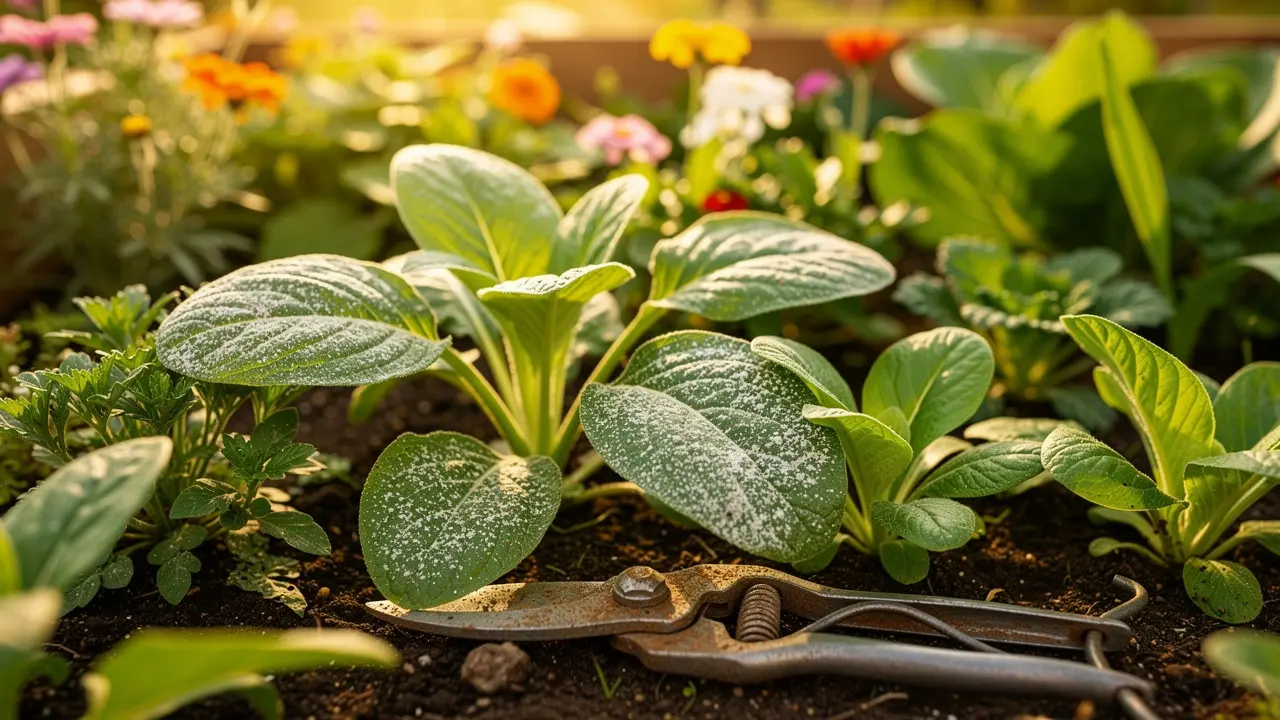
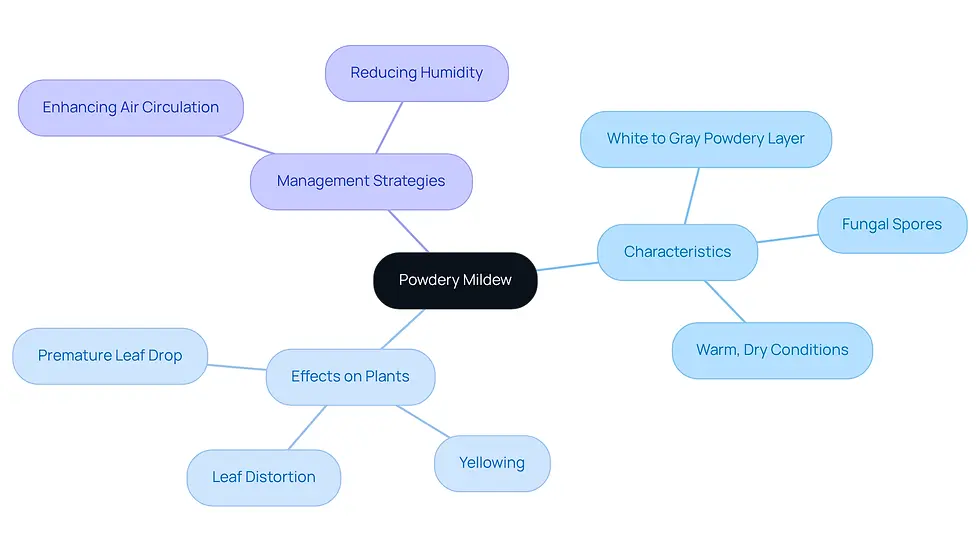
Imagine watching your beloved plants wilt and suffer due to a hidden enemy, robbing them of their vitality. Understanding what causes powdery mildew is essential, as it is a fungal condition that manifests as a white to gray powdery layer on the surfaces of leaves, stems, and flowers. This coating, made up of fungal spores and mycelium, can severely impact the health of your plants. It thrives in warm, dry conditions and can affect a wide range of host plants, including ornamental flowers, vegetables, and turf grasses. You can spot this unwelcome guest by its telltale dusty appearance on the leaves, a sign that your plants need your attention.
As the infection progresses, it may lead to leaf distortion, yellowing, and premature leaf drop. Recognizing the signs early can truly make a difference in how effectively you can protect your plants. If left unchecked, this fungal menace can lead to irreversible damage, leaving your garden in disarray. Homeowners in southern Minnesota have successfully managed fungal growth by regularly monitoring their plants and implementing cultural practices, such as enhancing air circulation and reducing humidity around vulnerable vegetation.
Understanding what causes powdery mildew is crucial, as it is estimated that around 2.9% of identified angiosperm species are hosts for this pathogen, emphasizing the importance of vigilance in preserving your garden's health. As Jay W. Pscheidt wisely notes, "Understanding the life cycle of a powdery fungus can offer significant insights into epidemiology and control of ailments." Staying informed and proactive can make all the difference in preserving the beauty and health of your garden.
Explore Conditions Favoring Powdery Mildew Development
Have you noticed a white, powdery substance on your plants, which is often what causes powdery mildew? It could be a sign of what causes powdery mildew, which is a serious fungal issue that thrives in specific conditions. Understanding what causes powdery mildew involves recognizing that it flourishes in moderate temperatures between 60°F and 80°F (approximately 15.5°C to 26.7°C) and elevated humidity levels. This condition is particularly common in shaded areas with limited airflow, such as overcrowded gardens or poorly ventilated greenhouses, highlighting what causes powdery mildew. The problem intensifies when warm days are followed by cool nights, which creates a humid microclimate that is linked to what causes powdery mildew and encourages spore germination. In fact, relative humidity levels of 71% to 76% significantly increase the likelihood of disease, highlighting what causes powdery mildew, with ideal conditions for powdery fungus peaking near 85% relative humidity.
Fortunately, there are steps you can take to combat this issue:
Ensuring adequate spacing between your plants can significantly improve air circulation and reduce humidity buildup.
For instance, potted greenery situated in the shade of solar array panels tends to develop more fungus than those basking in full sunlight.
Pruning your plants can also enhance airflow, which can help you understand what causes powdery mildew infestations and further reduce their risk.
As Muhammad Atiq noted, maximum air temperatures between 18.5°C to 20°C can promote the development of these illnesses.
By taking these steps, you can safeguard your garden and ensure a healthy yield, free from the threat of powdery mildew.

Identify the Fungi Behind Powdery Mildew
Have you ever noticed a white, powdery coating on your plants and wondered what causes powdery mildew and what it could mean for their health? To understand what causes powdery mildew, it's important to know that it comes from a group of fungi in the Erysiphaceae family, including familiar names like Erysiphe, Podosphaera, and Sphaerotheca. This means that if you’re not careful, your plants could be at risk from specific fungi that thrive on them. Knowing which fungi are affecting your plants can help you manage them better, as different types may need different approaches.
These fungi have a fascinating lifecycle, reproducing both asexually through conidia and sexually, creating resting spores that can survive tough conditions. This ability to survive and spread can be frustrating for gardeners, but understanding it can help you take control.
It’s surprising to learn that fungal infections impact over 10,000 types of plants, showing just how widespread their influence can be. This can be disheartening for gardeners, but understanding these challenges can empower you to take action and protect your plants. For instance, identifying specific fungal species can guide you toward targeted management strategies, like using resistant varieties or biocontrol agents such as Ampelomyces quisqualis, which has shown effectiveness against resistant pathogens. Additionally, various control treatments, including botanical essential oils and synthetic oils, have been explored for their effectiveness against fungal infections.
Fungal disease made its way to England from North America in 1845, spreading across Europe and reminding us of the importance of staying informed about its impact on our gardens. By identifying the specific fungi and their host preferences, you can take proactive steps to ensure your garden thrives, bringing you peace of mind and a bountiful harvest.

Analyze Factors Influencing Powdery Mildew Spread
Fungal diseases can spread quickly, leaving homeowners feeling overwhelmed and uncertain about how to protect their plants. The spread of fungal disease is significantly influenced by environmental factors, vegetation density, and the presence of susceptible host species. Fungal spores can travel far on the wind. This means homeowners need to pay attention to local wind patterns to protect their plants. High humidity levels and warm temperatures create an ideal environment for spore germination and infection, with optimal conditions typically ranging between 68 and 77 degrees Fahrenheit. In fact, the time from infection to new spore production can be as short as seven days. Without timely action, homeowners risk rapid spread of the disease, underscoring the urgency of effective management strategies.
Crowded arrangements can worsen fungal outbreaks by restricting airflow, which is essential for drying leaves and lowering moisture around the vegetation. Research has shown that maintaining proper vegetation density through adequate spacing and regular pruning can significantly reduce the risk of infection. Homeowners are encouraged to choose resistant varieties and monitor weather conditions closely, adjusting care routines accordingly to understand what causes powdery mildew and mitigate its persistent threat. As Michael Bradshaw, an assistant professor of pathology at NC State, points out, managing this organism can be tough. That's why taking proactive measures is so important. Implementing these cultural practices can lead to healthier plants and a more resilient garden environment. By taking proactive steps, you can safeguard your garden and enjoy a thriving landscape.

Conclusion
The threat of powdery mildew can feel overwhelming for any gardener, but understanding its causes can bring peace of mind. This fungal disease, marked by a distinctive white to gray powdery coating on plant surfaces, thrives in warm temperatures and high humidity. By recognizing the signs of powdery mildew and knowing what causes it, you can empower yourself to take action and protect your cherished plants from this common threat.
Key insights from the article emphasize the importance of monitoring environmental conditions that favor powdery mildew development, such as humidity levels and plant density. Strategies like ensuring adequate air circulation, proper spacing, and selecting resistant plant varieties can significantly reduce the risk of infection. Additionally, being aware of the specific fungi responsible for powdery mildew and their life cycles allows you to implement targeted management practices effectively.
Staying vigilant and proactive can make all the difference in keeping your garden healthy and thriving. By taking these steps, you not only protect your garden but also contribute to a community of thriving plant lovers, ensuring a vibrant future for all.
Frequently Asked Questions
What is powdery mildew?
Powdery mildew is a fungal condition that appears as a white to gray powdery layer on the surfaces of leaves, stems, and flowers, made up of fungal spores and mycelium.
What conditions promote the growth of powdery mildew?
Powdery mildew thrives in warm, dry conditions.
What types of plants can be affected by powdery mildew?
A wide range of host plants can be affected, including ornamental flowers, vegetables, and turf grasses.
How can I identify powdery mildew on my plants?
You can spot powdery mildew by its telltale dusty appearance on the leaves, which indicates that your plants need attention.
What are the symptoms of powdery mildew infection?
Symptoms include leaf distortion, yellowing, and premature leaf drop.
What can happen if powdery mildew is left unchecked?
If left unchecked, powdery mildew can lead to irreversible damage to your plants.
How have homeowners in southern Minnesota managed powdery mildew?
Homeowners have successfully managed fungal growth by regularly monitoring their plants and implementing cultural practices, such as enhancing air circulation and reducing humidity around vulnerable vegetation.
Why is it important to understand powdery mildew?
Understanding what causes powdery mildew is crucial because it affects approximately 2.9% of identified angiosperm species, highlighting the need for vigilance in garden health.
What insights can understanding the life cycle of powdery mildew provide?
Understanding the life cycle of a powdery fungus can offer significant insights into its epidemiology and control, helping to manage and prevent plant ailments.
List of Sources
Define Powdery Mildew: Characteristics and Identification
An In-Depth Evaluation of Powdery Mildew Hosts Reveals One of the World’s Most Common and Widespread Groups of Fungal Plant Pathogens | Plant Disease (https://apsjournals.apsnet.org/doi/10.1094/PDIS-07-23-1471-RE)
Powdery mildew is easy to spot, yet tougher to control. Here’s how. (https://chicagotribune.com/2023/08/13/powdery-mildew-is-easy-to-spot-yet-tougher-to-control-heres-how)
Understanding Powdery Mildew in Nurseries and Floriculture (https://ucnfa.ucdavis.edu/news/understanding-powdery-mildew-nurseries-and-floriculture)
Powdery Mildew Presence in Your Garden: How to identify and prevent it (https://extension.sdstate.edu/powdery-mildew-presence-your-garden-how-identify-and-prevent-it)
Powdery Mildew Diseases (https://pnwhandbooks.org/plantdisease/pathogen-articles/common/fungi/powdery-mildew-diseases)
Explore Conditions Favoring Powdery Mildew Development
(PDF) Characterization Of Environmental Conditions Conducive To Powdery Mildew Disease Of Pea (https://researchgate.net/publication/305495162_Characterization_Of_Environmental_Conditions_Conducive_To_Powdery_Mildew_Disease_Of_Pea)
Powdery mildew loves city living - scientists investigate why (https://the-microbiologist.com/news/powdery-mildew-loves-city-living-scientists-investigate-why/3418.article)
Blueberries Beware: Powdery Mildew Spreading Across the Globe (https://news.ncsu.edu/2025/01/blueberries-beware-powdery-mildew)
Effects of Humidity on the Development of Grapevine Powdery Mildew | Phytopathology® (https://apsjournals.apsnet.org/doi/10.1094/PHYTO.2003.93.9.1137)
Effects of humidity on the development of grapevine powdery mildew - PubMed (https://pubmed.ncbi.nlm.nih.gov/18944098)
Identify the Fungi Behind Powdery Mildew
Powdery Mildew - an overview | ScienceDirect Topics (https://sciencedirect.com/topics/agricultural-and-biological-sciences/powdery-mildew)
An In-Depth Evaluation of Powdery Mildew Hosts Reveals One of the World’s Most Common and Widespread Groups of Fungal Plant Pathogens | Plant Disease (https://apsjournals.apsnet.org/doi/10.1094/PDIS-07-23-1471-RE)
An In-Depth Evaluation of Powdery Mildew Hosts Reveals One of the World’s Most Common and Widespread Groups of Fungal Plant Pathogens | Pfister Lab (https://pfistergroup.oeb.harvard.edu/publications/depth-evaluation-powdery-mildew-hosts-reveals-one-world’s-most-common-and)
New records of powdery mildew fungi on stone fruits from India - Scientific Reports (https://nature.com/articles/s41598-025-23119-3)
Analyze Factors Influencing Powdery Mildew Spread
Wine grape season shaping up for powdery mildew (https://farmprogress.com/grapes/wine-grape-season-shaping-up-for-powdery-mildew)
New study traces worldwide spread of powdery mildew (https://thepacker.com/news/produce-crops/new-study-traces-worldwide-spread-powdery-mildew)
Garden Alert! Powdery Mildew Spreads from Monsoon Rains - Signals AZ (https://signalsaz.com/articles/garden-alert-powdery-mildew-spreads-from-monsoon-rains)
The Problem with Powdery Mildew (https://agromagen.com/blogs/news/the-problem-with-powdery-mildew)
Temperature Influences on Powdery Mildew Susceptibility and Development in the Hop Cultivar Cascade | Plant Disease (https://apsjournals.apsnet.org/doi/10.1094/PDIS-10-21-2133-RE)
Blueberries Beware: Powdery Mildew Spreading Across the Globe (https://news.ncsu.edu/2025/01/blueberries-beware-powdery-mildew)