.png)

What Makes the Grass Grow: Nutrients vs. Environmental Factors
- Spring Touch Team

- Apr 25
- 5 min read
Updated: 17 hours ago
Introduction
Many homeowners feel frustrated and confused when their grass doesn’t grow as expected. The health of a lawn often hinges on a delicate balance between essential nutrients and environmental conditions.
Let’s explore how nutrients like nitrogen, phosphorus, and potassium interact with sunlight, soil type, and water availability to affect your lawn’s health. Understanding this relationship can empower you to cultivate a lush, resilient landscape that not only survives but flourishes in the face of seasonal challenges.
With the right knowledge, you can turn your lawn into a vibrant, thriving space that stands strong against seasonal challenges.
Identify Essential Nutrients for Grass Growth
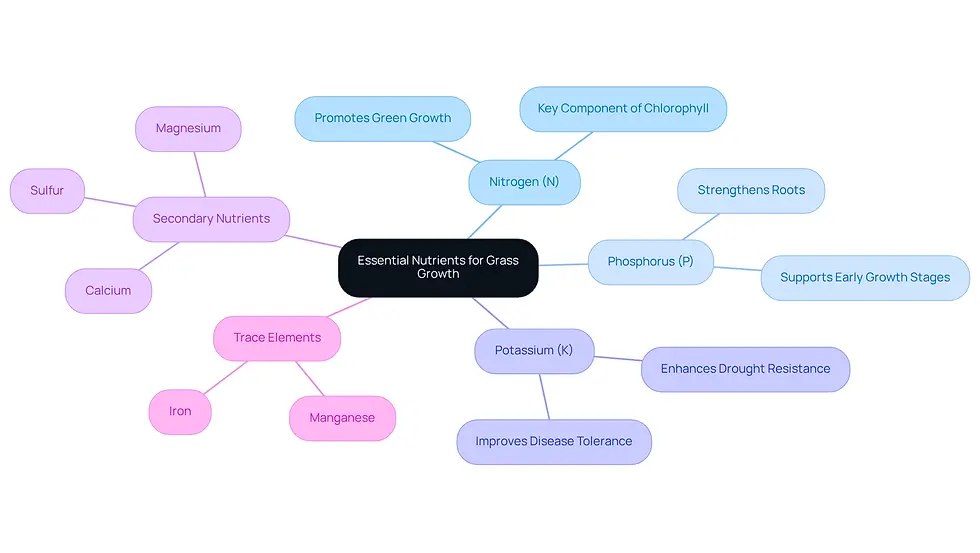
Have you ever wondered why your lawn struggles to thrive, even with regular care? It all comes down to the nutrients it needs. Grass flourishes when it receives a balanced supply of essential nutrients, particularly nitrogen (N), phosphorus (P), and potassium (K), known collectively as NPK. Nitrogen is vital for promoting lush, green growth and is a key component of chlorophyll, which is essential for photosynthesis. Without adequate nitrogen, your lawn may appear dull and lifeless.
Phosphorus plays a crucial role in developing strong root systems, especially during the early growth stages of your turf. If your grass lacks phosphorus, it may struggle to establish itself, leading to weak roots and poor overall health. Meanwhile, potassium contributes to the overall vitality of your plants by enhancing drought resistance and improving disease tolerance. Without sufficient potassium, your lawn may become vulnerable to environmental stresses, leaving it susceptible to damage.
In addition to these primary nutrients, secondary components like calcium, magnesium, and sulfur, along with trace elements such as iron and manganese, are also essential for various physiological processes in turf. Understanding your lawn's unique nutrient needs is key to ensuring it flourishes, especially in the distinct climate of Southern Minnesota.
Successful case studies in the region highlight the importance of tailored nutrient management. By addressing these specific dietary requirements, you can promote not only vibrant lawns but also resilience against environmental challenges. By understanding and addressing these nutrient needs, you can transform your lawn into a resilient and vibrant space that withstands the challenges of its environment.
Examine Environmental Factors Affecting Grass Growth
Have you ever wondered how the environment shapes the health of your lawn? Environmental factors play a crucial role in the growth and vitality of vegetation. Sunlight, water, soil temperature, and soil type are key elements that every homeowner should consider. Sunlight is vital for photosynthesis; most types of turf need at least six hours of direct sunlight each day to thrive, although they can tolerate about 20% shade from trees.
Water availability is equally important, as both overwatering and drought can lead to poor lawn health. With alarming drought conditions reported in early 2026, managing water effectively has never been more critical. It's essential to keep an eye on how much water your lawn receives to ensure it stays healthy and vibrant.
Cool-season plants thrive best when the ground is just the right temperature, ideally between 50°F and 65°F, and they can do well even with less sunlight than you might expect. Additionally, the type of soil-whether sandy, clay, or loamy-affects how well water is retained and how easily essential nutrients are absorbed.
To promote optimal lawn health, consider using Spring Touch's organic-based fertilizer, which replenishes vital nutrients and helps prevent crabgrass. Their customized weed control solutions can also make a significant difference. By understanding these environmental factors and how they impact your lawn, you can create the best conditions for growth, especially in areas with distinct seasonal changes. With the right care and attention, you can enjoy a lush, vibrant lawn that brings peace and beauty to your outdoor space.

Compare Nutrient Needs and Environmental Influences on Grass Health
Have you ever felt frustrated watching your lawn struggle, despite your best efforts? The relationship between your lawn's dietary needs and the environment is crucial for its health. Essential nutrients like nitrogen, phosphorus, and potassium are key to your lawn's growth, but environmental factors can often get in the way. For instance, even if you provide enough nitrogen, your grass might still struggle if the soil is compacted or if it’s not getting enough sunlight. On the flip side, when your soil is well-aerated, it allows roots to access resources more easily, leading to healthier growth.
Changes in temperature and moisture throughout the seasons also affect when and how you should apply fertilizer. In Southern Minnesota, where the weather can shift dramatically, it’s important for homeowners to balance resource management with environmental conditions to keep their lawns thriving. Compacted soil can really hold your lawn back, making it hard for grass to absorb the minerals it needs to grow strong.
When you focus on both nutrients and soil health, you can keep your lawn vibrant and ready to face any environmental challenges.

Conclusion
Achieving a thriving lawn can often feel overwhelming, especially when balancing nutrient needs with environmental factors. While nutrients like nitrogen, phosphorus, and potassium are essential for grass health, the surrounding environment plays a crucial role in how effectively these nutrients are utilized. Without a balanced approach that considers both nutrient management and environmental conditions, even the most well-cared-for lawns can struggle.
The importance of nutrients in promoting growth, root development, and overall vitality of grass cannot be overstated. However, without the right balance, lawns may not reach their full potential. Environmental elements such as:
Sunlight
Water availability
Soil temperature
Soil type
significantly influence how grass absorbs nutrients and withstands stressors. The case studies from Southern Minnesota illustrate how tailored nutrient management can effectively address these environmental challenges.
By embracing a holistic perspective on lawn care, you can harmonize nutrient application with environmental considerations. Understanding the dual importance of nutrients and environmental factors empowers you to cultivate lush, healthy lawns that enhance your outdoor spaces and contribute to a sustainable ecosystem. By taking proactive steps in both nutrient management and environmental care, you can create a lawn that not only flourishes but also supports the environment around it.
Frequently Asked Questions
What are the essential nutrients for grass growth?
The essential nutrients for grass growth are nitrogen (N), phosphorus (P), and potassium (K), collectively known as NPK.
Why is nitrogen important for grass?
Nitrogen is vital for promoting lush, green growth and is a key component of chlorophyll, which is essential for photosynthesis. Without adequate nitrogen, grass may appear dull and lifeless.
What role does phosphorus play in grass health?
Phosphorus plays a crucial role in developing strong root systems, especially during the early growth stages of turf. A lack of phosphorus can lead to weak roots and poor overall health.
How does potassium benefit grass?
Potassium contributes to the overall vitality of plants by enhancing drought resistance and improving disease tolerance. Insufficient potassium can make lawns vulnerable to environmental stresses.
Are there other nutrients that grass needs besides NPK?
Yes, in addition to NPK, grass also requires secondary components like calcium, magnesium, and sulfur, as well as trace elements such as iron and manganese for various physiological processes.
Why is it important to understand a lawn's unique nutrient needs?
Understanding a lawn's unique nutrient needs is key to ensuring it flourishes, especially in specific climates like Southern Minnesota, where tailored nutrient management can promote vibrant and resilient lawns.
How can tailored nutrient management benefit lawns?
Tailored nutrient management can address specific dietary requirements, promoting not only vibrant lawns but also resilience against environmental challenges.
List of Sources
Identify Essential Nutrients for Grass Growth
newsweek.com (https://newsweek.com/spring-lawn-care-start-now-for-a-greener-year-ahead-11745185)
northpennnow.com (https://northpennnow.com/news/2026/apr/15/why-lawn-fertilization-is-crucial-lets-find-out-more)
Top lawn care tricks for a great spring (https://nbcdfw.com/weather/weather-connection/getting-north-texas-lawns-ready-for-spring-2026/3981558)
nbcnews.com (https://nbcnews.com/select/shopping/best-fertilizers-rcna265520)
farmonaut.com (https://farmonaut.com/blogs/best-fertilizer-for-grass-in-summer-top-picks-2026)
Examine Environmental Factors Affecting Grass Growth
motherjones.com (https://motherjones.com/politics/2026/02/agriculture-land-conversion-grasslands-wetlands-forests-carbon-sinks)
trugreen.com (https://trugreen.com/lawn-care-101/learning-center/turf-grasses/dig-deeper/turf-grass-and-sunlight)
eenews.net (https://eenews.net/articles/heat-drought-and-wildfire-shatter-records-in-the-west)
earth.org (https://earth.org/grasslands-could-shrink-by-half-as-climate-change-intensifies-study-warns)
2026 Spring Homeland | Keeping Soil Healthy Despite Drought (https://tsln.com/news/2026-spring-homeland-keeping-soil-healthy-despite-drought)
Compare Nutrient Needs and Environmental Influences on Grass Health
tynmagazine.com (https://tynmagazine.com/how-lawn-care-practices-influence-soil-health-and-long-term-grass-sustainability)
dtnpf.com (https://dtnpf.com/agriculture/web/ag/news/article/2026/04/20/soil-moisture-concern-us)
stbiologicals.com (https://stbiologicals.com/2026-drought-outlook-and-droughts-effect-on-soil-micronutrients)
thefencepost.com (https://thefencepost.com/news/2026-spring-homeland-keeping-soil-healthy-despite-drought)
pmc.ncbi.nlm.nih.gov (https://pmc.ncbi.nlm.nih.gov/articles/PMC12223407)


