.png)

Create Your Fall Lawn Care Schedule: A Step-by-Step Guide
- Spring Touch Team

- 2 hours ago
- 9 min read
Introduction
As winter approaches, many homeowners worry about how to protect their lawns from the harsh elements ahead. Establishing a fall lawn care schedule is not just a seasonal chore; it’s a vital strategy for ensuring a lush, healthy yard come spring.
Let’s explore a step-by-step approach to fall lawn care that can help strengthen your lawn’s roots, ward off disease, and boost its resilience for the coming spring.
What challenges could you face as winter approaches, and how can you tackle them to ensure your landscape thrives?
Understand the Importance of a Fall Lawn Care Schedule
As winter approaches, many homeowners worry about the health of their lawns, especially in southern Minnesota's challenging climate. Implementing a fall lawn care schedule is essential for preserving a healthy yard during the winter season. Here are key reasons to prioritize your fall lawn care:
Root Development: Without proper care, your lawn may struggle to survive the winter, leading to patchy growth and increased weed problems in the spring. The fall lawn care schedule is the prime time for grass to establish deep roots, which are crucial for surviving harsh winter conditions. Core aeration plays a vital role in this process by pulling thousands of plugs from your grass, creating holes 2-3 inches deep that allow seed to make direct contact with the soil. This leads to dramatically higher germination rates, as the seed is protected from wind and runoff, and moisture is preserved where roots need it most. A Winterizer treatment enhances this process, promoting stronger root systems that can withstand cold stress. A fall lawn care schedule that includes applying pre-emergent herbicides during autumn effectively prevents winter weeds from sprouting in spring, reducing competition for nutrients and water. Additionally, Spring Touch's late-fall application of fertilizer with dandelion and broadleaf weed control removes late-season weeds and boosts your lawn for spring. Applying fertilizer in the autumn as part of a fall lawn care schedule supplies vital nutrients that promote strong development and endurance against winter stress. Research from the University of Massachusetts Extension suggests that nutrients taken in during autumn are stored in the root system, resulting in more robust early spring development.
Disease Prevention: Regular upkeep, including leaf removal and suitable watering, helps prevent mold growth and other turf diseases. Proper fall care can mitigate diseases that thrive in cooler, damp conditions.
By adhering to a fall lawn care schedule now, you set your lawn up for a vibrant and healthy spring, free from the stress of winter damage. Implementing a structured garden care calendar simplifies maintenance tasks, ensuring that all necessary care is provided efficiently.

Develop Your Step-by-Step Fall Lawn Care Plan
As the leaves begin to fall, many homeowners worry about how to keep their lawns healthy through the winter months. Creating a comprehensive fall lawn care schedule can ease those concerns and ensure your yard thrives.
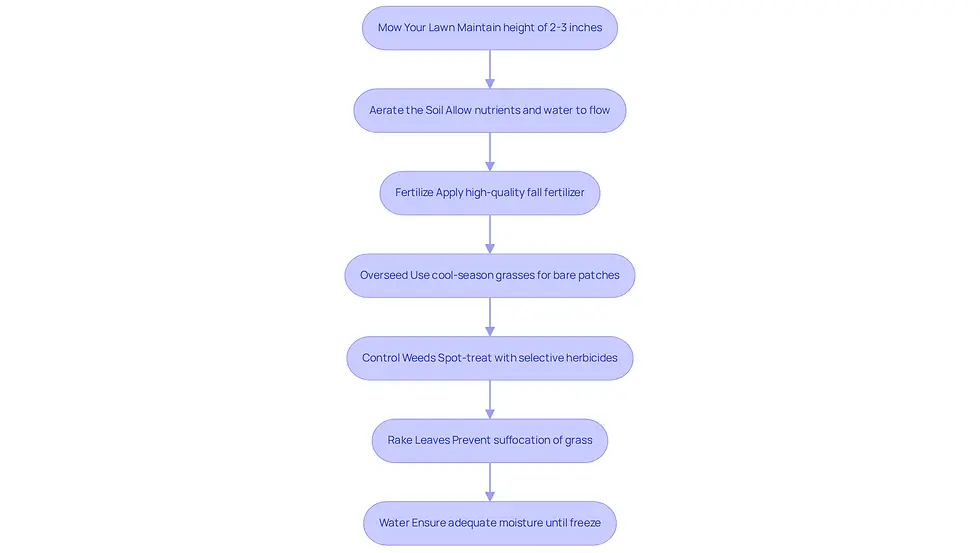
Mow Your Lawn: Continue mowing until vegetation growth ceases, maintaining a height of 2 to 3 inches. This height helps prevent winter diseases by allowing sunlight to reach the grass while minimizing matting from fallen leaves.
Aerate the Soil: Imagine your lawn struggling to breathe; aeration helps it regain that vital breath, allowing nutrients and water to flow freely. Spring Touch provides a sophisticated liquid aeration service that reaches 6-8 inches into the soil and encompasses 100% of your yard, leaving behind no plugs. Aim to aerate your grass in early to mid-fall, allowing new roots to establish before winter.
Fertilize: By fertilizing now, you’re giving your grass the strength it needs to withstand the cold and emerge stronger in spring. Apply a high-quality fall fertilizer rich in potassium about 3-4 weeks before the first expected frost. This application enhances root systems and readies the grass for the cold months ahead, ensuring improved resistance to drought and disease. Consider using organic-based fertilizers with bio-solids and crabgrass preventer, which restore nutrients and help prevent weed development.
Overseed: If your yard has bare patches, overseed in early fall with cool-season grasses like Fescue or Kentucky bluegrass. This encourages dense growth before winter, assisting in crowding out weeds and improving grass density. Keep overseeded areas evenly moist for 2-3 weeks to promote germination.
Control Weeds: Spot-treat any persistent weeds with selective herbicides before the first hard freeze. Spring Touch's applications target dandelions and broadleaf weeds, ensuring that your lawn remains healthy and vibrant. This proactive method stops weeds from taking root and competing with your lawn in the spring.
Rake Leaves: Regularly remove fallen leaves to prevent suffocation of the grass and reduce the risk of mold. If your yard is more than 50 percent covered by leaves, consider raking and bagging them instead of mulching. Remember, mulching leaves with a grass cutter is equivalent to adding a round of fertilizer to your soil every time you mow.
Water: Ensure your grass receives adequate moisture until the ground freezes, especially during dry spells. Watering is essential for newly overseeded areas to promote germination and establish healthy roots. Additionally, if your soil is too acidic, consider applying lime, or if it is too alkaline, add sulfur to adjust the pH for optimal grass growth.
By adhering to a fall lawn care schedule, you’re not just preparing for winter; you’re nurturing a vibrant landscape that will thrive come spring. Appropriate autumn yard care practices lead to a healthier, more vigorous spring growing season.
Utilize Tools and Resources for Effective Lawn Care
As autumn approaches, many homeowners face the daunting task of preparing their lawns for the colder months ahead by adhering to a fall lawn care schedule. To make this process smoother, having the right tools can truly make a difference.
A dependable lawn mower can really ease your mind when it comes to keeping your grass at the right height. During the growing season, you’ll want to cut your grass weekly. If you have a larger yard, consider a self-propelled or riding mower. For smaller areas, a push or reel mower might be just what you need.
Another essential tool is an aerator. Renting or purchasing a core aerator can help alleviate soil compaction, which is vital for encouraging healthier turf growth. It allows air, water, and nutrients to penetrate the soil more effectively, giving your lawn the boost it needs.
Don’t forget about a fertilizer spreader. Whether you choose a broadcast or drop spreader, it ensures even distribution of fertilizer and seed, which is crucial for achieving uniform coverage and optimal turf health.
A sturdy rake is also important for removing leaves and debris, which is essential in your fall lawn care schedule, especially when leaf buildup can suffocate your grass. Keeping your lawn clear will help it thrive.
Additionally, having weed control products on hand is wise. Spot treatments with herbicides can help manage persistent weeds that compete with your grass for nutrients and water, ensuring your lawn stays healthy.
Watering equipment, like a hose or sprinkler system, is essential for maintaining moisture levels, particularly during dry spells. This will help keep your grass vibrant and healthy.
Lastly, don’t hesitate to reach out to the University of Minnesota Extension for personalized advice and seasonal tips that can help you tackle the unique challenges of your local climate.
With the right tools and knowledge, you can transform your lawn care routine into a rewarding experience by following a fall lawn care schedule that brings peace of mind and beauty to your outdoor space.

Troubleshoot Common Fall Lawn Care Challenges
Even with the best intentions, a fall lawn care schedule can present unexpected hurdles that leave you feeling overwhelmed. Here are some common issues and effective troubleshooting strategies to help you navigate them with confidence:
Weed Overgrowth: If you find that your weed treatments aren't working, it can be disheartening. Consider adjusting your herbicide application timing, as autumn applications often yield better results than those in spring. Make sure you're targeting the right types of weeds, like broadleaf perennials such as dandelions and clover, which remain active in early fall.
Thin or Bare Patches: If overseeding hasn't brought the results you hoped for, it can be frustrating. Take a moment to check for soil compaction or drainage issues. Aerating the grass can relieve compaction and improve water penetration. Modify the soil as needed before reseeding to create a welcoming environment for new grass to thrive.
Fungal Diseases: Brown patches or mold can signal fungal problems. To help your lawn breathe better, make sure you're mowing at the right height-generally between 2.5 to 4 inches-and rake leaves regularly to prevent moisture buildup. If issues persist, consider applying a fungicide to effectively manage the disease.
Inadequate Watering: A dry lawn may indicate improper watering practices. Make sure you're giving your lawn a good drink, but do it deeply and less often, which encourages deep root development. Adjust your watering schedule based on recent rainfall to avoid over or under-watering.
Nutrient Deficiency: If your lawn is looking a bit off or struggling to grow, perform a soil test to assess nutrient levels. Based on the results, amend the soil with the right fertilizers tailored to your grass type, ensuring optimal health and growth.
By taking these proactive steps outlined in your fall lawn care schedule, you can nurture your lawn's resilience, ensuring it thrives through the changing seasons.

Conclusion
As the seasons change, the urgency to prepare your lawn for winter becomes clear; a well-planned fall care schedule is your best ally for a vibrant spring. By prioritizing essential tasks such as:
Mowing
Aerating
Fertilizing
Overseeding
you’re not just caring for your lawn; you’re building a strong defense against winter’s challenges and keeping weeds at bay. This approach not only enhances your lawn's resilience but also ensures it’s well-prepared to thrive when spring arrives.
We’ve explored essential strategies to simplify your fall lawn care journey, making it easier for you to achieve a thriving lawn. From understanding the importance of root development to utilizing the right tools, each step contributes to a comprehensive plan that fosters lawn health. The emphasis on timely actions, like applying fertilizers and controlling weeds, highlights how proactive care during this critical season can make all the difference.
Ultimately, neglecting these steps now could mean facing a lackluster lawn come spring, so take action today for a thriving outdoor space tomorrow. Embrace these practices, and you’ll be rewarded with a lush and healthy lawn, ready to greet the warmth of spring with renewed vigor.
Frequently Asked Questions
Why is a fall lawn care schedule important?
A fall lawn care schedule is essential for preserving a healthy yard during winter, as it helps establish deep roots, prevents winter weeds, and promotes strong development for spring.
How does fall lawn care contribute to root development?
Fall lawn care allows grass to establish deep roots, which are crucial for surviving winter. Core aeration creates holes in the soil that enhance seed germination and moisture retention, while a Winterizer treatment promotes stronger root systems.
What role do pre-emergent herbicides play in fall lawn care?
Pre-emergent herbicides applied during autumn effectively prevent winter weeds from sprouting in spring, reducing competition for nutrients and water.
How does fertilizing in the fall benefit the lawn?
Applying fertilizer in the autumn supplies vital nutrients that promote strong root development and endurance against winter stress, leading to more robust growth in early spring.
What maintenance tasks can help prevent lawn diseases in the fall?
Regular upkeep, including leaf removal and appropriate watering, helps prevent mold growth and other turf diseases that thrive in cooler, damp conditions.
What is the overall benefit of following a fall lawn care schedule?
Following a fall lawn care schedule sets the lawn up for a vibrant and healthy spring, minimizing the stress of winter damage and simplifying maintenance tasks.
List of Sources
Understand the Importance of a Fall Lawn Care Schedule
Preparing Your Lawn for Winter: Essential Tips for a Healthy Spring | Jonathan Green (https://jonathangreen.com/resources/preparing-your-lawn-for-winter)
7 Must-Do Tasks in Your Fall Lawn Care Schedule for a Healthy Lawn (https://us.mammotion.com/blogs/news/fall-lawn-care-schedule?srsltid=AfmBOoqcI1Bk2I_0F3QDvfXlY9DL_dxxOQtZBJeuHDteg7MaFgpI0p1o)
Fall Lawn Care Calendar—Minnesota: Seasonal Tips & Schedule | bioLawn (https://getbiolawn.com/fall-lawn-care-calendar-for-minnesota)
Transitioning Lawn Care from Autumn to Winter (https://fairwaylawns.com/transitioning-lawn-care-from-autumn-to-winter)
Benefits of a Winterizer Treatment for Your Lawn in Fall - Brooklawn Services (https://brooklawnservices.com/benefits-of-a-winterizer-treatment-for-your-lawn-in-fall)
Develop Your Step-by-Step Fall Lawn Care Plan
Fall Yard Care Tips: Everything You Need to Know (https://mwmo.org/learn/preventing-water-pollution/fall-yard-care)
Lawn Care in Fall: 8 Essential Tips for a Healthy, Winter-Ready Lawn | TruGreen (https://trugreen.com/lawn-care-101/blog/lawn-care/fall-lawn-care-tips-for-winter)
Year Round Lawn Care Schedule and Tips For Maintaining Your Lawn | ScottsMiracle-Gro US (https://scottsmiraclegro.com/en-us/learn/lawn-care/your-seasonal-guide-to-a-lush-lawn.html)
Fall Lawn Care Schedule: The Complete Month-by-Month Checklist (https://whatgrassisthis.com/blog/fall-lawn-care-schedule-checklist)
Utilize Tools and Resources for Effective Lawn Care
Updated for 2025/2026 Top Lawn Care Tools You Need for Fall Clean-Up (https://trigreenequipment.com/top-lawn-care-tools-you-need-for-fall-clean-up?srsltid=AfmBOorU2_g37XFJje1im6eP7c7OYgY7LFqz09-MTwGNfj0eutBfJZhs)
Essential Lawn Care Tools for Every Homeowner (https://lawnlove.com/blog/essential-lawn-care-tools)
6 Essential Lawn Care Tools for Homeowners (https://lawnstarter.com/blog/lawn-care-2/essential-lawn-care-tools-for-homeowners)
The Complete Guide to Fall Lawn Care 2026 (https://navimow.com/blogs/lawn-care/fall-lawn-care)
Troubleshoot Common Fall Lawn Care Challenges
Avoid These 4 Fall Lawn Care Mistakes (https://limbwalkertree.com/blog/avoid-these-4-fall-lawn-care-mistakes)
Tackling Garden Weeds in Fall (https://preen.com/learn/lawn-garden-tips/weed-control/get-rid-of-weeds/tackling-garden-weeds-in-fall)
New Survey Unveils the Truth Behind Lawn Care Maintenance Habits | Tractor Supply Co. (https://tractorsupply.com/tsc/cms/life-out-here/insights-surveys/new-survey-unveils-the-truth-behind-lawn-care-maintenance-habits)
5 Things You’re Probably Doing This Fall That Are Bad for Your Lawn—and What to Do Instead (https://thespruce.com/fall-tasks-ruining-your-lawn-11814858)
Ask the Expert: Best Practices for Fall Weed Control - Central Pro Supply (https://centralpros.com/ask-the-expert-best-practices-for-fall-weed-control)


