.png)

10 Best Practices for Your Lawn Care Routine This Season
- Spring Touch Team

- 8 hours ago
- 14 min read
Introduction
Many homeowners feel overwhelmed by the constant battle against weeds and pests, unsure of how to achieve the lawn of their dreams. You might be struggling with soil health, pest management, and the changing seasons, feeling like your efforts are never enough. But what if I told you that with just a few simple changes, your lawn could not only survive but truly thrive, becoming a beautiful oasis for you and your family? Let’s explore the key strategies that can help you tackle these common issues and create the lawn you’ve always wanted.
Assess Soil Health and Prepare for Planting
Are you worried about your lawn's health this summer? Begin your lawn care routine with a ground test to assess pH levels and nutrient content. You can use a DIY kit or submit samples to a local extension service. The results will guide you in modifying the ground with organic matter, lime, or sulfur to achieve the right pH and nutrient balance.
This foundational step is vital for a successful lawn care routine. Good soil conditions directly impact grass growth and health, especially in southern Minnesota's unique climate. Make sure to till the soil to a depth of 4-6 inches and remove any debris. This creates an optimal setting for seed germination.
To further enhance your yard's health, consider Spring Touch Lawn & Pest Control's first application of organic-based fertilizer with bio-solids and crabgrass preventer. This treatment helps your lawn by adding nutrients and keeping crabgrass at bay this summer. Following this, the second application focuses on dandelions and broadleaf weeds, along with grub control, ensuring comprehensive care for your yard.
Remember, the optimal pH for most cultivated plants is between 6.0 and 6.8. Soil pH is a key factor in determining plant health because it directly affects nutrient availability. If the pH falls outside this range, your grass may struggle to thrive, leading to poor health.

Choose the Right Grass Seed for Your Environment
Are you struggling to find the right grass seed for your lawn in Minnesota's unpredictable climate? Selecting the appropriate grass seed is essential for achieving a healthy lawn. Kentucky bluegrass stands out for its vibrant appearance and ability to thrive in cold weather. It thrives in well-drained soil but needs a consistent lawn care routine. On the other hand, tall fescue is known for its drought resistance and adaptability, making it a great choice for various ground types and conditions.
Think about what your lawn will be used for - whether it’s for family fun or simply to enhance your home’s beauty. This will guide your choice. For shaded areas, fine fescue blends are often more suitable due to their shade tolerance and low maintenance requirements.
Take a moment to check the seed label for purity and germination rates; it makes a real difference in your lawn's success. By making informed choices as part of your lawn care routine, you can cultivate a lawn that not only survives but thrives, bringing joy and beauty to your outdoor space.

Implement Effective Watering Techniques
Maintaining a vibrant yard can feel overwhelming, especially with the unique climate challenges we face in southern Minnesota. You need to water thoroughly but infrequently, aiming for about 1 to 1.5 inches of moisture each week, including rainfall. Early morning is the best time to water, as it reduces evaporation and minimizes the risk of fungal diseases that can thrive in our humid summers. If you've recently established grass areas, they may need more frequent watering - ideally 2 to 4 times daily - to promote healthy root growth.
It's important to be mindful of overwatering, as it can weaken your grass and lead to shallow root systems, making your yard more vulnerable. Using a rain gauge is a simple way to keep track of how much water your yard is getting, allowing you to adjust your watering schedule based on recent rainfall. To make watering easier and more effective, think about using a drip irrigation system or soaker hoses. These methods deliver water right to the roots, helping your grass thrive even in tough conditions.
Plus, consider enhancing your watering routine with an organic-based fertilizer from Spring Touch Lawn & Pest Control. It replenishes essential nutrients and helps keep your grass healthy and weed-free all season long. By adopting these practices, you can cultivate a yard that not only survives but thrives, bringing beauty and joy to your home.

Follow Proper Mowing Practices for Optimal Growth
Are you worried about your lawn's health in southern Minnesota? To achieve optimal lawn health, mow your turf at a height of 3 to 3.5 inches, depending on the species, like Kentucky bluegrass or fescues. Finding the right mowing height can be a challenge, but it’s crucial for keeping your lawn healthy and thriving. Try not to cut more than a third of the grass blade at once; this helps your lawn stay strong and healthy. Sharp mower blades make a big difference; they ensure clean cuts that keep your grass looking vibrant and healthy.
Switching up your mowing pattern can make a big difference; it helps keep the soil healthy and encourages your grass to grow tall and strong. Mowing regularly not only keeps your lawn looking great but also helps it grow thicker, making it tougher against weeds. In the busy spring and fall seasons, you might need to mow once or twice a week to keep your lawn in top shape.
Raising your mowing height by an inch in the summer can really help your lawn handle the heat better. Mowing when the grass is dry helps prevent soil compaction and keeps your lawn looking its best.
Key Steps for Lawn Care:
Mow at the Right Height: Maintain turf at 3 to 3.5 inches.
Avoid Overcutting: Never cut more than one-third of the grass blade.
Keep Blades Sharp: Ensure clean cuts to prevent disease.
Vary Mowing Patterns: Alternate directions to reduce compaction.
Mow Regularly: During peak seasons, mow once or twice a week.
Adjust Height in Summer: Raise mowing height to combat heat stress.
Mow When Dry: Prevent ground compaction and tearing.
To further enhance your yard's health, consider adding Spring Touch Lawn & Pest Control's organic-based fertilizer with bio-solids and crabgrass preventer to your lawn care routine, which restores nutrients and prevents crabgrass from overtaking your space this summer. Proper lawn preparation, including aeration, is essential for successful seed germination, particularly in Minnesota's clay soils. Aeration allows for better seed-to-soil contact, promoting healthier growth. Continue mowing until the vegetation stops growing in the fall, typically around the end of October. By following these steps, you can cultivate a lawn that not only looks great but thrives through every season.

Fertilize for Health and Growth
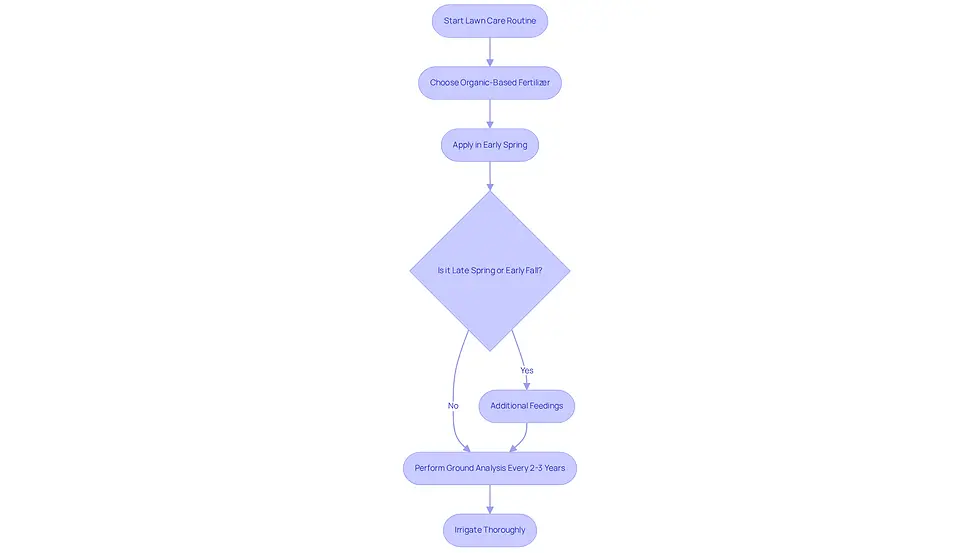
Many homeowners struggle to keep their lawns vibrant and healthy as part of their lawn care routine, especially with the threat of crabgrass looming in the summer months. To combat this, it is essential to include a balanced organic-based fertilizer in your lawn care routine during the active growing period, starting in early spring when the grass begins to wake up from dormancy. Spring Touch Lawn & Pest Control recommends an organic-based fertilizer that includes bio-solids and crabgrass preventer. This not only replenishes vital nutrients but also helps prevent crabgrass from taking over your yard this summer.
Look for a fertilizer that has a higher nitrogen content; it’s key for promoting lush growth and vibrant color in your grass. After the initial application, consider additional feedings in late spring and early fall as part of your lawn care routine to keep your lawn thriving and ready for seasonal changes. It’s also wise to perform a ground analysis every 2-3 years to ensure your grass gets the specific nutrients it needs.
After fertilization, always irrigate your lawn thoroughly to help the nutrients seep into the ground effectively. Just be careful not to over-fertilize, as this can lead to fertilizer burn; always follow the package directions for application. By choosing the right organic treatments, you can cultivate a thriving lawn that not only looks beautiful but also supports the environment.
Control Weeds to Maintain Lawn Aesthetics
Weeds can quickly take over your yard, making it difficult to maintain a beautiful outdoor space. Regular inspections are key to effective weed management, especially in southern Minnesota's unique climate. If you spot weeds, don’t wait-remove them right away. For small patches, hand-pulling is effective, but larger areas might need herbicides to tackle the problem.
Applying pre-emergent herbicides in early spring can be a game-changer, stopping weed seeds before they even have a chance to sprout and ensuring your yard is well-protected. At Spring Touch Lawn & Pest Control, we recommend our organic-based fertilizer with bio-solids and crabgrass preventer as part of your first application this spring. This treatment not only nourishes your soil but also keeps crabgrass at bay, allowing your yard to thrive throughout the summer.
A healthy lawn care routine that includes regular mowing, watering, and fertilization is key; lush grass can outcompete weeds for nutrients and sunlight. Using mulch in your garden beds can be a simple yet effective way to keep weeds at bay and maintain a tidy appearance. As Dr. Jim Brosnan wisely points out, "It’s always much harder to get rid of weeds than to keep them from appearing in the first place."
Taking these proactive steps not only beautifies your garden but also strengthens its health and resilience for the long haul. And if you’re a new client, take advantage of your complimentary first application when you sign up for our comprehensive yard care programs!
Manage Pests and Diseases Responsibly
Are you worried about the health of your garden? Regularly checking for signs of pests and diseases, like discoloration or unusual growth patterns, is crucial to keeping your plants healthy. You might feel overwhelmed by the thought of pests invading your garden, but implementing integrated pest management (IPM) strategies can help. This includes simple practices like:
Proper watering
Mowing
Biological controls that work in harmony with nature
If you find that chemical treatments are necessary, remember to choose targeted products and apply them carefully according to label instructions. This responsible approach not only protects your plants but also minimizes harm to beneficial organisms, ensuring a healthier ecosystem for your garden. By taking these steps, you can ensure your garden thrives, bringing you peace of mind and joy.

Incorporate Aeration and Dethatching into Your Routine
To maintain a thriving yard, it's essential to aerate at least once a year, ideally in the autumn or spring when your plants are actively growing. Core aeration involves using a machine to extract small plugs of earth. This process allows air, water, and nutrients to reach the roots more effectively, nurturing your plants. This is especially important for turf in southern Minnesota, where compacted soil and thatch buildup can create challenges for your plants to thrive. In fact, excessive thatch, defined as a layer exceeding half an inch, can result in your grass struggling to absorb water effectively, making it more vulnerable to diseases.
If thatch buildup is significant, dethatching may be necessary. You can accomplish this using a dethatching rake or machine, which removes the excess thatch and promotes healthier grass growth. By regularly aerating and dethatching, you’re not just helping your grass bounce back; you’re also boosting its overall health, making it more capable of withstanding environmental stresses. By incorporating these practices into your lawn care routine, you can create a lush, vibrant outdoor space that flourishes through every season.

Adapt Lawn Care Tasks to Seasonal Changes
As the seasons change, so do the needs of your yard, presenting both challenges and opportunities for growth. In spring, focus on essential cleanup tasks, like removing debris and dead plant matter, to prepare your yard for new life. Think of aeration as a gentle wake-up call for your lawn, helping it breathe and thrive as it prepares for growth. To kickstart your yard care, consider Spring Touch Lawn & Pest Control's organic-based fertilizer with bio-solids and crabgrass preventer. With this treatment, you’re not just feeding your lawn; you’re nurturing it, keeping pesky crabgrass at bay and paving the way for a vibrant summer landscape.
As summer approaches, adjust your watering schedule to prevent drought stress. As summer heat sets in, your grass might take a little nap; mowing higher helps it stay cozy and hydrated, ready to bounce back when the cooler days arrive. Regular monitoring for pests, like grubs and fungal diseases, is essential; keep an eye out for them, as being proactive now can save you from bigger headaches later on. Spring Touch Lawn & Pest Control has been assisting homeowners in Jordan and nearby regions in attaining beautiful, pest-free yards for more than 50 years, with over 1,320 five-star reviews to support their expertise.
In fall, prepare your lawn for winter by overseeding thinning areas and applying a final fertilizer treatment. This helps grass store carbohydrates, enhancing its resilience against harsh winter conditions. The University of Minnesota recommends seeding from early August to late September, ensuring optimal growth before the frost.
Every season brings its own set of challenges and chances for your garden to shine; adapting your care routine can make all the difference. Additionally, assessing winter damage in spring is important to identify any issues that need addressing. By adhering to a seasonal checklist and taking into account Spring Touch Lawn & Pest Control's expert services, homeowners can guarantee a flourishing yard throughout the year, adjusting their strategies to the particular requirements of their grass varieties and local climate conditions. Don't forget, new clients can enjoy their first application at no cost when enrolling in comprehensive yard care, mosquito management, or pest management programs. By embracing seasonal care, you can cultivate a yard that thrives, bringing joy and beauty to your home all year round.

Commit to Ongoing Lawn Maintenance
Are you feeling overwhelmed by the demands of maintaining a beautiful yard? Creating a regular lawn care routine can truly help keep your green space healthy and vibrant. This schedule should encompass key activities such as mowing, watering, fertilizing, and pest management. Many homeowners feel overwhelmed by the demands of yard care, leading to frustration and neglect of their green spaces. Spring Touch Lawn & Pest Control offers an organic-based fertilizer with bio-solids and crabgrass preventer, perfect for the first application in spring. This treatment helps nourish your lawn while keeping crabgrass at bay, ensuring your yard stays beautiful all summer long.
Here’s how you can easily apply the organic-based fertilizer and crabgrass preventer to get the best results:
Mow your grass to a height of 2.5 to 3 inches before application.
Ensure the grass is dry to allow for better absorption.
Use a spreader to evenly distribute the fertilizer, following the manufacturer's instructions for the correct amount.
Water the grass lightly after application to help activate the treatment.
Keeping a detailed log of these activities allows you to track progress, identify areas needing improvement, and adjust practices accordingly. Participating in local garden care communities or resources can offer valuable ongoing education and support, especially in tackling the unique challenges presented by Minnesota's climate and soil conditions. As one expert noted, "Keeping up with regular maintenance can help you avoid common issues like browning grass and pest infestations." By committing to this routine, you can ensure your garden flourishes throughout the seasons, reflecting the unique challenges and conditions of Minnesota's climate.
Additionally, being aware of potential grass diseases, such as Red Thread and Dollar Spot, can help you take proactive measures. Steering clear of typical mistakes, like overlooking seasonal adjustments or neglecting to track grass health, can further improve the effectiveness of your care efforts. Ultimately, a dedicated lawn care routine enhances the beauty of your outdoor space while also contributing to the overall health and value of your property. With a little dedication, your yard can become a source of pride and joy, enhancing both your home and your well-being.

Conclusion
Understanding your lawn's unique needs can feel overwhelming, especially with the changing seasons and specific climate challenges in southern Minnesota. Imagine the satisfaction of seeing your lawn flourish, knowing you’ve taken the right steps to nurture it through seasonal changes. In southern Minnesota, where the climate can be unpredictable, having local expertise can make all the difference in achieving a thriving lawn.
Regular care, like organic fertilization and smart weed management, can transform your lawn into a lush oasis. These practices not only enhance your lawn's beauty but also its vitality, creating a space you can truly enjoy. Think of aeration and dethatching as a refreshing breath for your lawn, helping it grow strong and healthy all year long.
By staying committed to your lawn’s needs, you’re not just maintaining a yard; you’re creating a beautiful outdoor retreat that adds value to your home and joy to your life. Consider teaming up with Spring Touch Lawn & Pest Control to give your lawn the expert care it truly deserves, ensuring it thrives under your watch. With their family-owned heritage and dedication to quality, you can trust that your lawn is in good hands, making a thriving yard a reality for you.
Frequently Asked Questions
How can I assess the health of my lawn before planting?
Begin your lawn care routine with a ground test to assess pH levels and nutrient content. You can use a DIY kit or submit samples to a local extension service. The results will help you modify the soil with organic matter, lime, or sulfur to achieve the right pH and nutrient balance.
What is the optimal soil preparation for planting grass?
Tilling the soil to a depth of 4-6 inches and removing any debris is essential for creating an optimal setting for seed germination. This foundational step is vital for a successful lawn care routine.
What is the ideal pH range for soil health?
The optimal pH for most cultivated plants is between 6.0 and 6.8. Soil pH is crucial as it directly affects nutrient availability, which impacts plant health.
What types of grass seed are suitable for Minnesota's climate?
Kentucky bluegrass is ideal for its vibrant appearance and cold weather resilience, while tall fescue is known for its drought resistance and adaptability. For shaded areas, fine fescue blends are more suitable due to their shade tolerance.
How can I ensure the grass seed I choose is of good quality?
Check the seed label for purity and germination rates, as these factors significantly influence your lawn's success.
What are effective watering techniques for maintaining a healthy lawn?
Water thoroughly but infrequently, aiming for about 1 to 1.5 inches of moisture each week, including rainfall. Early morning is the best time to water to reduce evaporation and minimize fungal disease risks.
How often should I water newly established grass areas?
Newly established grass areas may require more frequent watering, ideally 2 to 4 times daily, to promote healthy root growth.
What should I consider to avoid overwatering my lawn?
Be mindful of overwatering, as it can weaken grass and lead to shallow root systems. Using a rain gauge can help track water levels and adjust your watering schedule accordingly.
How can I enhance my watering routine?
Consider using a drip irrigation system or soaker hoses to deliver water directly to the roots, which helps your grass thrive even in challenging conditions.
How can Spring Touch Lawn & Pest Control assist with lawn care?
Spring Touch Lawn & Pest Control offers organic-based fertilizers that replenish essential nutrients and help keep your grass healthy and weed-free throughout the season.
List of Sources
Assess Soil Health and Prepare for Planting Soil Health Data - MN Soil Health Coalition (https://mnsoilhealth.org/soilhealthdata) Soil pH and Plant Growth (https://extension.unh.edu/blog/2025/08/soil-ph-plant-growth) Soil Health and New Soil Testing Methods | MN Board of Water, Soil Resources (https://bwsr.state.mn.us/soil-health-and-new-soil-testing-methods) Soil Health & Testing | Scott County, MN (https://scottcountymn.gov/763/Soil-Health-Testing) Soil Monitoring, Could it Become a Thing? - MN Soil Health Coalition (https://mnsoilhealth.org/news/soil-monitoring-could-it-become-a-thing)
Choose the Right Grass Seed for Your Environment Selecting the Best Grass Seed for Your Minnesota Lawn (https://groundfxmn.com/blog/selecting-the-best-grass-seed-for-your-minnesota-lawn) Best Grass Seed for the Midwest (https://lawnstarter.com/blog/lawn-care-2/best-grass-seed-midwest) The Best Grass Seed for Minnesota Lawns (https://lawnlove.com/blog/best-grass-minnesota) 4 Best Grass Seeds for Minnesota Lawns (https://lawnstarter.com/blog/minnesota/best-grass-seed-mn) Finding the right grass seed | Turfgrass Science (https://turf.umn.edu/news/finding-right-grass-seed)
Implement Effective Watering Techniques Healthy Lawns for Healthy Water - MWMO (https://mwmo.org/news/healthy-lawns-for-healthy-water) Frequently Asked Questions (FAQ) | BioLawn (https://getbiolawn.com/maintenance-tips) Tips for Watering Your Lawn in Minnesota | Rainbow Lawncare (https://rainbowlawncare.com/lawn-watering-tips)
Follow Proper Mowing Practices for Optimal Growth Mowing practices for healthy lawns (https://extension.umn.edu/lawn-care/mowing-practices-healthy-lawns) Expert Lawn Mowing Tips for Minnesota Lawns | Rainbow Lawncare (https://rainbowlawncare.com/lawn-mowing-tips) Healthy Lawns for Healthy Water - MWMO (https://mwmo.org/news/healthy-lawns-for-healthy-water) News Flash • Golden Valley, MN (https://goldenvalleymn.gov/CivicAlerts.asp?AID=1183)
Fertilize for Health and Growth When to Fertilize Your Lawn in Minnesota (https://lawnlove.com/blog/when-to-fertilize-lawn-minnesota) Spring Lawn Fertilization: Minneapolis Timing & Tips (https://peterdoranlawn.com/the-ultimate-guide-to-spring-lawn-fertilization-in-minneapolis) Recommended Fertilizers for Minnesota Lawns: What You Need to Know | Supreme Lawn (https://supremelawn.com/recommended-fertilizers-for-minnesota-lawns-what-you-need-to-know) Minnesota Homeowner’s Guide to Lawn Fertilization | Rainbow Lawncare (https://rainbowlawncare.com/fertilization-homeowners-guide) Complete Spring Lawn Care Guide for Minnesota | Green Horizons (https://green-horizons.com/blog/complete-guide-spring-lawn-care-minnesota)
Control Weeds to Maintain Lawn Aesthetics U. Minn. Offers Tips For Pre-Emergence Herbicide Application (https://no-tillfarmer.com/articles/11515-u-minn-offers-tips-for-pre-emergence-herbicide-application) Options for controlling weeds in your lawn this summer | Turfgrass Science (https://turf.umn.edu/news/options-controlling-weeds-your-lawn-summer) How To Control Weeds in Your Lawn (https://usga.org/content/usga/home-page/course-care/green-section-record/63/issue-04/how-to-control-weeds-in-your-lawn-.html) Best practices for postemergence weed control (https://blog-crop-news.extension.umn.edu/2025/06/best-practices-for-postemergence-weed.html) Master Summer Lawn Weed Control: Key Practices for Homeowners (https://springtouchlawn.com/post/master-summer-lawn-weed-control-key-practices-for-homeowners)
Incorporate Aeration and Dethatching into Your Routine Lawn Aeration Explained | Green Stuff LawnWhen Should You Aerate Your Lawn in Minnesota? | Green Stuff Lawn (https://thegreenstufflawn.com/lawn-aeration-explained) Expert Lawn Care Services | BioLawn (https://getbiolawn.com/aeration) Best Time to Aerate and Overseed Your Lawn (https://lawnstarter.com/blog/lawn-care-2/best-time-to-aerate-overseed-lawn) What Are the Benefits of Aerating Your Lawn? (https://lawnstarter.com/blog/lawn-care-2/benefits-aerating-lawn)
Adapt Lawn Care Tasks to Seasonal Changes Complete Spring Lawn Care Guide for Minnesota | Green Horizons (https://green-horizons.com/blog/complete-guide-spring-lawn-care-minnesota) US Lawn Care Consumer Insights Report - The Freedonia Group (https://freedoniagroup.com/industry-study/lawn-care-consumer-insights) Monthly Lawn Care Schedule for Minnesota (https://lawnlove.com/blog/minnesota-lawn-care-schedule) Seasonal Lawn Care Checklist: Tips | HillSide Lawn Service (https://hillsidelawn.com/seasonal-lawn-care-checklist-do-you-know-what-to-do-each-month)
Commit to Ongoing Lawn Maintenance
New Survey Unveils the Truth Behind Lawn Care Maintenance Habits | Tractor Supply Co. (https://tractorsupply.com/tsc/cms/life-out-here/insights-surveys/new-survey-unveils-the-truth-behind-lawn-care-maintenance-habits)
Maximize Your Lawn Care Quotes: The Ultimate Strategy Guide (https://realgreen.com/blog/lawn-care-quote-guide)
ProLawns News | Advanced Lawn Care Programs in the Minneapolis, MN Metro Area (https://prolawnsmn.com/blog/news)


