.png)

Eliminate Cinch Bugs: Steps for a Healthy Lawn
- Spring Touch Team

- Jun 1
- 6 min read
Updated: Jun 28
Introduction
Have you ever stepped onto your lawn, only to discover it under siege by tiny invaders? The southern cinch bug, though small, poses a serious threat to your lawn's health. Early detection and swift action are essential for homeowners who want to protect their vibrant green grass from turning into a patchy brown wasteland. This guide will provide you with the insights you need to:
Identify these pests
Recognize the signs of infestation
Implement effective control measures to restore and maintain a flourishing yard
It's important to consider how our lawn care practices might unintentionally attract these pests.
Understand Cinch Bugs: Identification and Behavior
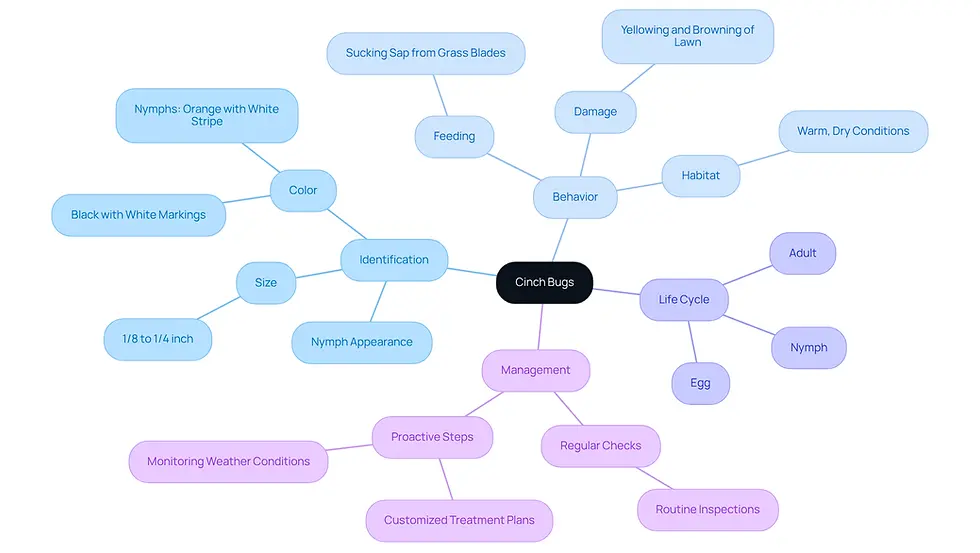
Imagine a beautiful lawn, only to discover it's under attack by tiny pests that can cause significant damage. The southern cinch bug, although small, can wreak havoc on your yard. These pests measure about 1/8 to 1/4 inch in length and are easily recognized by their black bodies with distinctive white markings on their wings. The young nymphs, which are orange with a white stripe, might look harmless, but they can be just as damaging.
These pests thrive in warm, dry conditions and are most active during the summer months. They pierce grass blades to suck out sap, which leads to yellowing and browning of your lawn. Knowing their life cycle - egg, nymph, and adult stages - can really help you manage them effectively.
Regularly checking your garden, especially during peak seasons, is essential for spotting infestations early. With southern insect pests capable of producing multiple generations each year, taking proactive steps now can save your lawn from the devastation of cinch bugs, ensuring it remains lush and vibrant.
Recognize Signs of Infestation: Symptoms to Look For
Have you noticed your grass looking less vibrant lately? Detecting cinch bug infestations early can protect your lawn from serious harm. One of the first signs of a bug issue is often yellowing grass, which can easily be mistaken for drought stress. This confusion can leave you feeling uncertain about how to care for your lawn.
As the infestation worsens, those yellow patches can turn brown and die off completely, leaving your lawn vulnerable to serious damage. This can be disheartening for any homeowner who takes pride in their yard.
You might notice that damage appears in irregular patches, often near sidewalks or driveways where the grass is already stressed. This uneven distribution can be a clear sign that cinch bugs are at work, and it’s crucial to act quickly.
If you suspect pests are lurking, you can easily check by placing a coffee can with both ends removed into the ground and filling it with water. This simple test can reveal if you have a significant infestation that needs your attention.
By regularly checking your yard for these signs, you can catch pests before they cause serious harm. Remember, during peak summer months, populations can soar to 150 to 200 insects per square foot, making vigilance essential for a healthy lawn.
Taking action now can save your lawn and restore its health, giving you peace of mind.

Implement Control Measures: Effective Elimination Techniques
Dealing with a bug infestation can be overwhelming and stressful, leaving you worried about the health of your lawn. Here are [effective control measures](https://www.springtouchlawn.com/post/master-chinch-bug-control-identify-eliminate-and-prevent-inf infestations) to consider:
Watering: Deeply water your lawn before applying any insecticides. This practice ensures that treatments penetrate the soil effectively, reaching the cinch bugs where they reside. Experts agree that adequate watering can significantly enhance the efficacy of treatments.
Insecticides: Consider using a bifenthrin-based insecticide for strong control, or if you prefer something more eco-friendly, neem oil is a great option. As noted by Southern Green USA, "Early accurate diagnosis allows us to implement appropriate control measures before populations explode and cause widespread damage." Be sure to follow the manufacturer's guidelines regarding application rates and timing to maximize effectiveness.
Dethatching: If your grass has developed a thick thatch layer, dethatching can be beneficial. This process reduces the habitat available for cinch bugs and encourages healthier grass growth. Studies show that grass areas that experience regular dethatching bounce back more swiftly from insect infestations.
Cultural Practices: Foster a resilient turf by mowing at the optimal height of 3-4 inches, watering deeply but infrequently, and applying fertilizers appropriately. A well-kept yard is inherently less susceptible to pest damage. Research suggests that maintaining adequate nitrogen levels can also decrease bug susceptibility.
Observation: After treatment, keep an eye on your lawn for any signs of pest problems. Be prepared to reapply treatments as necessary, especially during peak activity periods, to ensure ongoing protection. Neglecting to monitor your lawn could lead to a resurgence of pests, undoing your hard work and investment in treatment. By staying vigilant, you can protect your lawn and ensure it remains healthy and vibrant, free from the threat of pests.

Maintain a Healthy Lawn: Prevention and Ongoing Care
Without a solid strategy, your yard can easily fall victim to persistent pests. Here are key strategies to keep them at bay:
Regular Maintenance: Your lawn needs about ¾ inches of water two to three times a week to stay healthy and keep pests at bay. Consistent mowing and fertilization also play a crucial role in maintaining its vitality.
Aeration: Make sure to aerate your lawn each year to boost soil health and reduce thatch buildup. Thatch thicker than 1 inch may require professional aeration to minimize bug habitats.
Proper Mowing: Cut your grass at the recommended height, ideally between 3 to 4 inches. This encourages deep root development and provides shade to the soil, making it less appealing to pests. Regular mowing also alleviates pressure on the grass, further discouraging insects.
Encourage Helpful Insects: Attract natural predators of pest insects, like birds and beneficial insects, by planting a variety of plants in your yard. This helps sustain a balanced ecosystem that naturally regulates insect populations.
Seasonal Inspections: Conduct regular assessments of your yard, especially during warmer months when chinch bugs are most active. If you notice yellowing or browning patches, act quickly to prevent severe damage.
Taking these steps not only protects your lawn from cinch bugs but also creates a thriving outdoor space for you and your family.

Conclusion
Many homeowners worry about the potential damage cinch bugs can cause to their beloved lawns. Maintaining a lush and vibrant lawn requires vigilance and proactive measures against these pests. Understanding how to identify them, their behavior, and the signs of infestation is crucial for anyone who values their outdoor space. When you spot the signs early and take action, you can protect your lawn from these pesky invaders.
Key strategies discussed include:
Regular inspections
Proper watering techniques
The use of targeted insecticides or eco-friendly alternatives
Additionally, fostering a healthy lawn through cultural practices like optimal mowing and aeration not only enhances resilience against cinch bugs but also contributes to the overall vitality of your yard. Staying informed and taking timely action can prevent severe damage, ensuring your lawn remains an inviting and lush environment.
The journey to a healthy lawn is about staying proactive and caring for your space. By embracing simple yet effective lawn care practices and staying alert during peak times, homeowners can create a thriving outdoor space free from the threat of cinch bugs. By embracing these strategies, you can cultivate a lawn that not only withstands pests but flourishes beautifully, bringing joy for years to come.
Frequently Asked Questions
What are cinch bugs and what damage can they cause?
Cinch bugs, specifically the southern cinch bug, are small pests that can cause significant damage to lawns by piercing grass blades to suck out sap, leading to yellowing and browning of the grass.
How can I identify cinch bugs?
Cinch bugs measure about 1/8 to 1/4 inch in length and can be recognized by their black bodies with distinctive white markings on their wings. The young nymphs are orange with a white stripe.
When are cinch bugs most active?
Cinch bugs thrive in warm, dry conditions and are most active during the summer months.
What is the life cycle of cinch bugs?
The life cycle of cinch bugs includes three stages: egg, nymph, and adult.
How can I manage cinch bug infestations?
Regularly checking your garden, especially during peak seasons, is essential for spotting infestations early. Proactive steps can help manage cinch bugs effectively and protect your lawn.
How many generations of cinch bugs can occur in a year?
Southern cinch bugs are capable of producing multiple generations each year.
List of Sources
Understand Cinch Bugs: Identification and Behavior
blogs.clemson.edu (https://blogs.clemson.edu/ipm/spotting-trouble-before-it-takes-over-southern-chinch-bugs-in-turf)
turnerpest.com (https://turnerpest.com/chinch-bugs-in-2025-a-quick-guide-for-florida-homeowners)
blogs.k-state.edu (https://blogs.k-state.edu/kansasbugs/2026/05/27/chinch-bugs-on-the-move)
jacksonville.com (https://jacksonville.com/story/lifestyle/home-garden/how-to/2026/03/21/florida-lawns-chinch-bugs-drought/89185325007)
aggieturf.tamu.edu (https://aggieturf.tamu.edu/turfgrass-insects/chinch-bugs)
southerngreenusa.com (https://southerngreenusa.com/blog/2026-chinch-bug-offensive-insecticide-resistance-st-augustine)
Recognize Signs of Infestation: Symptoms to Look For
jacksonville.com (https://jacksonville.com/story/lifestyle/home-garden/how-to/2025/09/20/chinch-bugs-could-be-killing-your-lawn-how-to-spot-treat-them/86165580007)
jacksonville.com (https://jacksonville.com/story/lifestyle/home-garden/how-to/2026/03/21/florida-lawns-chinch-bugs-drought/89185325007)
Chinch Bugs in Home Lawns (https://extension.psu.edu/chinch-bugs-in-home-lawns)
aggieturf.tamu.edu (https://aggieturf.tamu.edu/turfgrass-insects/chinch-bugs)
extension.unh.edu (https://extension.unh.edu/resource/hairy-chinch-bug-fact-sheet)
woodlandswater.org (https://woodlandswater.org/chinch-bugs-a-bane-to-woodlands-lawns)
mesaturfmasters.com (https://mesaturfmasters.com/blog/chinch-bugs-are-a-lawns-worst-enemy-heres-what-to-know-about-them)
blogs.ifas.ufl.edu (https://blogs.ifas.ufl.edu/pascoco/2026/01/29/chinch-bugs-or-cold-damage)
masseyservices.com (https://masseyservices.com/chinch-bugs-in-your-lawn-why-theyre-getting-worse-and-what-homeowners-can-do)
Implement Control Measures: Effective Elimination Techniques
researchgate.net (https://researchgate.net/publication/232673746_Development_of_resistance_in_southern_chinch_bugs_Hemiptera_Lygaeidae_to_the_insecticide_bifenthrin)
blogs.ifas.ufl.edu (https://blogs.ifas.ufl.edu/orangeco/2018/07/31/chinch-bug-resistance-still-a-problem)
southerngreenusa.com (https://southerngreenusa.com/blog/2026-chinch-bug-offensive-insecticide-resistance-st-augustine)
researchgate.net (https://researchgate.net/publication/267523806_Manipulation_of_cultural_practices_to_reduce_Blissus_insularis_densities_in_St_Augustine_grass)
blogs.ifas.ufl.edu (https://blogs.ifas.ufl.edu/entnemdept?p=29621)
Maintain a Healthy Lawn: Prevention and Ongoing Care
turnerpest.com (https://turnerpest.com/chinch-bugs-in-2025-a-quick-guide-for-florida-homeowners)
landscapemanagement.net (https://landscapemanagement.net/top-12-things-to-remember-when-managing-chinch-bugs)
umass.edu (https://umass.edu/agriculture-food-environment/turf/management-updates-april-17-2026)
springtouchlawn.com (https://springtouchlawn.com/post/4-essential-steps-to-manage-chinch-bugs-in-your-lawn)
jacksonville.com (https://jacksonville.com/story/lifestyle/home-garden/how-to/2026/03/21/florida-lawns-chinch-bugs-drought/89185325007)
turnerpest.com (https://turnerpest.com/how-to-avoid-chinch-bug-lawn-damage)
Chinch Bugs in Home Lawns (https://extension.psu.edu/chinch-bugs-in-home-lawns)
southerngreenusa.com (https://southerngreenusa.com/blog/2026-chinch-bug-offensive-insecticide-resistance-st-augustine)
cbc.ca (https://cbc.ca/news/canada/prince-edward-island/chinch-bugs-tips-lawn-1.3701609)