.png)

Master Ant Control: Best Practices for Using Professional Ant Killers
- Spring Touch Team

- 2 days ago
- 8 min read
Updated: 23 hours ago
Introduction
For many homeowners in southern Minnesota, the presence of ants can feel like an unwelcome invasion, disrupting the peace of their homes. Understanding how to manage these pests is essential, as effective control not only restores comfort but also safeguards your property from potential damage.
With countless options for ant control, it’s easy to feel overwhelmed and unsure about the best way to reclaim your space from these persistent pests. In this article, we’ll explore effective strategies for using professional ant killers, providing you with the confidence and knowledge to take back your home from these unwelcome guests.
Identify Common Household Ant Species
In southern Minnesota, many homeowners find themselves facing the persistent challenge of common ant species, both inside and outside their homes. Understanding these species is essential for effective pest management and peace of mind.
Carpenter Insects: These large insects, often black or reddish, are known for nesting in wood, and if left unchecked, they can cause serious structural damage to your home.
Pavement Insects: Small and brown or black, pavement insects often inhabit cracks in pavement and can invade homes in search of food, making them a common nuisance.
Odorous House Insects: Identifiable by their unique scent when crushed, these insects typically reside indoors and can create large colonies, leading to infestations that require specific management strategies.
Field Insects: Usually found outside, field insects build mounds in lawns but can also venture indoors, especially when searching for food.
Identifying the specific ant species is the first step toward regaining control, guiding you to the right treatment methods that can bring peace of mind. For instance, about 64% of managed insect infestations in the area are linked to odorous house insects, highlighting the need for customized strategies. Homeowners should utilize local extension services and pest identification guides to accurately determine the species present in their gardens. This knowledge enables the implementation of effective preventive measures, such as eliminating moisture sources and keeping tree branches cut back from the house.
For even better results, think about the Ant Control program from Spring Touch. With regular treatments every 28 days, you can create a protective barrier around your home, keeping those pesky ants at bay. Keeping a log of ant activity can also help identify patterns for more targeted interventions, ensuring a pest-free lawn and home. By understanding these species and implementing tailored strategies, you can reclaim your space and enjoy a pest-free environment.

Choose the Right Professional Ant Killers
Ants invading your home can disrupt your peace and comfort, leaving you feeling overwhelmed and frustrated. When selecting professional ant killers, homeowners should consider several effective options:
Bait Stations: These are highly effective for luring insects and delivering poison directly to the colony. Terro Liquid Ant Baits, for instance, have been widely recognized for their reliability and effectiveness against various ant species. With a professional ant killer, you can expect to see a noticeable drop in ant activity within 24 hours and complete elimination in three days.
Granular Insecticides: You can spread these products around your home’s perimeter to create a protective barrier against pests. Amdro Ant Block, for example, targets more than 20 types of these insects and offers protection for as long as three months, making it a thorough solution for outdoor infestations.
Sprays: Contact insecticides provide instant relief by eliminating these pests on contact. However, using a professional ant killer alongside baits is essential for long-term control. Products like Raid Ant & Roach Killer Spray are effective for quick action but do not eliminate the colony, highlighting the need for a combined approach.
Natural Options: For those seeking eco-friendly solutions, products containing diatomaceous earth or essential oils, such as Mighty Mint Insect & Pest Control, can repel insects without harsh chemicals. These natural alternatives are safe for use around children and pets, providing a gentler option for pest management.
Always take a moment to read the labels and follow the instructions carefully; it’s the best way to ensure safety and effectiveness. Make sure to keep bait stations out of reach of kids and check on ant activity every day. Confirming complete elimination after two weeks is recommended, along with sealing entry points before ants move indoors in fall to prevent infestations. By understanding these strategies and acting promptly, you can reclaim your space and enjoy a pest-free home.

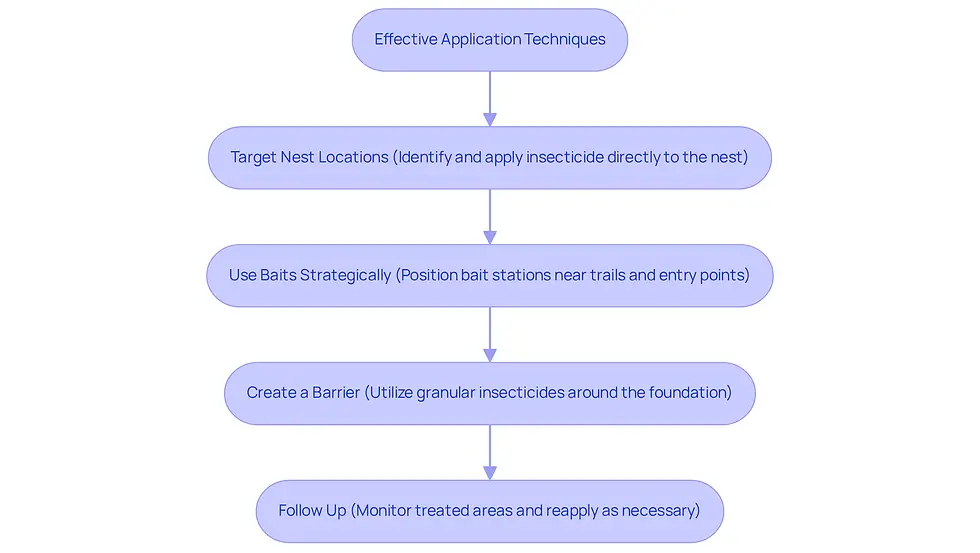
Implement Effective Application Techniques
Are you tired of battling ants in your home and thinking about calling a professional ant killer, feeling like they’re always one step ahead? Here are some effective strategies to help you regain control, including hiring a professional ant killer.
Target Nest Locations: Identifying and applying insecticide directly to the nest significantly increases effectiveness. Investigate trails leading back to the nest for precise targeting. This focused approach not only addresses the problem of ants but also empowers you to become a professional ant killer.
Use Baits Strategically: Position bait stations near ant trails and entry points. It’s essential to refrain from disturbing the insects after placing the bait, allowing them to carry it back to the colony. This patience can feel challenging, but it’s a crucial step toward a long-term solution.
Create a Barrier: Utilize granular insecticides to establish a protective barrier around your home’s foundation. This strategy not only stops insects from entering but also helps in managing outdoor populations. Imagine the peace of mind that comes with knowing you’ve taken proactive steps to protect your space with the help of a professional ant killer.
Follow Up: Continuously monitor treated areas for ant activity. If ants remain, reapply treatments as necessary, adhering to the product's guidelines. Staying vigilant can feel like a chore, but it’s key to ensuring your efforts pay off.
With these strategies, you can take back your space and find comfort in a pest-free environment.
Establish Long-Term Ant Prevention Strategies
Ant infestations can be a source of frustration and discomfort for homeowners, but there are effective ways to keep them at bay. To effectively prevent future ant infestations, homeowners should adopt the following long-term strategies:
Seal Entry Points: Conduct a thorough inspection of your home for any cracks and gaps around windows, doors, and foundations. Use caulk or weather stripping to seal those openings, as even small gaps can provide access for insects. Regular inspections and sealing foundation cracks are crucial for long-term pest management.
Maintain Cleanliness: Store food in airtight containers and promptly clean up spills and crumbs. Consistent vacuuming and cleaning surfaces will help remove food sources that attract these pests.
Manage Moisture: Ants are drawn to moisture, so it’s crucial to fix leaks, ensure proper drainage, and avoid overwatering plants near the home. Keeping spaces dry will help prevent insects from entering.
Landscaping Practices: Trim tree branches and shrubs away from the house to prevent insects from using them as bridges to gain entry. Additionally, maintain a distance of at least six inches between mulch and vegetation and the foundation of your home.
Natural Deterrents: Consider using cucumber and citrus peels in areas where ants gather, as these peels are toxic to the fungi that ants feed on. Sprinkling talcum powder or drawing a line of chalk near entry points can also act as a natural ant repellent.
If ant problems persist, it may be necessary to schedule a professional ant killer inspection to identify hidden nests and recommend targeted control strategies.
Taking these proactive steps not only protects your home but also brings peace of mind, knowing you’ve done your part to keep pests away.

Conclusion
Many homeowners feel overwhelmed and frustrated when faced with persistent ant invasions that disrupt their peace at home. Understanding and managing these infestations is essential for reclaiming your living space. By recognizing the specific ant species invading your home, you can take targeted action that truly makes a difference.
It’s not just about getting rid of the ants; it’s about restoring your comfort and tranquility. The right strategies, from selecting effective ant killers to implementing long-term prevention techniques, can help you regain control. Remember, maintaining cleanliness, sealing entry points, and managing moisture are vital steps in preventing future infestations.
Taking immediate action, along with proactive measures, can help you build a strong defense against these pesky invaders. Ultimately, by adopting these best practices, you can not only address current infestations but also safeguard your home against future invasions. By taking action today, you can create a sanctuary in your home, free from the stress of unwanted pests.
Frequently Asked Questions
What are the common ant species found in southern Minnesota?
The common ant species include carpenter ants, pavement ants, odorous house ants, and field ants.
What are carpenter ants and why are they a concern?
Carpenter ants are large insects, often black or reddish, that nest in wood. If left unchecked, they can cause serious structural damage to homes.
What do pavement ants look like and where do they typically live?
Pavement ants are small and brown or black, often inhabiting cracks in pavement and can invade homes in search of food.
How can you identify odorous house ants?
Odorous house ants are identifiable by their unique scent when crushed and typically reside indoors, forming large colonies that can lead to infestations.
Where are field ants usually found?
Field ants are usually found outside, building mounds in lawns, but they can also venture indoors when searching for food.
Why is it important to identify the specific ant species?
Identifying the specific ant species is crucial for effective pest management and helps guide homeowners to the right treatment methods.
What percentage of managed insect infestations in the area are linked to odorous house ants?
About 64% of managed insect infestations in the area are linked to odorous house ants.
What resources can homeowners use to identify ant species?
Homeowners can utilize local extension services and pest identification guides to accurately determine the species present in their gardens.
What preventive measures can be taken to manage ant infestations?
Preventive measures include eliminating moisture sources and keeping tree branches cut back from the house.
What is the Ant Control program from Spring Touch?
The Ant Control program from Spring Touch involves regular treatments every 28 days to create a protective barrier around the home, helping to keep ants at bay.
How can keeping a log of ant activity be beneficial?
Keeping a log of ant activity can help identify patterns for more targeted interventions, ensuring a pest-free lawn and home.
List of Sources
Identify Common Household Ant Species
4 Best Practices for Effective Ant Control in Your Yard (https://springtouchlawn.com/post/4-best-practices-for-effective-ant-control-in-your-yard)
2024 Statistics and Facts about Household Pests (https://dodsonbros.com/2024-statistics-and-facts-about-household-pests)
Identifying Common Ant Species in Minnesota | Rainbow Pest Experts (https://rainbowpestexperts.com/identifying-common-ant-species-in-minnesota)
Carpenter ants can wreck your home (https://postbulletin.com/news/carpenter-ants-can-wreck-your-home)
Choose the Right Professional Ant Killers
Ant Control Market Size, Share, & Analysis Report, 2034 (https://marketdataforecast.com/market-reports/ant-control-market)
We Tested the Top Ant Killers. These 9 Delivered the Best Results (https://thespruce.com/best-ant-killers-4142823)
The Best Ant Killers in 2026 (tested by our experts) (https://pesthq.ca/blogs/news/the-best-ant-killers-in-2026-tested-by-our-experts?srsltid=AfmBOorPjzt2EVYnQzrN85X3bvGvxiaF7_stfmIJ--JkGGUlJpld_D_l)
Best Ant Killer: Top Solutions That Work Fast 2026 (https://greenpestmanagementct.com/best-ant-killer-top-solutions-work-fast)
The Best Ant Killer (https://nytimes.com/wirecutter/reviews/best-ant-killer?eafs_enabled=false)
Implement Effective Application Techniques
In the News--Group advises how to control ants without harming the environment—UC IPM (https://ipm.ucanr.edu/NEWS/ants_control-news.html)
Pesticides use and trade. 1990–2022 (https://fao.org/statistics/highlights-archive/highlights-detail/pesticides-use-and-trade-1990-2022/en)
Best Practices for Effective and Efficient Pesticide Application (https://ohioline.osu.edu/factsheet/fabe-532)
Pesticide Statistics (https://npic.orst.edu/ingred/stats.html)
Effective Control & Preventative Strategies for Ant Management (https://rockwelllabs.com/2023/11/06/effective-contro-preventative-strategies-for-ant-management)
Establish Long-Term Ant Prevention Strategies
5 DIY Ways To Save Your Home from an Ant Invasion (https://bredapest.com/news/ways-to-save-your-home-from-an-ant-invasion)
How to Keep Ants Out of Your House: Prevention Tips That Actually Work | Pfitzer Pest Control (https://pfitzerpestcontrol.com/preventing-ant-infestations-tips-for-a-pest-free-home)
Long-term strict ant-plant mutualism identity characterises growth rate and leaf shearing resistance of an Amazonian myrmecophyte - Scientific Reports (https://nature.com/articles/s41598-024-67140-4)
Effective Control & Preventative Strategies for Ant Management (https://rockwelllabs.com/2023/11/06/effective-contro-preventative-strategies-for-ant-management)


