.png)

What Is a Tiller Used For? Key Functions and Benefits for Homeowners
- Spring Touch Team

- May 19
- 7 min read
Updated: 8 hours ago
Introduction
Many gardeners face the frustration of hard, compacted soil that hinders their planting efforts. This challenge can make the dream of a vibrant garden feel out of reach. But what if there was a way to transform that stubborn earth into a fertile bed, ready to nurture your plants? A tiller serves as an essential tool for overcoming these obstacles. By breaking up compacted soil, it prepares the ground for planting while enhancing nutrient distribution and moisture retention, leading to healthier plants. Understanding how a tiller can ease these challenges can truly change the way you approach your gardening journey.
Define a Tiller: Understanding Its Purpose and Mechanism
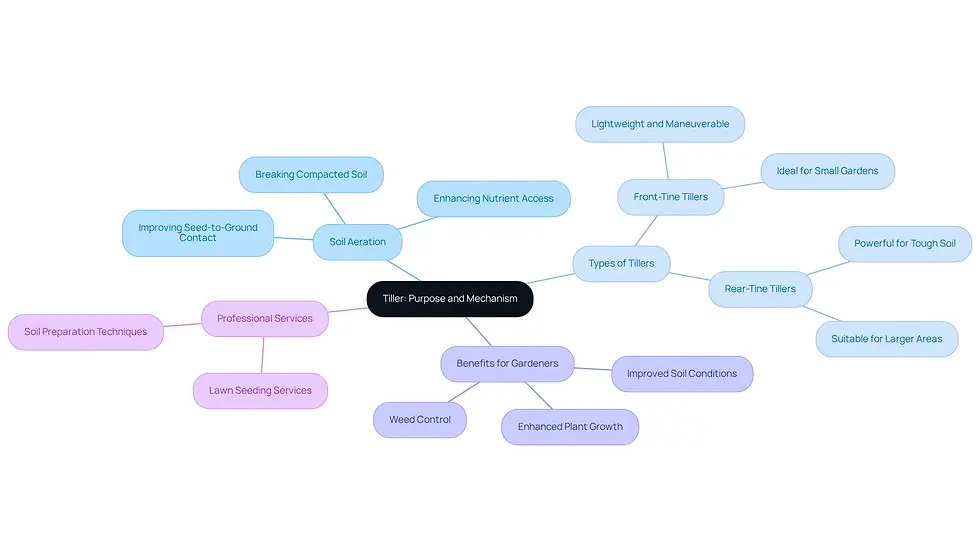
A tiller is more than just a gardening tool; it’s your partner in creating a thriving garden, especially when faced with tough soil conditions. By breaking up compacted soil, a tiller helps create a nurturing environment where plants can thrive, ensuring they have the space and nutrients they need to grow strong and healthy.
In Minnesota, many gardeners face the challenge of hard, compacted clay soil, making aeration a vital step in nurturing their gardens. Using a cultivator to aerate the ground not only improves seed-to-ground contact but also gives homeowners peace of mind, knowing they’re setting their gardens up for success.
Whether you need a front-tine tiller for smaller plots or a rear-tine model for tougher soil, there’s a tiller designed to meet your unique gardening needs. Many homeowners have shared heartwarming stories of how using a tiller has transformed their gardens, leading to vibrant plants and a sense of accomplishment.
Understanding what a tiller is used for in your garden is key to unlocking its full potential, especially when considering professional lawn seeding services that prioritize aeration as a crucial first step.
Explore Tiller Functions: Key Uses in Gardening and Farming
Are you struggling to prepare your garden for planting? Tillers can be your best ally, as they offer a range of functions that clarify what is a tiller used for, making gardening easier and more enjoyable.
Ground Preparation: One of the biggest challenges gardeners face is dealing with hard, compacted earth. Tillers excel at breaking up tough ground, which demonstrates what a tiller is used for in creating a loose seedbed that makes planting a breeze. When the ground is properly cultivated, it enhances root development and nutrient uptake, leading to healthier plants.
Weed Management: Weeds can be a gardener's worst enemy, competing for precious nutrients and water. By overturning the ground, tillers effectively show what is a tiller used for by uprooting these unwanted plants. Research shows that a well-cultivated garden can have up to 80% fewer weeds compared to untilled ground (University of California), making tillers invaluable for maintaining a weed-free garden.
Mixing Amendments: Ensuring that nutrients are evenly distributed is crucial for plant health. Homeowners can utilize tillers to blend in compost, fertilizers, and other enhancements, demonstrating what a tiller is used for. This practice not only improves soil quality but also encourages better moisture retention, with properly tilled earth retaining 30% more water (American Journal of Soil Science).
Aeration is essential for healthy plants that need access to water and oxygen, which is why understanding what is a tiller used for can enhance ground aeration. This allows these vital elements to penetrate deeper into the earth, fostering a balanced microbial ecosystem essential for nutrient cycling and overall soil health.
If you're looking to expand your planting efforts, you may wonder what is a tiller used for in making the establishment of new garden beds a straightforward task. They break ground in previously unplanted areas, making it easier to cultivate vegetables or flowers.
Embracing the use of tillers can transform your gardening journey into a rewarding and fulfilling experience. Historically, tilling is an agricultural practice that dates back over 4,000 years, demonstrating its long-standing importance in effective soil management. As Richard L. Parish from LSU AgCenter notes, "Proper use can make your gardening experience more pleasant and productive.

Highlight Benefits: Why Use a Tiller for Your Lawn and Garden
Many homeowners struggle with achieving a lush, healthy garden due to poor soil conditions and weed overgrowth. Without proper soil preparation, gardens can become a source of frustration rather than joy, leading to wasted time and effort.
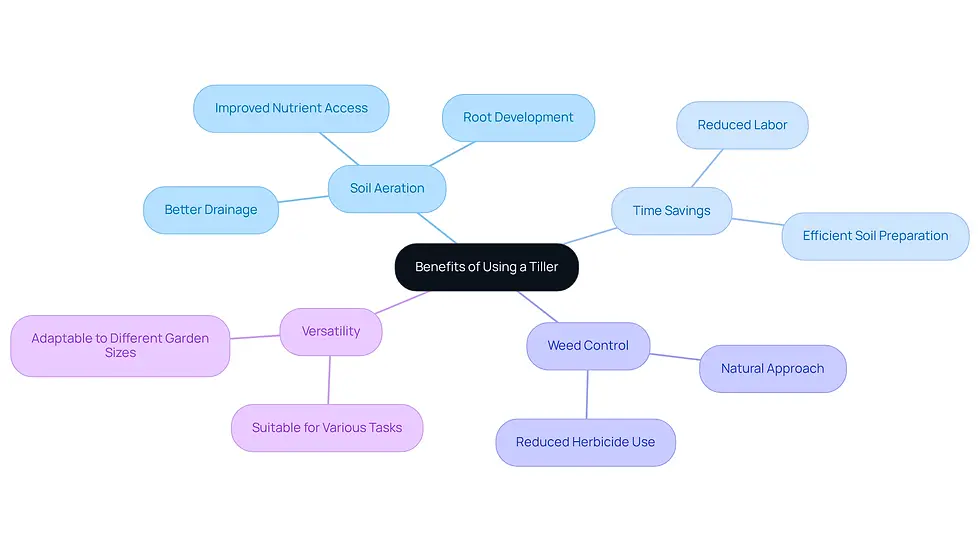
When you till the soil, you’re not just turning it over; you’re breathing life into it, which makes one wonder what a tiller is used for. This process aerates the earth, allowing for better drainage and root development, which leads to healthier plants that thrive in your garden.
Imagine harvesting a bountiful crop from your vegetable garden. By effectively preparing the ground, you ensure that your plants have better access to nutrients and water, leading to higher yields and a more rewarding gardening experience.
Think about all the time you could save. Tillers can drastically cut down the time and effort needed for soil preparation, helping you understand what a tiller is used for and freeing you up to focus on other enjoyable tasks in your yard.
Weeds can be a gardener’s worst enemy. Regular tilling helps keep them at bay, reducing the need for chemical herbicides and promoting a more natural approach to cultivation.
Versatility is key in gardening. A tiller is an invaluable tool in your gardening arsenal, as it helps you understand what a tiller is used for by tackling a range of tasks, from preparing new beds to maintaining existing ones.
By investing in a tiller, you can transform your gardening experience, turning frustration into flourishing beauty.
Identify Types of Tillers: Choosing the Right Tool for Your Needs
Navigating the world of tillers can be daunting, particularly when trying to understand what a tiller is used for in your gardening journey. There are several types of tillers available, each designed for specific gardening tasks:
Front-Tine Tillers: These are usually lighter and more agile, making them perfect for small to medium-sized plots. They excel at blending earth and preparing existing beds, demonstrating what a tiller is used for. As gardening authority Brian Barth points out, "Front-line cultivators are an affordable, all-purpose choice for medium-sized gardens."
Rear-Tine Tillers: These models are heavier and more powerful, designed for breaking new ground and tackling tougher soil conditions. They pull themselves forward, making them easier to operate in larger areas. Statistics suggest that rear-tine cultivators perform better in challenging environments, offering enhanced depth and width for tilling.
Mini Tillers: Compact and lightweight, mini tillers are ideal for small plots or raised beds. They are simple to manage and excellent for confined areas, enabling precise weeding and earth management. As gardening expert Bill Norcott shares, we often use it for weeding and setting up rows, which helps explain what a tiller is used for in our constant rotations.
Electric Tillers: These are quieter and more environmentally friendly, suitable for small gardens where noise and emissions are a concern. While they may be less powerful than gas models, their ease of maintenance makes them appealing for casual gardeners.
Gas-Powered Cultivators: Known for their strength and efficiency, gas-powered cultivators are perfect for larger plots and more challenging soil conditions. They offer greater depth and width for tilling, making them versatile for different planting tasks. The rising popularity of urban gardening has boosted the demand for both gas and electric cultivators, as homeowners seek effective solutions for their gardening needs.
When selecting between front-tine and rear-tine cultivators, consider the dimensions of your plot and the type of earth you will be using. Front-tine cultivators are generally more maneuverable and easier to manage, while rear-tine models provide more power for tougher tasks. Mini cultivators have gained popularity for their efficiency in small gardens and raised beds, allowing for precise weeding and soil management. Leading brands like Yanmar, Honda, Husqvarna, and Kubota continue to innovate in the tiller market, providing homeowners with a range of options to suit their gardening needs. Selecting the right tiller not only enhances your gardening experience but also clarifies what a tiller is used for, ensuring your efforts lead to fruitful results.

Conclusion
For many homeowners, the thought of preparing their garden can feel overwhelming, especially when faced with tough soil conditions. But with a tiller, you can break through that tough surface, allowing air and nutrients to reach your plants, helping them flourish like never before. Imagine turning that daunting task of soil preparation into a rewarding experience, where every turn of the tiller brings you closer to the garden of your dreams.
A tiller helps you prepare the ground, manage pesky weeds, and mix in nutrients, making your gardening journey smoother and more enjoyable. With options ranging from front-tine to rear-tine models, you can choose the right tiller to meet your specific gardening needs, ensuring that every planting project is executed with ease and efficiency.
When you embrace the power of a tiller, you’re not just gardening; you’re nurturing a thriving ecosystem that reflects your dedication and care. Investing in this versatile tool not only enhances your gardening experience but also promotes sustainable practices that benefit both the environment and you. By understanding what a tiller is used for, you can unlock the full potential of your garden, turning aspirations into reality.
Frequently Asked Questions
What is a tiller and what is its purpose?
A tiller is a gardening tool designed to break up compacted soil, creating a nurturing environment for plants to thrive by ensuring they have the space and nutrients needed for healthy growth.
Why is aeration important for gardening, particularly in Minnesota?
Aeration is vital for nurturing gardens, especially in Minnesota where gardeners often deal with hard, compacted clay soil. It improves seed-to-ground contact and helps create optimal conditions for plant growth.
What types of tillers are available for gardeners?
There are different types of tillers available, including front-tine tillers for smaller plots and rear-tine models for tougher soil conditions, allowing gardeners to choose one that suits their specific needs.
How can using a tiller transform a garden?
Many homeowners have reported that using a tiller has transformed their gardens by leading to vibrant plants and providing a sense of accomplishment through improved garden conditions.
How does understanding the use of a tiller benefit gardeners?
Understanding what a tiller is used for helps gardeners unlock its full potential, especially when considering professional lawn seeding services that prioritize aeration as a crucial first step.
List of Sources
Define a Tiller: Understanding Its Purpose and Mechanism
troybilt.com (https://troybilt.com/en_US/knowledge-tb-benefits-of-tilling.html?srsltid=AfmBOoqf3lLwKSJ6jzYc9qQRyazXqL269DR8CFhVtZqQDEuHzR2RZ9t2)
datamintelligence.com (https://datamintelligence.com/research-report/tillers-market)
What Is a Tiller? A Beginner’s Guide to This Essential Garden Tool (https://prestonlawn.com/What-Is-a-Tiller)
ukoke.com (https://ukoke.com/blogs/all-blogs/five-reasons-to-use-a-garden-tiller)
growthmarketreports.com (https://growthmarketreports.com/report/global-rotary-tiller-market-industry-analysis)
Explore Tiller Functions: Key Uses in Gardening and Farming
cattachments.com (https://cattachments.com/the-benefits-of-tilling-soil?srsltid=AfmBOoqNSJHRRPdPKN8dJGqJ0Oekaj9tqbVRudlf72A9HIrdtEVdZHpM)
What Can a Tiller Be Used For? Common Farming and Gardening Tasks Explained - NOVUS (https://novuspowerequipment.com/what-can-a-tiller-be-used-for-common-farming-and-gardening-tasks-explained)
longreeimplements.com (https://longreeimplements.com/blog/benefits-of-using-tiller-cultivators-for-gardening)
lsuagcenter.com (https://lsuagcenter.com/topics/lawn_garden/commercial_horticulture/equipment/rotary tillers/use-of-a-rotary-garden-tiller)
patelagroindustries.com (https://patelagroindustries.com/blog/the-ultimate-guide-to-using-a-rotary-tiller)
Highlight Benefits: Why Use a Tiller for Your Lawn and Garden
troybilt.com (https://troybilt.com/en_US/knowledge-tb-benefits-of-tilling.html?srsltid=AfmBOooGjPZEYioHI6XwB_2Xg81rbtYTHaWVInuE4bCVTZLkbF2mmGxm)
sustainability.stanford.edu (https://sustainability.stanford.edu/news/reduced-soil-tilling-helps-both-soils-and-yields)
ugaoo.com (https://ugaoo.com/blogs/garden-maintenance/the-pros-and-cons-of-using-a-garden-tiller-in-your-garden?srsltid=AfmBOorLUKdEF4HCMf5Qsu3dnOiEw0FGHKrqq7_9XrD8cW7WjdvpXy-3)
soilhealthinstitute.org (https://soilhealthinstitute.org/news-events/nationwide-study-on-30-u-s-farms-shows-positive-economic-impact-of-soil-health-management-systems)
Identify Types of Tillers: Choosing the Right Tool for Your Needs
westinghouse.com (https://westinghouse.com/blogs/news/get-your-garden-ready-choosing-the-right-tiller-for-spring?srsltid=AfmBOorMAy8Ra7VtxLSNZk3Itbw2Gm3iiqa4VNgx4PDcMKgw6deEvfAr)
datamintelligence.com (https://datamintelligence.com/research-report/tillers-market)
ourcoop.com (https://ourcoop.com/news/rural-lifestyle/choosing-the-right-tiller)
motherearthnews.com (https://motherearthnews.com/organic-gardening/choosing-the-right-tiller)
modernfarmer.com (https://modernfarmer.com/2018/07/buying-a-tiller-heres-what-to-look-for)


