.png)

How to Treat Rust Fungus on Grass: Steps for Homeowners
- Spring Touch Team

- 8 hours ago
- 6 min read
Introduction
Homeowners in southern Minnesota often find themselves facing a daunting challenge when rust fungus invades their lawns, turning vibrant greenery into unsightly patches. This situation can leave you feeling overwhelmed as your once-thriving lawn deteriorates before your eyes. But there is hope; with the right knowledge and tools, you can reclaim your lawn and restore its beauty.
In this guide, you'll discover practical steps and expert insights that will empower you to treat rust fungus effectively, from cultural practices to chemical controls, helping you restore your lawn to its former glory.
But what if traditional methods don’t work? How can you ensure your lawn stays strong and resilient against future outbreaks?
Identify Rust Fungus: Causes and Symptoms
Imagine stepping onto your lawn only to find it looking weak and unhealthy. Rust fungus on grass typically manifests as yellowish-orange spots or patches on blade surfaces, which may ultimately produce a powdery orange spore that can be seen when the blades are brushed. Symptoms often show up during warm, humid weather, especially in shaded areas. Key indicators include:
Yellowish Patches: Look for irregular yellow patches on the grass, which may become more pronounced over time.
Orange Dust: If you notice an orange powder on your shoes or mower after walking through the lawn, this is a strong sign of rust fungus on grass.
Weak Grass: Infected grass may appear thin and frail, making it more vulnerable to other ailments.
While rust diseases won't kill your grass, they can weaken it, making it more susceptible to other problems. Rust usually forms on grass that is growing slowly, particularly in conditions of drought, low fertility, or close mowing. Commonly affected grass types include perennial ryegrass and Kentucky bluegrass. By recognizing these signs and understanding what causes the fungus to thrive, you can take quick action to protect your lawn and stop further spread of the fungus, preserving its health.
Furthermore, adopting sound cultural practices, such as appropriate mowing and watering, is essential for managing the issue effectively. For homeowners in southern Minnesota, partnering with Spring Touch Lawn & Pest Control can provide expert guidance and treatment options tailored to local conditions. As a bonus, new customers can enjoy their first application for free when signing up for a complete lawn care program, ensuring a beautiful, healthy lawn all season long. Taking action now can save your lawn from further decline and ensure it thrives for years to come.

Implement Treatment Strategies: Cultural and Chemical Controls
Are you tired of seeing your once-vibrant lawn fade under the threat of rust fungus on grass? This common issue, like rust fungus on grass, can turn your lush lawn into a patchy, unhealthy space, leaving you frustrated and worried about your yard's appearance. But don’t worry; there are effective ways to combat this problem and restore your lawn's health.
Consider the following steps:
Mow your lawn regularly to keep it healthy and vibrant, which can help reduce the chances of rust fungus on grass taking hold.
Water your lawn early in the morning to allow the blades to dry quickly, which helps reduce moisture that rust fungus on grass thrives on.
Use a high-nitrogen fertilizer to give your lawn the boost it needs to combat diseases like rust fungus on grass.
Trim back overhanging branches and avoid overcrowding to help your grass breathe better, making it less inviting for rust fungus.
If cultural controls aren’t enough, you might want to consider a systemic fungicide to help effectively tackle rust fungus on grass. Keep an eye on your lawn for any signs of decay, and don’t hesitate to reapply treatments as needed, especially during peak seasons.
By merging these approaches, you can efficiently handle and reduce the effects of fungal growth on your yard, ensuring a healthier and more vibrant outdoor area. Taking these steps not only protects your lawn but also restores your peace of mind, knowing you’re nurturing a healthy outdoor space for your family to enjoy.

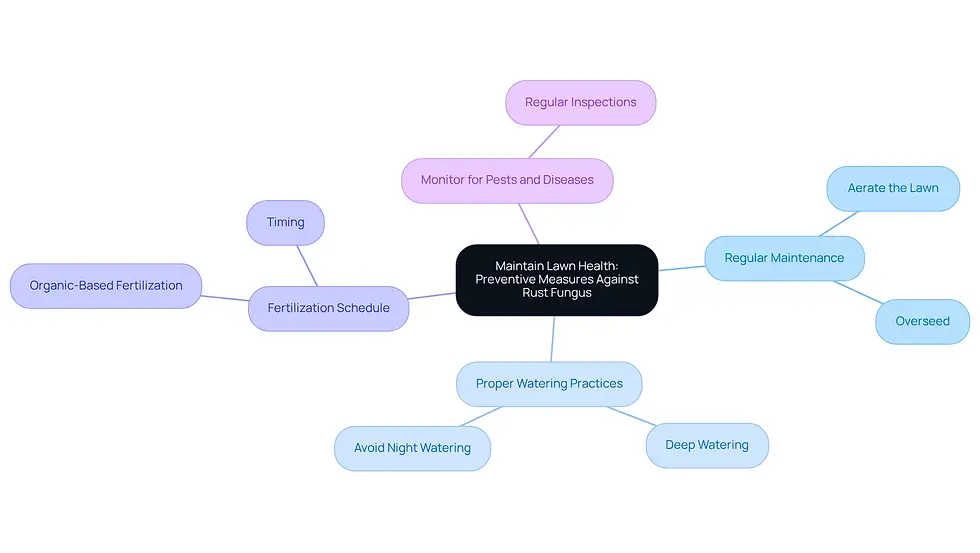
Maintain Lawn Health: Preventive Measures Against Rust Fungus
Dealing with rust fungus on grass can be a frustrating experience for homeowners in southern Minnesota, but there are effective ways to combat it. To effectively prevent rust fungus from returning, adopting a proactive approach to lawn care with the help of Spring Touch Lawn & Pest Control is essential.
Regular Maintenance:
Aerate the Lawn: Aeration alleviates soil compaction, allowing water and nutrients to penetrate deeper, promoting healthier grass roots. This practice is crucial for sustaining a robust yard that can endure illnesses.
Overseed: Introducing new seed helps thicken the turf, effectively crowding out potential spores and enhancing overall density.
Proper Watering Practices:
Deep Watering: Watering deeply but infrequently encourages robust root growth. Aim for about 1 inch of water per week, adjusting for rainfall to ensure optimal moisture levels.
Avoid Night Watering: Watering at night can leave grass blades damp for prolonged durations, creating an ideal environment for rust and other fungal issues.
Fertilization Schedule:
Organic-Based Fertilization: Use Spring Touch's organic-based fertilizer with bio-solids, which not only restores nutrients but also includes crabgrass preventer to keep your lawn healthy and vibrant.
Timing: Apply fertilizer throughout the growing season, especially in spring and early fall, to encourage robust growth and resistance to illnesses.
Monitor for Pests and Diseases:
Regular Inspections: Conduct routine checks on your lawn for any signs of pests or diseases. Addressing issues promptly can prevent escalation and protect the health of your grass.
With the right care and support, you can enjoy a vibrant lawn that stands strong against rust fungus on grass and other challenges. Plus, new customers can enjoy their first application for free when signing up for complete lawn care programs, making it easier to transform your yard into a beautiful, bug-free outdoor space.
Conclusion
Rust fungus can quickly turn a lush lawn into a patchy mess, leaving homeowners frustrated and worried about their outdoor space. Recognizing the signs of rust fungus early can save your lawn from becoming a source of stress and disappointment. Simple steps like regular mowing and mindful watering can make a world of difference, helping your grass fight back against rust fungus.
Key strategies discussed include:
Regular lawn maintenance
Appropriate watering practices
A well-timed fertilization schedule
These steps not only combat existing rust fungus but also create an environment that discourages its return. Additionally, monitoring for pests and diseases is crucial; early detection is key to preserving lawn health.
Taking these steps today can transform your lawn into a vibrant oasis, ensuring it remains a cherished space for family gatherings and relaxation. For those in southern Minnesota, partnering with Spring Touch Lawn & Pest Control offers expert guidance tailored to local conditions, ensuring your lawn remains healthy and vibrant. Embrace these best practices and take action today to protect your lawn from rust fungus and enjoy the benefits of a thriving outdoor space.
Frequently Asked Questions
What is rust fungus and how does it affect grass?
Rust fungus on grass typically appears as yellowish-orange spots or patches on the blade surfaces and may produce a powdery orange spore. It weakens the grass, making it more susceptible to other problems, although it does not kill the grass.
What are the symptoms of rust fungus on grass?
Key symptoms include irregular yellow patches on the grass, orange dust on shoes or mowers after walking through the lawn, and thin, frail grass that is more vulnerable to other ailments.
When does rust fungus typically manifest?
Rust fungus symptoms often show up during warm, humid weather, especially in shaded areas.
What conditions contribute to the growth of rust fungus?
Rust fungus thrives on grass that is growing slowly, particularly in conditions of drought, low fertility, or when grass is mowed too closely.
Which types of grass are commonly affected by rust fungus?
Commonly affected grass types include perennial ryegrass and Kentucky bluegrass.
How can homeowners manage rust fungus effectively?
Homeowners can manage rust fungus by adopting sound cultural practices such as appropriate mowing and watering.
How can Spring Touch Lawn & Pest Control assist with rust fungus issues?
Spring Touch Lawn & Pest Control can provide expert guidance and treatment options tailored to local conditions in southern Minnesota.
Is there an incentive for new customers of Spring Touch Lawn & Pest Control?
Yes, new customers can enjoy their first application for free when signing up for a complete lawn care program.
List of Sources
Identify Rust Fungus: Causes and Symptoms
Turfgrass Diseases: Rust Diseases (Causal fungi: Puccinia spp.) (https://extension.psu.edu/turfgrass-diseases-rust-diseases-causal-fungi-puccinia-spp)
Preventing Rust Diseases on Home Lawns (https://extension.illinois.edu/lawns/preventing-rust-diseases-home-lawns)
Turf Grass Rust (https://yardandgarden.extension.iastate.edu/encyclopedia/turf-grass-rust)
Understanding Lawn Rust: Causes, Symptoms, and Treatment (https://oasisturf.com/blog/understanding-lawn-rust-causes-symptoms-treatments)
Rust on Turfgrass (https://turfdisease.osu.edu/news/rust-turfgrass)
Implement Treatment Strategies: Cultural and Chemical Controls
How to Treat Rust Diseases in the Lawn | ScottsMiracle-Gro US (https://scottsmiraclegro.com/en-us/learn/lawn-care/how-to-identify-and-control-rust-in-the-lawn.html)
Rust in Turf | NC State Extension Publications (https://content.ces.ncsu.edu/rust-in-turf)
Lawn Rust Control in Michigan | Lawn Rust Fungus | Lush Lawn (https://lushlawn.com/lawn-care-services/lawn-disease-control-services/lawn-rust-disease-control)
Managing lawn diseases (https://canr.msu.edu/news/managing-lawn-diseases)
How to Get Rid of Lawn Rust: Treatment & Prevention | Lawn Doctor (https://lawndoctor.com/blog/lawn-rust-what-is-it-how-to-treat-prevent-it)
Maintain Lawn Health: Preventive Measures Against Rust Fungus
Lawn Rust: Causes, Treatment & Prevention Tips | GreenThumb (https://greenthumb.co.uk/blog/article/lawn-rust-explained)
Lawn Disease Prevention Tips for a Healthier Lawn All Year | TLC (https://tlcthelawncompany.com/blog/lawn-disease-prevention-tips)
Preventing Rust Diseases on Home Lawns (https://extension.illinois.edu/lawns/preventing-rust-diseases-home-lawns)
Managing lawn diseases (https://canr.msu.edu/news/managing-lawn-diseases)
How to Prevent Lawn Rust | Nature's Select Sandhills (https://naturesselect.com/blog/how-to-prevent-lawn-rust)


