.png)

Master Fertilization Services: Key Practices for Homeowners
- Spring Touch Team

- 1 hour ago
- 7 min read
Introduction
Lawn care can feel overwhelming, particularly when it comes to fertilization, but it doesn’t have to be. With the right knowledge and practices, you can achieve a vibrant and healthy lawn. In this article, we’ll share some best practices for fertilization, helping you:
Choose the right fertilizer
Create a tailored plan
Steer clear of common mistakes
Let’s explore how the right approach can make all the difference. By embracing the right strategies, you can nurture a beautiful lawn that benefits both your home and the environment.
Understand Fertilizer Types and Their Applications
Choosing the right fertilizer can feel overwhelming, especially with the two main types: organic and synthetic. Organic options, like those from Spring Touch Lawn & Pest Control, come from natural sources such as compost and manure. They improve soil health over time, slowly releasing nutrients over a few months, which is great for the ecosystem. This gradual process not only enhances soil structure but also boosts water retention and nourishes beneficial microorganisms that help absorb essential nutrients. On the other hand, synthetic fertilizers provide quick access to essential nutrients like nitrogen, phosphorus, and potassium, which plants need to thrive, but they come with their own set of challenges. Yet, relying too heavily on these can harm the land, leading to issues like compaction and runoff, which can worry homeowners about their environmental impact.
In 2026, trends in grass care nutrients in southern Minnesota suggest an increasing preference for organic choices because of their long-term advantages. Property owners are becoming more conscious of the significance of ground health, with research indicating that organic nutrients can greatly enhance ground structure and microbial activity. Spring Touch Lawn & Pest Control's organic-based soil enhancer, combined with crabgrass preventer, is intended to replenish essential elements and stop crabgrass from dominating yards during the summer months. Additionally, the second application targets dandelions and broadleaf weeds while incorporating grub control, addressing both weed and pest infestations effectively.
Agronomists stress the importance for homeowners to evaluate their lawns' particular needs, such as nutrient deficiencies and ground composition, when choosing nutrients. A nitrogen-rich nutrient is ideal for promoting lush green growth, while phosphorus supports root development. Understanding these distinctions allows homeowners to tailor their fertilization services effectively, ensuring optimal plant health and minimizing environmental impact.
Case studies reveal that regions utilizing organic fertilizers, like those from Spring Touch, have experienced improved soil health metrics, including increased organic matter content and enhanced microbial diversity. For example, improvements in nitrogen use efficiency for corn have been documented, showcasing the benefits of organic practices. This change not only supports lush greenery but also contributes to wider ecological advantages, such as decreased runoff and enhanced water quality. Additionally, homeowners should consider the cost differences: organic fertilization typically ranges from $200 to $500 per application, while synthetic options cost between $100 and $300. Opting for organic solutions not only beautifies your lawn but also nurtures the environment for future generations.

Develop Customized Fertilization Plans
Are you worried that your lawn isn’t reaching its full potential? To create an effective fertilization strategy, homeowners should begin by utilizing fertilization services to conduct a soil test that evaluates nutrient levels and pH balance. This step helps you choose the right nutrients to fix any deficiencies you find. For instance, if your soil test shows low nitrogen levels, prioritizing a high-nitrogen fertilizer becomes essential. Additionally, understanding the type of grass you have is crucial; cool-season grasses, common in Minnesota, require a different ratio of nutrients compared to warm-season types.
Here’s a step-by-step outline for homeowners to implement their fertilization plan effectively:
Perform a Soil Analysis: Analyze your soil to assess mineral levels and pH balance.
Analyze Results: Identify any deficiencies, particularly nitrogen, phosphorus, and potassium levels.
Select Suitable Nutrients: Choose substances that address specific deficiencies based on the soil test results.
Consider Grass Type: Determine whether you have cool-season or warm-season grass to select the appropriate ratio of nutrients.
Plan Multiple Applications: Schedule multiple applications throughout the growing season to ensure consistent nourishment.
As part of their spring turf care applications, Spring Touch Turf & Pest Control provides fertilization services that include an organic-based fertilizer containing bio-solids and crabgrass preventer. This treatment not only gives your lawn the nutrients it needs but also keeps crabgrass at bay, so you can enjoy a beautiful yard all summer. Following this, a second application targets dandelions and broadleaf weeds while incorporating grub control to manage both weeds and grub infestations effectively. Homeowners in southern Minnesota have seen their lawns thrive with these personalized plans, turning their outdoor spaces into beautiful retreats. As Dr. Omanjana Goswami observes, 'Proper resource management is essential for sustaining grass health and avoiding environmental problems.' With the right approach, your lawn can flourish, bringing you joy and satisfaction all season long.

Implement Strategic Fertilization Schedules
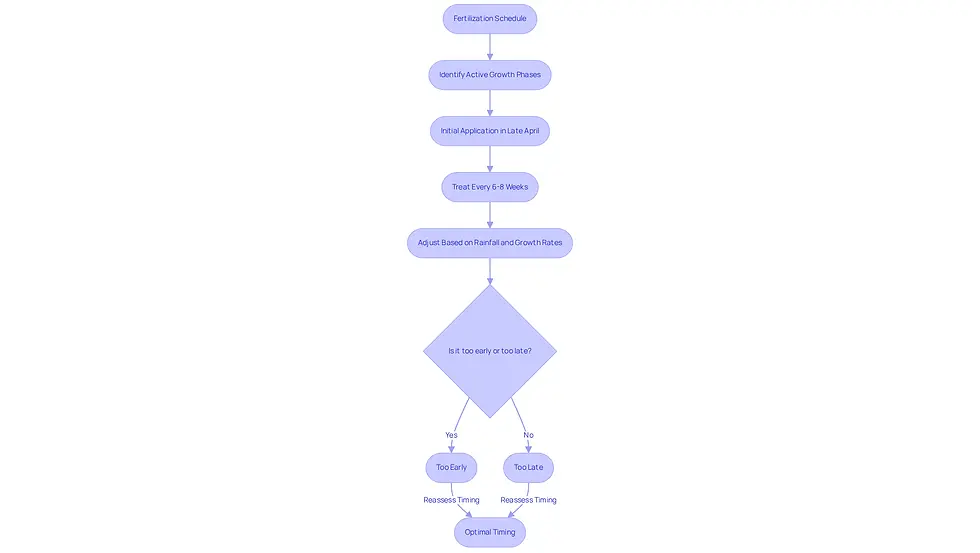
Timing is crucial for effective lawn fertilization, especially for cool-season grasses in southern Minnesota, where the right approach can make all the difference in your yard's health. Homeowners should aim to fertilize during the grass's active growth phases, typically in early spring and fall. An initial application in late April is ideal, followed by treatments every 6 to 8 weeks, adjusting based on rainfall and growth rates. If you apply fertilizer too early, you risk losing valuable nutrients to leaching, and waiting too long means your grass might not have enough time to absorb what it needs before going dormant. For optimal results, keeping an eye on weather conditions and grass growth is essential.
It's important to understand that grass seed germination can be particularly challenging in Minnesota's compacted clay soil, so taking the time to prepare properly can lead to successful growth. Core aeration is vital as it enhances soil contact, promoting better seed germination. Spring Touch Lawn & Pest Control offers organic-based products that replenish essential nutrients and prevent crabgrass, ensuring your yard thrives throughout the growing season. Case studies show that proper timing in fertilization can significantly boost grass health and resilience, leading to a vibrant and robust turf. Regular soil tests, performed every few years or yearly if monitoring amendments, can help you choose the right fertilizer and timing to effectively tackle nutrient deficiencies. By embracing a thoughtful fertilization strategy, you can cultivate a yard that not only survives but thrives, bringing joy and beauty to your home.
Avoid Common Fertilization Mistakes
Many homeowners struggle with the challenges of utilizing fertilization services for their lawns, often leading to unintended consequences. Over-fertilization can damage your lawn, causing brown patches and unhealthy grass. It also poses environmental risks, like runoff that pollutes our water. To avoid these problems, it’s important to stick to the application rates on your fertilizer packaging and water your lawn thoroughly after applying, ensuring nutrients penetrate the soil effectively.
Another common mistake is not adjusting nutrient types according to seasonal needs. For instance, using a high-nitrogen fertilizer in the fall can encourage excessive growth before winter, which weakens the grass as it prepares for dormancy. Additionally, skipping ground assessments can lead to over-application of resources, wasting materials and harming your lawn's health.
In southern Minnesota, the effects of over-fertilization are especially noticeable due to the region's unique climate and soil conditions. Homeowners should know that yards typically require fertilization services 2-4 times a year, and applying too often can stress the grass and upset nutrient balance. By recognizing these common fertilization mistakes and implementing best practices, like using organic-based fertilizers from Spring Touch Lawn & Pest Control, you can improve your lawn care. This leads to a healthier, more vibrant outdoor space.

Conclusion
Many homeowners struggle with patchy, unhealthy lawns despite their best efforts. Choosing the right fertilizer can feel overwhelming, but it’s crucial for nurturing a healthy lawn that thrives. It’s important to understand that every lawn is unique, and what works for one may not work for another. By conducting soil tests and implementing a strategic fertilization schedule, you can avoid common pitfalls like over-fertilization and ensure your lawn receives the nutrients it needs.
Utilizing organic-based fertilizers not only supports lush growth but also promotes long-term soil health, aligning with the growing trend towards environmentally friendly lawn care solutions. Homeowners in southern Minnesota can truly benefit from these practices, transforming their yards into vibrant retreats that reflect their commitment to sustainable gardening.
Taking these steps not only beautifies your home but also nurtures the environment around you, creating a lasting impact. For those ready to take the next step, consider reaching out to Spring Touch Lawn & Pest Control for expert guidance and support in creating a personalized fertilization plan that meets the unique needs of your lawn.
Frequently Asked Questions
What are the two main types of fertilizers?
The two main types of fertilizers are organic and synthetic. Organic fertilizers come from natural sources like compost and manure, while synthetic fertilizers provide quick access to essential nutrients.
What are the benefits of using organic fertilizers?
Organic fertilizers improve soil health over time, slowly releasing nutrients, enhancing soil structure, boosting water retention, and nourishing beneficial microorganisms. They also contribute to long-term ecological benefits.
What challenges are associated with synthetic fertilizers?
While synthetic fertilizers provide quick access to nutrients, relying too heavily on them can harm the land, leading to issues like soil compaction and runoff, which can negatively impact the environment.
What trends are emerging in grass care nutrients in southern Minnesota?
There is an increasing preference for organic fertilizers among property owners in southern Minnesota due to their long-term advantages and the importance of ground health.
How does Spring Touch Lawn & Pest Control address weed and pest control?
Spring Touch Lawn & Pest Control offers an organic-based soil enhancer combined with crabgrass preventer to replenish essential elements and prevent crabgrass. Their second application targets dandelions and broadleaf weeds while incorporating grub control.
What should homeowners consider when choosing fertilizers?
Homeowners should evaluate their lawns' specific needs, such as nutrient deficiencies and ground composition. Understanding the roles of nitrogen and phosphorus can help tailor fertilization services for optimal plant health.
What are the cost differences between organic and synthetic fertilizers?
Organic fertilization typically ranges from $200 to $500 per application, while synthetic options cost between $100 and $300.
What ecological advantages do organic fertilizers provide?
Regions using organic fertilizers have shown improved soil health metrics, increased organic matter content, enhanced microbial diversity, decreased runoff, and improved water quality.
List of Sources
Understand Fertilizer Types and Their Applications
Fertilizers (https://ourworldindata.org/fertilizers)
Fertilizer Use and Price | Economic Research Service (https://ers.usda.gov/data-products/fertilizer-use-and-price)
Organic vs. Synthetic Fertilizer: Which Is Best for Your Lawn? (https://lawnstarter.com/blog/lawn-care-2/difference-between-organic-synthetic-fertilizer)
Trends in Fertilizer Use and Efficiency in the U.S. - farmdoc daily (https://farmdocdaily.illinois.edu/2025/05/trends-in-fertilizer-use-and-efficiency-in-the-us.html)
Develop Customized Fertilization Plans
New Report Measures Climate-Damaging Emissions Created in Minnesota by Massive Overuse of Nitrogen Fertilizer on Corn, Soybean Crops (https://ucs.org/about/news/emissions-created-minnesota-massive-overuse-nitrogen-fertilizer)
Minnesota farmer dials in crop fertility plan - Brownfield Ag News (https://brownfieldagnews.com/news/minnesota-farmer-dials-in-crop-fertility-plan)
Soil Testing Project | Minnesota Department of Agriculture (https://mda.state.mn.us/soil-testing-project)
Implement Strategic Fertilization Schedules
Lawn Care Calendar for Cool-Season Grass (https://lawnlove.com/blog/lawn-care-calendar-cool-season-grass)
The Lawn Fertilizing Schedule Experts Swear By for Greener Grass (https://shopping.yahoo.com/home-garden/gardening/articles/lawn-fertilizing-schedule-experts-swear-002659572.html)
Lawn calendar for cool-season grasses (https://extension.k-state.edu/news-and-publications/news/stories/2026/03/horticulture-cool-season-grasses.html)
What is the Best Lawn Fertilization Schedule: Timing & Tips Guide (https://lionscapelawn.com/what-is-the-best-lawn-fertilization-schedule)
Avoid Common Fertilization Mistakes
5 Common Lawn Fertilization Mistakes Homeowners Make | 4-Evergreen, LLC. | Lawn Fertilization, Healthy Lawn Care, Fertilizer Mistakes, Lawn Care Tips, Lawn Maintenance (https://4evergreenlawnservice.com/blog/common-fertilization-mistakes)
The Biggest Lawn Fertilizing Mistakes—And How to Avoid Them (https://countryliving.com/gardening/garden-ideas/a65447958/fertilizing-mistakes-lawn-care-tips)
How to Avoid Over-Fertilizing Your Lawn (https://lawnlove.com/blog/how-to-avoid-over-fertilizing-lawn)
8 Common Fertilizer Mistakes to Avoid and What to Do Instead (https://lawnstarter.com/blog/lawn-care-2/common-fertilizer-mistakes-to-avoid)


