.png)

Master Natural Grub Control: Effective Strategies for Your Lawn
- Spring Touch Team

- Apr 19
- 6 min read
Updated: 1 day ago
Introduction
Grubs are the hidden menace lurking beneath the surface of many lawns, capable of wreaking havoc on even the most meticulously maintained yards. For homeowners, understanding their life cycle and the damage they can inflict is crucial in protecting those cherished green spaces. This article explores effective natural grub control strategies, offering insights into how to manage these pests without resorting to harsh chemicals. With so many options available, it’s natural to wonder: how can you determine the best approach to safeguard your lawn from these underground invaders?
Understand Grubs: Life Cycle and Lawn Impact
Grubs, the larval stage of various beetles like the Japanese beetle and the June bug, can pose a serious threat to your lawn. Their life cycle unfolds in four stages: egg, larva, pupa, and adult beetle. Typically, adult beetles lay their eggs in the soil during late spring to early summer. Once those eggs hatch, the larvae start feeding on grass roots, leading to significant damage. This feeding frenzy peaks in late summer and early fall when the larvae are growing most actively.
As a homeowner, it’s crucial to be aware of this cycle. Research shows that larvae develop through three instars during August and September, making it a key time to monitor your yard. Look out for signs of insect damage, such as wilting grass, brown patches, and spongy soil. Staying vigilant during these critical periods can make all the difference. Fortunately, sites that benefit from natural grub control provided by Spring Touch are at a lower risk for grub damage.
With over 50 years of experience, Spring Touch Lawn & Pest Control offers expert solutions to protect your yard. By targeting the eggs, larvae, and adult beetles through strategic pest management, you can utilize natural grub control to safeguard your green oasis from these underground invaders. Plus, as a new client, you can enjoy your first application for FREE when you enroll in our comprehensive yard care, mosquito management, or pest management programs.
Understanding this life cycle is essential for planning effective preventive measures and treatments, ensuring the health and vitality of your garden.

Implement Natural Control Methods for Grubs
Dealing with larvae in your lawn can be a real concern. These pests can wreak havoc, damaging your grass and disrupting the beauty of your yard. But don’t worry; there are techniques for natural grub control that can help you tackle this issue effectively.
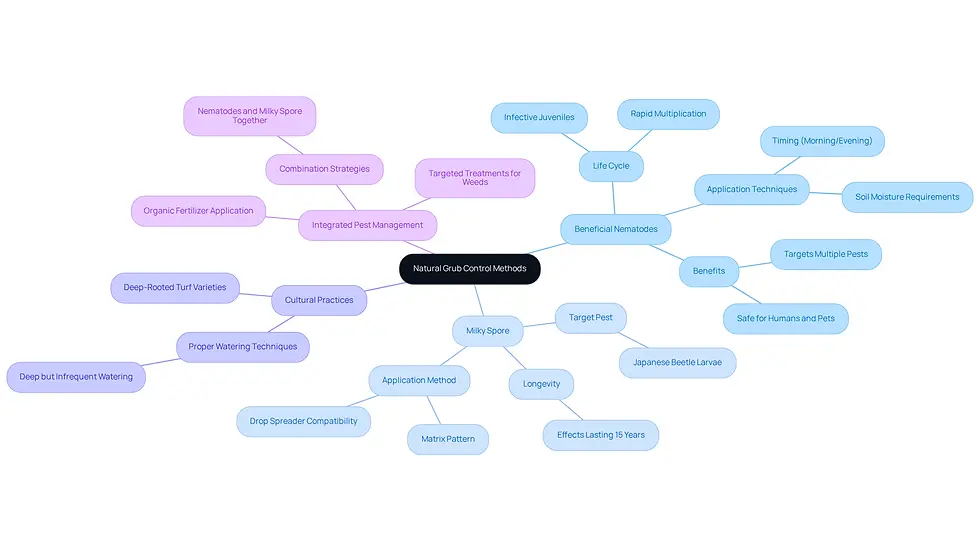
One of the most effective solutions is the use of beneficial nematodes. These microscopic roundworms actively seek out and eliminate larvae in the soil, especially when applied during moist conditions, which allows them to penetrate the soil more effectively. Another great option is milky spore, a bacterium that specifically targets Japanese beetle larvae. It provides a valuable choice for homeowners seeking natural grub control, offering long-term management with effects lasting up to fifteen years to sustainably manage insect populations.
In addition to these biological controls, implementing [cultural practices](https://nematodes.com/fact sheet.htm) can significantly reduce larval infestations. For example, planting deep-rooted turf varieties and using proper watering techniques - like watering deeply but infrequently - encourages roots to grow deeper. This not only makes your grass less vulnerable to insect damage but also promotes a healthier yard ecosystem overall. If you find yourself facing serious infestations, with more than ten larvae per square foot, combining beneficial nematodes with milky spore can enhance effectiveness.
Spring Touch’s seasonal turf care strategy also emphasizes the importance of natural grub control as part of integrated pest management. Their organic-based fertilizer application not only replenishes nutrients but also incorporates pest control measures, ensuring a comprehensive approach to yard health. By blending these natural techniques with Spring Touch’s targeted treatments for dandelions and broadleaf weeds, you can efficiently control larvae while enhancing the overall health of your grass.
Adopt Preventive Strategies for Grub Management
Adopt Preventive Strategies for Grub Management
Managing grubs can feel overwhelming for homeowners, but there are effective preventive strategies that can bring peace of mind.
Regular Lawn Maintenance: Engaging in practices like aeration, overseeding, and proper mowing techniques can make a significant difference.
Aeration: This essential process alleviates soil compaction, allowing roots to grow deeper and water to penetrate more effectively. When the soil is well-aerated, it deters beetles from laying eggs. A healthy, well-aerated lawn that employs natural grub control is more resilient against pests, as strong turf can better withstand insect feeding.
Mowing: Keeping your lawn at a height of 3 to 4 inches promotes deeper root systems, which strengthens the turf against potential insect damage.
Corn Gluten Meal Application: This natural option not only hinders weed growth but also encourages robust turf vitality, making your lawn less attractive to insects.
Timing of Treatments: Applying preventive treatments in late spring is crucial. This proactive step can significantly reduce pest populations using natural grub control before they become a larger issue.
By implementing these methods and using Spring Touch's organic fertilizer, which nourishes your grass while controlling crabgrass, you can cultivate a vibrant, thriving yard. This approach not only enhances your lawn's beauty but also minimizes the risk of pest infestations, giving you the assurance of a healthy outdoor space.

Monitor Lawn Health: Early Detection of Grub Infestations
Regular inspections are essential for keeping your yard healthy and spotting signs of insect activity. It’s important to stay alert for unusual brown patches, spongy soil, or increased animal activity, like birds or raccoons digging in your lawn. To check for larvae, you can simply cut a square foot of turf and peel it back to see how many larvae you find. If you discover more than five larvae per square foot, it could indicate a significant problem. Additionally, using a soapy water solution can help flush grubs to the surface, making them easier to count.
Early detection is crucial. It allows you to take swift action, whether through natural control methods or preventive treatments, ensuring your lawn stays healthy and vibrant. Experts stress that recognizing these signs early can prevent extensive damage and encourage robust grass growth. Remember, by being proactive, you can protect your yard and enjoy a lush, thriving landscape.

Conclusion
Taking control of grubs in your lawn is vital for nurturing a healthy and vibrant outdoor space. These pests can wreak havoc if left unchecked, but by understanding their life cycle and employing effective natural control strategies, you can significantly minimize the risk of damage. This proactive approach not only protects your grass but also enhances the overall vitality of your yard.
One effective strategy involves using beneficial nematodes and milky spore, which specifically target grub larvae while promoting long-term pest management. Regular lawn maintenance, proper aeration, and timely preventive treatments are also essential in creating an environment that discourages grubs. By keeping an eye on your lawn for early signs of infestation, you can address any potential issues swiftly, preventing extensive damage and ensuring your lawn remains lush.
Ultimately, embracing these natural methods for grub management leads to a thriving lawn that can withstand the challenges posed by these underground invaders. We encourage homeowners to adopt these practices and consider seeking expert assistance from services like Spring Touch for comprehensive lawn care solutions. By implementing these strategies, you not only safeguard your yard but also contribute to a more sustainable ecosystem, allowing you to enjoy your green oasis for years to come.
Frequently Asked Questions
What are grubs and why are they a concern for lawns?
Grubs are the larval stage of various beetles, such as the Japanese beetle and the June bug, and they can pose a serious threat to lawns by feeding on grass roots, leading to significant damage.
What is the life cycle of grubs?
The life cycle of grubs unfolds in four stages: egg, larva, pupa, and adult beetle. Adult beetles typically lay their eggs in the soil during late spring to early summer.
When do grubs cause the most damage to lawns?
Grubs cause the most damage during late summer and early fall when the larvae are growing most actively and feeding on grass roots.
How can homeowners identify grub damage in their lawns?
Homeowners can identify grub damage by looking for signs such as wilting grass, brown patches, and spongy soil.
What is the significance of monitoring lawns during August and September?
August and September are key times to monitor lawns because larvae develop through three instars during these months, making it crucial to stay vigilant for signs of damage.
How can Spring Touch Lawn & Pest Control help with grub issues?
Spring Touch Lawn & Pest Control offers expert solutions that target the eggs, larvae, and adult beetles through strategic pest management, utilizing natural grub control to protect lawns.
Is there any special offer for new clients of Spring Touch Lawn & Pest Control?
Yes, new clients can enjoy their first application for free when they enroll in comprehensive yard care, mosquito management, or pest management programs.
Why is understanding the grub life cycle important for lawn care?
Understanding the grub life cycle is essential for planning effective preventive measures and treatments, ensuring the health and vitality of your garden.
List of Sources
Understand Grubs: Life Cycle and Lawn Impact
buckeyeturf.osu.edu (https://buckeyeturf.osu.edu/news/buckeye-turf-newsletter-spring-2026)
Check your lawn for Japanese Beetle grubs (https://mesacounty.us/news/noxious-weed-and-pest/check-your-lawn-japanese-beetle-grubs)
greenoasis.co (https://greenoasis.co/news/the-secret-world-beneath-your-green-oasis-unveiling-the-intriguing-lifecycle-of-lawn-grubs)
Implement Natural Control Methods for Grubs
nematodes.com (https://nematodes.com/fact sheet.htm)
ecolandscaping.org (https://ecolandscaping.org/05/landscape-challenges/pest-management/controlling-grubs-milky-spore-disease-or-beneficial-nematodes)
news.virginia.edu (https://news.virginia.edu/content/nematodes-vs-grubs-insect-smackdown-grounds)
arbico-organics.com (https://arbico-organics.com/product/milky-spore-granular-bacillus-popillae/organic-lawn-care?srsltid=AfmBOorvkqi3kDHplGEOwCU93aHz7YRgVis7ETZdidNzAbR8DeDQX1aY)
Adopt Preventive Strategies for Grub Management
farmonaut.com (https://farmonaut.com/blogs/grubs-in-lawn-best-treatments-powerful-control-for-2026)
fairwaylawns.com (https://fairwaylawns.com/the-truth-about-grubs-how-to-actually-prevent-them)
purplecare.com (https://purplecare.com/blog/lawn-grubs-treatment)
indoorandoutdoorplants.com.au (https://indoorandoutdoorplants.com.au/article/grub-control-for-lawns-2026-preventive-vs-curative-products-amp-timing?srsltid=AfmBOorKFdJDBrw4KjiPFM3twTidtSHDyDX2w5jhXjhsRLh51Pub20v4)
centralservicescompany.com (https://centralservicescompany.com/4-facts-about-aeration)
Monitor Lawn Health: Early Detection of Grub Infestations
westfallspestcontrol.com (https://westfallspestcontrol.com/about-us/blog/2026/april/grub-activity-in-spring-lawns-what-homeowners-ne)
justanswer.com (https://justanswer.com/landscaping/rw6qj-lawn-mess-think-grubs.html)
blog.nutrilawn.com (https://blog.nutrilawn.com/monitoring-for-white-grubs)
franklin.ces.ncsu.edu (https://franklin.ces.ncsu.edu/news/are-white-grubs-creating-problems-in-your-landscape)
thespruce.com (https://thespruce.com/signs-you-have-lawn-grubs-11916021)


