.png)

Master Grubs in Lawn: Identify, Treat, and Maintain Health
- Spring Touch Team

- Jun 6
- 7 min read
Updated: 2 hours ago
Introduction
Is your once-thriving lawn starting to show signs of distress? Patchy, spongy areas can indicate the presence of grubs, the larval stage of beetles like the Japanese beetle. These pests pose a significant threat to your lawn's health, feasting on grass roots and leaving behind unsightly damage.
In this article, we’ll explore the crucial steps you can take to:
Identify grubs
Treat your lawn
Maintain your lawn against these hidden threats
Ensuring a vibrant outdoor space. Ignoring these signs can lead to even greater damage, making recovery more challenging. Understanding the lifecycle and treatment strategies for grubs is essential for every homeowner looking to preserve their lawn's beauty and value.
Define Grubs: Understanding Their Role in Lawn Health
Have you noticed your once-lush lawn turning into a patchy, spongy mess? Grubs in lawn, which are the larval stage of beetles like the Japanese beetle and June bug, can be a hidden threat. Grubs in lawn feast on grass roots, leading to unsightly dead patches and a frustratingly spongy lawn. While they play a role in the ecosystem by breaking down organic material and aerating the soil, their feeding habits can wreak havoc on your grassy areas. In Minnesota, the presence of these larvae can lead to serious lawn health issues, especially during their peak feeding season from late spring to early fall.
It's important to keep an eye out for signs of grubs in lawn, such as:
Soft or spongy turf
Irregular brown patches
Increased activity from wildlife like skunks and raccoons digging for these pests
If you discover 10 or more larvae per square foot, it’s a clear indication of a serious infestation. This not only affects the beauty of your lawn but can also diminish your property value and enjoyment of your outdoor space.
Real-life stories highlight the impact of grubs on lawns. One property owner shared how their yard suffered due to a pest infestation, prompting a complete overhaul of their yard care approach. After implementing targeted pest control measures, they witnessed a remarkable recovery, underscoring the importance of timely intervention. Understanding the impact of grubs empowers you to take action, ensuring your lawn remains a source of pride and joy for years to come.

Explore the Grub Lifecycle: Stages and Timing
Are you worried about the health of your lawn as summer approaches? Understanding the lifecycle of grubs can help you protect your lawn from potential damage. These pests undergo a complete metamorphosis, moving through four stages:
Egg
Larva
Pupa
Adult beetle
The larvae stage can be particularly concerning, as these pests munch on grass roots, leading to unsightly patches in your lawn during late summer and early fall. To keep your lawn healthy, consider applying preventative treatments in late spring or early summer, before those pesky larvae start to emerge. In early autumn, when larvae are still close to the surface and actively feeding, healing therapies can work wonders for your lawn. By understanding this lifecycle, you can take proactive steps to ensure your lawn thrives, rather than just survives.

Identify Grub Infestation: Signs and Symptoms
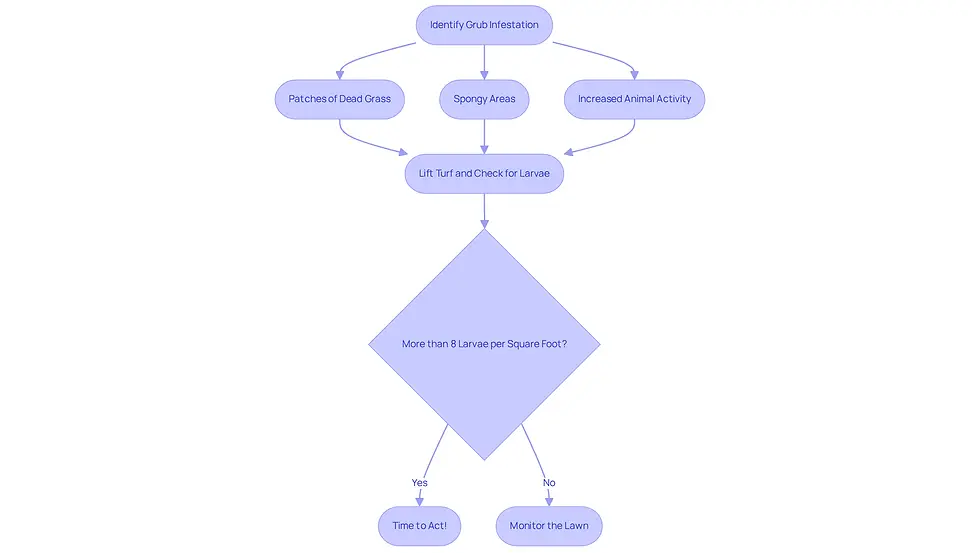
Have you noticed patches of dead or wilting grass in your lawn? It might be more than just a dry spell. Indicators of grubs in lawn often manifest as uneven areas that feel spongy underfoot. This can be concerning, especially when you see increased activity from animals like birds, raccoons, or skunks. These creatures often dig around, searching for grubs in lawn, which can signal trouble beneath the surface.
A simple way to check for grubs in lawn is to lift a piece of turf and see how many larvae you find. If you spot more than eight per square foot, it’s time to act. Ignoring these signs could lead to a lawn that struggles to thrive, leaving you frustrated and disappointed. Identifying these indicators promptly can help you avoid further damage and maintain a healthy yard.
With the right support, you can restore your lawn’s health and enjoy a vibrant outdoor space once again. Spring Touch Lawn & Pest Control offers organic-based fertilizers that enrich your grass while providing effective insect control. Their seasonal lawn care treatments are designed to tackle both weeds and pests, ensuring your lawn remains strong and healthy all year round.
Implement Treatment Strategies: Chemical, Biological, and Cultural Controls
Many homeowners feel overwhelmed when faced with the challenge of dealing with grubs in lawn infestations, unsure of how to protect their lawns. Effective management of grubs in lawn infestations requires a combination of strategies tailored to the specific needs of your lawn.
Chemical Controls: Insecticides such as imidacloprid and chlorantraniliprole work best during the larva's active feeding times. This usually happens from late April to early June and again in late summer to early autumn. It's crucial to follow label instructions for safe and effective application. Curative products like carbaryl or trichlorfon should be applied in late summer and autumn when grubs in lawn are present. Spring Touch Lawn & Pest Control's second treatment specifically targets dandelions and broadleaf weeds while also incorporating pest control, making it an ideal choice for comprehensive yard care.
Biological Controls: Natural alternatives such as beneficial nematodes and milky spore target larvae without harming helpful insects. Beneficial nematodes should be applied every 2-3 weeks if used curatively or 2-3 times a season if used preventatively. These methods are environmentally friendly and can yield effective results over time, especially when conditions are optimal for their application.
Cultural Controls: Sustaining a healthy yard through appropriate watering, mowing, and fertilization is crucial in preventing pest outbreaks. Methods like aerating the soil and overseeding can encourage strong grass growth, allowing the yard to endure a certain degree of insect harm. Additionally, after applying insecticides, it's important to water the treated areas to maximize effectiveness.
Keep an eye out for signs of larva damage, like brown patches or spongy turf, as these could indicate the presence of grubs in lawn. With the right approach, you can transform your lawn into a healthy, vibrant space that you can enjoy all season long.

Conclusion
Grubs can quietly wreak havoc on your lawn, leaving you with unsightly patches and a spongy texture. Understanding and managing these pests is essential for maintaining a vibrant and healthy outdoor space. By recognizing the signs of infestation and intervening promptly, homeowners can safeguard their lawns from the detrimental effects of grubs.
To manage grubs effectively, start by:
Spotting the signs of infestation
Learning about their lifecycle
Considering a mix of treatment options that suit your lawn's needs
From chemical controls to biological and cultural practices, each approach offers unique benefits tailored to specific lawn care needs. Taking action quickly can save your lawn from extensive damage and help it bounce back to health.
Ultimately, a well-maintained lawn not only enhances the beauty of your property but also contributes to the overall enjoyment of your outdoor environment. By staying vigilant and informed about grub management, homeowners can ensure their lawns remain lush and inviting. Taking proactive steps today can lead to a lawn that not only looks beautiful but also brings you joy for years to come.
Frequently Asked Questions
What are grubs and how do they affect lawns?
Grubs are the larval stage of beetles, such as the Japanese beetle and June bug. They feed on grass roots, causing dead patches and a spongy texture in lawns, which can lead to significant lawn health issues.
What signs indicate the presence of grubs in my lawn?
Signs of grubs include soft or spongy turf, irregular brown patches, and increased wildlife activity, such as skunks and raccoons digging for these pests.
How many grubs per square foot indicate a serious infestation?
Discovering 10 or more grubs per square foot is a clear indication of a serious infestation that can negatively impact lawn aesthetics and property value.
When is the peak feeding season for grubs in Minnesota?
The peak feeding season for grubs in Minnesota typically occurs from late spring to early fall.
What should I do if I discover a grub infestation in my lawn?
Timely intervention is crucial. Implementing targeted pest control measures can help recover your lawn from grub damage.
Can grubs play a beneficial role in the ecosystem?
Yes, while grubs can damage lawns, they also play a role in breaking down organic material and aerating the soil.
How can I prevent grubs from damaging my lawn?
Regular lawn maintenance and monitoring for signs of grubs can help prevent infestations. Consulting with lawn care professionals can also provide effective prevention strategies.
Who can I contact for professional help with grub infestations in southern Minnesota?
For professional assistance, you can contact Spring Touch Lawn & Pest Control at 507-934-5296 for Southern Minnesota or 952-898-5296 for the Twin Cities.
List of Sources
Define Grubs: Understanding Their Role in Lawn Health
stormlawnandsnow.com (https://stormlawnandsnow.com/insect-control/grub-control)
How do I treat for grubs in my lawn? (https://extension.unh.edu/blog/2019/09/how-do-i-treat-grubs-my-lawn)
Grub Problems in Turf | Home Garden Education Office | College of Agriculture, Health and Natural Resources | University of Connecticut (https://homegarden.cahnr.uconn.edu/factsheets/grub-problems-in-turf)
Explore the Grub Lifecycle: Stages and Timing
Understanding Grubs: Lifecycle, Treatment, and Timing (https://lawnscience.com/understanding-grubs-lifecycle-treatment-and-timing)
When Do Grubs Come Out? Life Cycle, Lawn Damage Signs & Treatment Timing (https://spring-green.com/learn/blogs/blog-grub-control-time-treat-grubs)
The Lifecycle of Lawn Grubs: Understanding and Controlling a Hidden Threat - SeaScape, Inc. (https://seascapeinc.com/healthy-lawns-with-dr-jim/the-lifecycle-of-lawn-grubs-understanding-and-controlling-a-hidden-threat)
The Best Time to Treat for Grubs in Your Lawn | KG Landscape (https://kglandscape.com/best-time-treat-grubs-lawn)
Identify Grub Infestation: Signs and Symptoms
Identifying and Controlling Grub Damage - Organic Lawns by Lunseth (https://organiclawnsbylunseth.com/identifying-and-controlling-grub-damage-2)
Grub Damage In Your Lawn: How to Identify, Repair, and Prevent Damage - bioLawn (https://getbiolawn.com/grub-damage-in-your-lawn)
What's digging up your yard? (https://extension.umn.edu/yard-and-garden-news/whats-digging-your-yard)
White grub damage in perennial grasses (https://blog-crop-news.extension.umn.edu/2024/05/white-grub-damage-in-perennial-grasses.html)
3 Signs You May Have Grubs in Your Lawn | TruGreen (https://trugreen.com/lawn-care-101/blog/lawn-care-tips/signs-of-lawn-grubs)
Implement Treatment Strategies: Chemical, Biological, and Cultural Controls
How to choose and when to apply grub control products for your lawn (https://canr.msu.edu/news/how_to_choose_and_when_to_apply_grub_control_products_for_your_lawn)
How do I treat for grubs in my lawn? (https://extension.unh.edu/blog/2019/09/how-do-i-treat-grubs-my-lawn)
White Grub Control in Turfgrass (https://hort.extension.wisc.edu/articles/grub-control-home-lawn)
Master Lawn Grub Killer Techniques for a Healthy Lawn (https://springtouchlawn.com/post/master-lawn-grub-killer-techniques-for-a-healthy-lawn)


