.png)

Master Weed Preventer for Lawns: Essential Tips for Homeowners
- Spring Touch Team

- May 27
- 7 min read
Updated: 1 day ago
Introduction
Every homeowner knows the frustration of watching weeds invade their cherished lawn, threatening its beauty and health. These weeds not only mar the appearance of your yard but can also choke out the healthy grass beneath. But with the right knowledge and tools, you can take back control of your lawn. This article will guide you through practical tips and best practices for identifying these weeds and implementing timely preventers, so you can reclaim your outdoor space with confidence. With the right strategies, you can not only protect your lawn but also enjoy the peace of mind that comes with a thriving outdoor space.
Identify Common Lawn Weeds
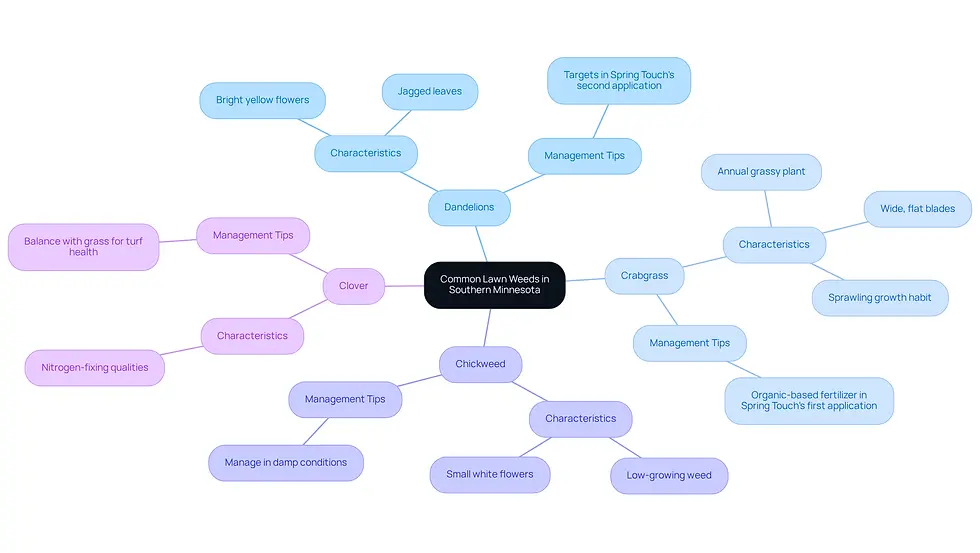
Recognizing the common weeds in Southern Minnesota grass areas is the first step toward maintaining a healthy lawn. The following weeds are frequently encountered:
Dandelions: These bright yellow flowers with jagged leaves can quickly take over your yard, turning a once vibrant lawn into a patchy mess if not addressed promptly. Dandelions thrive in disturbed soils and are among the most common plants in Minnesota lawns, making their identification essential for effective management. Spring Touch's second application specifically targets dandelions and broadleaf plants, ensuring a strong defense against these invaders.
Crabgrass: This annual grassy plant germinates in warm weather and can choke out desirable grass species. If you want to keep your lawn healthy, it’s crucial to keep an eye out for crabgrass early in the season before it takes hold and chokes out your grass. It’s identifiable by its wide, flat blades and sprawling growth habit. Spring Touch's first application features an organic-based fertilizer that acts as a weed preventer for lawns, helping to restore nutrients and stop crabgrass from dominating your yard this summer.
Chickweed: A low-growing weed with small white flowers, chickweed spreads quickly in damp conditions, making it a frequent annoyance in grassy areas. Its ability to thrive in wet environments can lead to significant competition with desirable grass, so it’s important to manage it effectively.
Clover: While some homeowners appreciate clover for its nitrogen-fixing qualities, it can compete with grass for nutrients and space, potentially affecting turf health. Finding the right balance between clover and grass is essential to ensure your yard thrives and remains lush.
By becoming acquainted with these plants, homeowners can better assess their yard's condition and choose suitable management techniques. Furthermore, Spring Touch's second application now features grub management, tackling both undesirable plants and grub infestations for thorough yard care. As William Curran, a professor at Penn State University, states, "Identifying these relationships and building herbicide programs based on both herbicide modes of action and mode of metabolism or detoxification will be important in the future to prevent the evolution of multiple resistance." This emphasizes the significance of accurate plant identification in creating effective management strategies. By understanding these weeds and their impact, you can take proactive steps to ensure your yard remains vibrant and healthy.
Implement Effective Weed Preventers
Weeds can quickly turn a beautiful lawn into a frustrating battle, leaving homeowners feeling overwhelmed and defeated. Here are some strategies to help you win this fight.
Pre-emergent Herbicides: Imagine a barrier that stands guard against the relentless invasion of weeds, protecting your lawn and giving you peace of mind. These products serve as a weed preventer for lawns by creating a protective barrier in the soil that inhibits the germination of weed seeds. For the best results, apply a weed preventer for lawns in early spring before soil temperatures reach 55°F, as this is when many unwanted plants begin to sprout. Spring Touch's organic-based fertilizer with crabgrass preventer is an excellent choice for this application, restoring nutrients while keeping crabgrass at bay.
Mulching: Picture a cozy blanket around your garden beds and trees, suppressing unwanted plant growth. Applying a layer of mulch is a highly effective method for blocking sunlight and retaining moisture, creating an environment less favorable for plant establishment. A mulch depth of 3 inches is ideal for maximizing its benefits, ensuring your plants thrive.
Proper Mowing: Maintaining your grass at the correct height, typically between 3-4 inches, encourages healthy growth. This elevation shelters the ground, hindering unwanted plant seeds from sprouting while promoting a strong turf that can outcompete unwanted vegetation.
Ground Quality: Frequent aeration and the incorporation of organic materials enhance ground structure and nutrient levels, making it less inviting for unwanted plants. Touch's revolutionary liquid aeration penetrates 6-8 inches into the soil, enhancing root growth and overall grass vitality without the mess of traditional aeration.
By taking these proactive steps, you can reclaim your lawn and enjoy a thriving outdoor space that brings you peace of mind.

Apply Weed Preventers at Optimal Times
Many homeowners struggle with the challenge of keeping their yards free from invasive plants, often feeling overwhelmed by the task. Timing is essential when applying plant preventers, and here are key periods to consider:
Early Spring: Applying pre-emergent herbicides in early spring, ideally between mid-February and early April, is crucial. This is when soil temperatures reach 50 to 55 degrees Fahrenheit. By utilizing a weed preventer for lawns, you can tackle pesky plants like crabgrass before they even have a chance to sprout, providing a solid defense against unwanted growth.
Late Summer to Early Fall: This period is perfect for applying post-emergent herbicides to control existing plants. Many persistent plants are actively storing nutrients for winter, making them especially vulnerable to treatment during this time.
After rainfall, applying a weed preventer for lawns when the soil is damp enhances product adherence to the soil, significantly improving effectiveness.
Without the right timing, those pesky weeds can quickly take over, leaving you feeling defeated in your efforts to maintain a beautiful yard.

Maintain Lawn Health for Effective Weed Control
Weeds can quickly take over your lawn, leaving you frustrated and overwhelmed, but a weed preventer for lawns can help you cultivate a healthy garden that protects against them. Here are essential practices to maintain lawn health:
Regular Watering: Think of watering your lawn as giving it a drink; deep and infrequent watering encourages strong roots. Aim for about 1 to 1.5 inches of water per week, adjusting based on rainfall. Early morning watering, ideally between 5 a.m. and 10 a.m., minimizes evaporation and ensures water reaches the roots effectively.
Fertilization: Consider using Spring Touch's organic-based fertilizer, which not only provides essential nutrients but also includes crabgrass preventer. A properly nourished grass area is more vigorous and better prepared to compete with unwanted plants. Turf care experts suggest that adequately fertilized grass areas show enhanced health and resistance against plant invasion, needing 1 to 1.5 inches of water weekly for optimal growth.
Aeration: Aerate your grass areas annually to relieve ground compaction and enhance air and nutrient penetration. This practice encourages deeper root development and overall lawn health, making it more competitive against unwanted plants. Proper aeration is especially crucial in Southern Minnesota, where compacted clay soil can obstruct seed germination.
Mowing Practices: Mow regularly and maintain the grass at an ideal height of around 3 inches. Taller grass offers shade to the soil, decreasing evaporation and encouraging denser growth, which can surpass unwanted plants for resources.
By nurturing your lawn with these practices, including the use of a weed preventer for lawns, you can create a thriving space that not only looks beautiful but also stands strong against weeds.

Conclusion
Many homeowners feel overwhelmed by the persistent battle against weeds that threaten their lawns. Understanding how to spot common weeds and take steps to protect your lawn can make all the difference. By recognizing prevalent weeds like dandelions and crabgrass, and using effective weed preventers, you can create a beautiful outdoor space that flourishes instead of fighting against invasive plants.
These simple practices help your lawn thrive, making it easier to keep those pesky weeds at bay and reducing the stress that comes with weed control. Proper lawn care techniques, such as mulching, mowing, and regular watering, contribute to a robust lawn that can outcompete unwanted vegetation.
A healthy lawn isn’t just about looking good; it’s about creating a space that thrives and keeps weeds at bay. With these strategies in hand, you can cultivate a lawn that not only looks beautiful but also thrives with resilience against weeds.
Frequently Asked Questions
What are the common lawn weeds found in Southern Minnesota?
The common lawn weeds in Southern Minnesota include dandelions, crabgrass, chickweed, and clover.
How can I identify dandelions?
Dandelions are recognizable by their bright yellow flowers and jagged leaves. They thrive in disturbed soils and can quickly take over a lawn if not managed.
What is the impact of crabgrass on my lawn?
Crabgrass is an annual grassy plant that germinates in warm weather and can choke out desirable grass species. It is identifiable by its wide, flat blades and sprawling growth habit.
What should I know about managing chickweed?
Chickweed is a low-growing weed with small white flowers that spreads quickly in damp conditions. It competes with desirable grass, making effective management important.
What are the pros and cons of having clover in my lawn?
While clover has nitrogen-fixing qualities that can benefit soil health, it competes with grass for nutrients and space, potentially affecting turf health.
How does Spring Touch help with weed management?
Spring Touch's second application specifically targets dandelions and broadleaf plants, while the first application features an organic-based fertilizer that acts as a weed preventer, helping to manage crabgrass.
Why is accurate plant identification important for lawn care?
Accurate plant identification is crucial for creating effective management strategies and preventing the evolution of multiple resistance in weeds, as highlighted by experts in the field.
List of Sources
Identify Common Lawn Weeds
growiwm.org (https://growiwm.org/learn-from-the-best-grow-farmer-case-studies)
Implement Effective Weed Preventers
littlejohnslawns.com (https://littlejohnslawns.com/blog/does-mulch-help-with-weed-control)
weeds.ces.ncsu.edu (https://weeds.ces.ncsu.edu/weeds-teaching/landscape-weed-management/preemergence-herbicides)
The Effect of Wood Mulch Type and Depth on Weed and Tree Growth and Certain Soil Parameters (https://auf.isa-arbor.com/content/21/5/225)
advancedturf.com (https://advancedturf.com/resources/pre-emergent-herbicides)
Apply Weed Preventers at Optimal Times
andersonslawn.com (https://andersonslawn.com/blogs/learn/pre-emergent-dos-and-donts?srsltid=AfmBOoqknegjyRLlROhU0tuUMVrSRcI0WEOXVzSHKg_IrLuWRoENwaka)
aggielandgreen.com (https://aggielandgreen.com/when-to-apply-pre-emergents-in-texas)
Pre-Emergent vs. Post-Emergent: How to Time Your Weed Control (https://shadesofgreenlawncare.com/blog/pre-emergent-vs-post-emergent-how-to-time-weed-control)
lawnstarter.com (https://lawnstarter.com/blog/lawn-care-2/when-to-apply-pre-emergent-herbicide)
lawndoctor.com (https://lawndoctor.com/blog/pre-emergent-herbicide-how-to-use-when-to-apply)
Maintain Lawn Health for Effective Weed Control
groundfxmn.com (https://groundfxmn.com/blog/the-science-of-lawn-hydration-when-how-why)
coloniallawn.com (https://coloniallawn.com/watering-tips-for-efficient-lawn-care)
The Ultimate Guide to Lawn Watering | TruGreen (https://trugreen.com/lawn-care-101/blog/lawn-care-tips/lawn-watering-guide)
Lawn Watering Tips | ScottsMiracle-Gro US (https://scottsmiraclegro.com/en-us/learn/lawn-care/lawn-watering-tips---when-is-the-best-time-to-water-your-lawn.html)
growiwm.org (https://growiwm.org/learn-from-the-best-grow-farmer-case-studies)


