.png)

What Does a Tiller Do? Functions, Benefits, and Types Explained
- Spring Touch Team

- 1 day ago
- 7 min read
Updated: 8 hours ago
Introduction
Choosing the right tiller can feel daunting, especially with so many options available to gardeners today. These tools are essential for breaking up compacted earth and improving soil quality, yet many gardeners struggle to find the right fit for their needs.
With so many options available, it can be overwhelming to select the right tiller for your needs, and choosing the wrong one can lead to wasted effort and a less productive garden.
Understanding the differences between tillers can empower you to cultivate a garden that flourishes beautifully.
Define a Tiller: Understanding Its Purpose and Mechanism
Are you struggling to prepare your garden for planting? A tiller might just be the solution you need. A tiller, often called a garden tiller or rototiller, is essential for breaking up and aerating the ground, which leads to the question of what does a tiller do for planting. It works with rotating blades or tines that penetrate the soil, loosening compacted earth and mixing in organic matter like compost or fertilizer. When you till, you’re not just breaking up the soil; you’re creating a better environment for your plants to thrive.
Many gardeners struggle with hard, compacted clay soil that makes planting a challenge. To understand what does a tiller do, it's important to note that tillers are especially beneficial for preparing new planting areas or rejuvenating existing ones, making them vital for both novice and expert horticulturists. Regular tilling can lead to a well-cultivated garden that boasts up to 80% fewer weeds compared to untilled ground, reducing the need for chemical herbicides. Without proper tilling, your garden may struggle to thrive, leading to disappointing results. Additionally, tilling improves aeration, allowing water and oxygen to penetrate deeper into the soil, which is crucial for optimal plant growth, especially in regions like Minnesota.
Imagine transforming your gardening experience from frustration to flourishing beauty with the right tiller. Investing in a cultivator not only enhances your horticultural efforts but also enriches the overall experience of planting, resulting in healthier plants and a more fulfilling gardening journey.

Explore Tiller Functions: Soil Preparation, Weed Control, and More
Gardening can often feel overwhelming, especially when faced with tough soil conditions that hinder plant growth. To understand what does a tiller do, it's important to note that tillers play an essential role in this process by serving multiple functions like ground preparation, weed control, and mixing amendments. Imagine struggling with hard, compacted soil that seems impossible to work with. A cultivator can change that, breaking up the ground to allow air and nutrients to reach your plants more easily. This is particularly important in regions with challenging soil conditions, such as Minnesota, where compacted clay is common. By utilizing a cultivator, you can create a more nurturing environment for your plants to thrive.
Weed management can also be a daunting task, but knowing what does a tiller do reveals that tillers are highly effective in this area. Picture a garden where weeds are kept at bay, allowing your plants to flourish. With proper tilling, you can achieve a garden that’s not just manageable but thriving, highlighting what does a tiller do. Studies show that a well-tended plot can have significantly fewer weeds compared to untilled ground, highlighting the importance of tilling in maintaining a tidy planting area.
Furthermore, cultivators are essential in blending compost and fertilizers into the soil, ensuring that nutrients are evenly distributed. By mixing in compost and fertilizers, you’re not just feeding your plants; you’re creating a nurturing environment where they can truly thrive. Overall, knowing what does a tiller do emphasizes the multifunctionality of these devices, making them essential tools for horticulturists aiming to maintain vibrant and productive landscapes. By embracing the power of tillers, you’re not just gardening; you’re nurturing a thriving ecosystem that supports your plants and your peace of mind.

Highlight Benefits: Time Savings, Improved Soil Quality, and Increased Yields
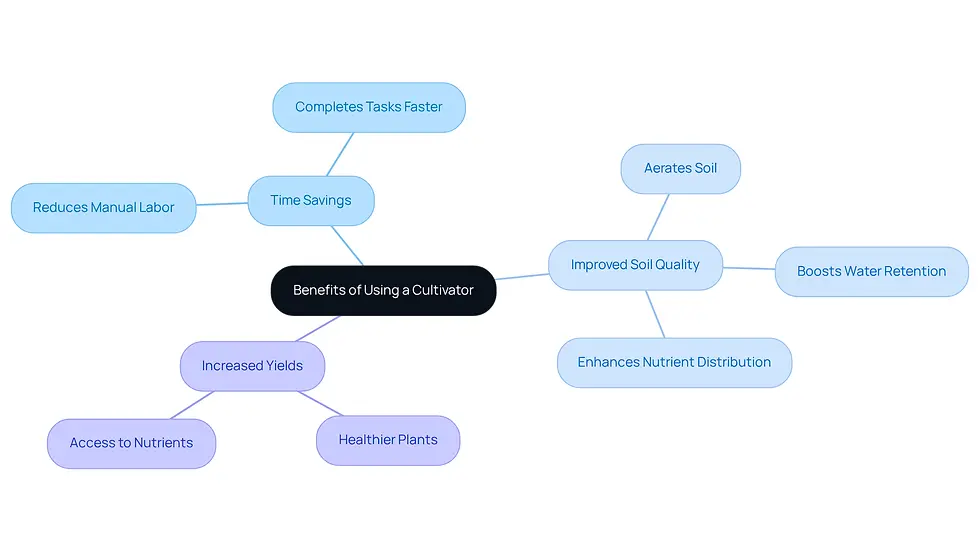
Many gardeners find themselves overwhelmed by the time-consuming nature of manual gardening tools. Using a cultivator can dramatically reduce the time needed for garden preparation and upkeep. Research indicates that cultivators can cut down the time needed for tasks significantly. One user even noted that a cultivator completed a job in less than half the time of a manual tool. This aligns with findings from the case study 'Advantages of Using a Cultivator,' which highlights how these tools greatly decrease manual labor and improve ground quality.
Along with saving time, cultivators enhance ground quality by aerating the earth, boosting water retention and nutrient distribution - essential factors for plant health. Regular tilling not only promotes better root growth but also leads to healthier plants and more abundant harvests. Moreover, cultivators help manage weeds by disturbing their roots and burying weed seeds deep within the ground, contributing to a healthier garden ecosystem. Gardeners who invest in a soil cultivator often report increased crop yields, as properly prepared soil allows plants to access essential nutrients and moisture more effectively. With a cultivator, you’re not just saving time; you’re also setting the stage for a thriving garden.
Differentiate Types of Tillers: Front-Tine vs. Rear-Tine and Their Uses
Choosing the right cultivator can feel overwhelming, especially when each type offers distinct advantages for your gardening needs. There are two main categories of cultivators: front-tine and rear-tine.
Front-tine cultivators, with tines located ahead of the engine, are lightweight and easy to handle, making them perfect for light cultivation tasks like maintaining previously worked ground or preparing small garden beds. They excel in smaller areas and established beds, where precision is key.
On the other hand, rear-tine cultivators have tines positioned behind the engine, providing greater power and depth for breaking up hard or compacted ground. These cultivators are more appropriate for larger spaces and challenging ground conditions, making them efficient for heavy-duty tasks and extensive planting projects. Many gardeners find that rear-tine cultivators can ease the physical demands of gardening, often needing just a couple of passes to get the job done, while front-tine models are more straightforward and easier to manage for lighter adjustments.
Additionally, considering environmental factors, such as reducing tilling frequency and depth to lessen soil erosion, is essential for sustainable cultivation practices. By understanding these differences, you can make informed choices that lead to a flourishing garden, free from unnecessary frustration.

Conclusion
Many gardeners face the challenge of hard, unyielding soil that makes planting a daunting task. Understanding the role of a tiller in gardening reveals its significance in creating a thriving landscape. A tiller prepares the soil for planting and improves its quality. It's an essential tool for all gardeners, whether you're just starting or have years of experience. By breaking up compacted earth and mixing in essential nutrients, tillers foster an environment where plants can flourish, ultimately leading to healthier gardens and more bountiful harvests.
Throughout this article, we've seen how tillers can tackle common gardening challenges like tough soil and pesky weeds, making your gardening journey smoother and more enjoyable. The benefits of using a tiller extend beyond mere convenience; they save time, improve soil structure, and contribute to increased crop yields. Understanding the differences between front-tine and rear-tine tillers further empowers gardeners to select the right tool for their specific needs, ensuring optimal results in their gardening endeavors.
Using a tiller can make gardening easier and more enjoyable, turning your efforts into a rewarding experience. Embracing this powerful tool can lead to a more productive and enjoyable gardening journey, transforming challenges into opportunities for growth. Investing in a tiller not only simplifies gardening but also opens the door to a flourishing garden that brings joy and satisfaction.
Frequently Asked Questions
What is a tiller and what is its purpose?
A tiller, often called a garden tiller or rototiller, is a tool used to break up and aerate the ground, making it easier to prepare soil for planting.
How does a tiller work?
A tiller works with rotating blades or tines that penetrate the soil, loosening compacted earth and mixing in organic matter like compost or fertilizer.
Why is tilling important for planting?
Tilling creates a better environment for plants to thrive by improving soil aeration, allowing water and oxygen to penetrate deeper, and reducing weed growth by up to 80% compared to untilled ground.
Who can benefit from using a tiller?
Both novice and expert horticulturists can benefit from using a tiller, especially when preparing new planting areas or rejuvenating existing ones.
What are the benefits of regular tilling?
Regular tilling leads to a well-cultivated garden, reduces the need for chemical herbicides, and enhances overall plant health and growth.
How does tilling affect soil in regions like Minnesota?
Tilling is crucial in regions like Minnesota, where hard, compacted clay soil can make planting challenging. It improves soil conditions for optimal plant growth.
List of Sources
Define a Tiller: Understanding Its Purpose and Mechanism
What Is a Tiller? A Beginner’s Guide to This Essential Garden Tool (https://prestonlawn.com/What-Is-a-Tiller)
Gardening Statistics (2026) (https://rubyhome.com/blog/gardening-stats)
What Is a Tiller Used For? Key Functions and Benefits for Homeowners (https://springtouchlawn.com/post/what-is-a-tiller-used-for-key-functions-and-benefits-for-homeowners)
Explore Tiller Functions: Soil Preparation, Weed Control, and More
What Is a Tiller? A Beginner’s Guide to This Essential Garden Tool (https://prestonlawn.com/What-Is-a-Tiller)
What Is a Tiller Used For? Key Functions and Benefits for Homeowners (https://springtouchlawn.com/post/what-is-a-tiller-used-for-key-functions-and-benefits-for-homeowners)
Unexpected Ways a BCS Tiller Saves Time in the Garden (https://andersonseedandgarden.com/blogs/knowledge-center-soil-fertilizer/bcs-tiller-time-saving-benefits?srsltid=AfmBOorbYfz6UWPULQ834qCIRgyA2YfGb_1E01Sn3PsZEUl-RLEpo9Jb)
The Pros and Cons of Using a Garden Tiller in Your Garden (https://ugaoo.com/blogs/garden-maintenance/the-pros-and-cons-of-using-a-garden-tiller-in-your-garden?srsltid=AfmBOop2lKBtyIORQbgIX1nYLaK_JfI7JePqXneDaBv96-NsH-E_eDWi)
Highlight Benefits: Time Savings, Improved Soil Quality, and Increased Yields
Benefits of Owning a Tiller (https://slaights.com/blog/benefits-of-owning-a-tiller)
Conservation tillage effects on European crop yields: A meta-analysis (https://sciencedirect.com/science/article/abs/pii/S0378429023001600)
Amazon's bestselling electric tiller that's a 'powerful time saver' is on sale for a limited time | Rogue Valley Times (https://rv-times.com/2024/04/25/amazons-bestselling-electric-tiller-thats-a-powerful-time-saver-is-on-sale-for-a-limited-time)
Tillers Make Gardening Simpler | Renter Center (https://rentercenter.net/tillers-make-gardening-simpler)
How Tillers Improve Soil Prep for Farming and Gardening - Blog (https://stihl.in/en/news/how-tillers-improve-soil-preparation-for-farming-gardening)
Differentiate Types of Tillers: Front-Tine vs. Rear-Tine and Their Uses
Rear tine tiller vs front tine: which is better? (https://toptenreviews.com/rear-tine-tiller-vs-front-tine-which-is-better)
Front Tine vs Rear Tine Tiller: Which Is Best for Your Garden? (https://novuspowerequipment.com/choosing-a-tiller-front-tine-vs-rear-tine-tiller)
When to Use a Front Tine Tiller: Guide for Gardeners - Rentalex (https://rentalex.com/when-to-use-a-front-tine-tiller-guide-for-gardeners)
Front Tine Versus Rear Tine Tiller (https://forums.yesterdaystractors.com/threads/front-tine-versus-rear-tine-tiller.1072499)