.png)

What Are Herbicides? Understanding Their Role in Lawn Care
- Spring Touch Team

- Apr 16
- 8 min read
Updated: 2 days ago
Introduction
Managing a lush, vibrant lawn can feel overwhelming, especially when weeds seem to take over. These pesky invaders can quickly turn your outdoor oasis into a battleground. Herbicides often come to the rescue, acting as the unsung heroes in the fight against unwanted vegetation. By understanding the two main types of herbicides - selective and non-selective - you can protect your cherished plants while nurturing a healthy outdoor space.
Yet, as concerns about the environmental and health impacts of these chemicals grow, it’s natural to wonder: how can you achieve effective weed control without compromising your values? The key lies in finding a balance. With the right knowledge and responsible practices, you can maintain a beautiful lawn while being mindful of the world around you.
Define Herbicides: Understanding Their Purpose and Function
Managing unwanted plants can feel overwhelming, especially when they threaten the beauty of your garden or lawn. What are herbicides? They are often called plant killers and are here to help. These chemical substances are specifically designed to tackle those pesky weeds that compete with your cherished plants for essential resources like light, water, and nutrients. They work by disrupting vital biological processes within the plants, leading to their demise or stunted growth. For homeowners and landscapers alike, it's crucial to understand what are herbicides in order to maintain the health and aesthetic appeal of outdoor spaces.
To understand what are herbicides, it's important to know that they fall into two main categories: selective and non-selective.
Selective herbicides target specific unwanted plants while leaving your preferred flora unharmed. This makes them ideal for preserving the integrity of your beloved garden.
On the other hand, non-selective herbicides eliminate all plant life they touch. While this can be beneficial in certain situations, it requires careful application to avoid harming desirable plants.
Knowing the difference is essential for effective lawn maintenance, allowing you to protect your landscape while managing those unwelcome weeds.
Consider this: weeds like Palmer amaranth can grow up to three inches a day. This rapid growth underscores the importance of having effective weed management strategies in place. Thankfully, advancements in precision application technologies, such as the John Deere See & Spray system, are making it easier to apply herbicides efficiently. These innovations aim to reduce overall usage and help prevent resistance development. Real-world examples show how selective herbicides are often used in landscaped areas to safeguard ornamental plants, while non-selective options may be employed when preparing for new planting or in spaces where complete vegetation removal is necessary. By understanding these dynamics, you can maintain a healthy, vibrant outdoor space that brings you joy.

Explore Types of Herbicides: Selective, Non-Selective, and More
Managing unwanted plants in your lawn can feel overwhelming, especially when you want to keep your grass healthy and vibrant. In turf management, it is vital to understand what are herbicides, as their types and uses can be confusing. Selective herbicides target specific unwanted plants while protecting the desirable ones, making them ideal for lawns. For example, products like Ortho Weed B Gon Plus Crabgrass Control can effectively eliminate over 200 grassy and broadleaf weeds without harming your grass.
On the other hand, non-selective weed killers, such as RM43, eliminate all plants they touch. These are typically used for clearing areas before planting or in non-crop environments. It’s important to know what are herbicides, as they can also be divided into pre-emergent and post-emergent types. Pre-emergent treatments prevent seedling growth, while post-emergent solutions, like Gordon's SpeedZone, tackle plants that have already sprouted, often showing results within 24 hours. Understanding these differences is crucial for homeowners looking to choose the right chemical for their yard maintenance needs, ensuring effective plant control without damaging their grass.
Recent advancements in weed killer technology, such as FMC's rimisoxafen with its dual mode of action, enhance effectiveness against resistant plants. This gives homeowners innovative solutions for maintaining healthy grass. The herbicide market is also evolving, leading to questions about what are herbicides that focus on sustainable practices and integrated pest management strategies blending chemical and non-chemical methods for the best results.
To kickstart your yard maintenance this spring, consider using Spring Touch's organic-based fertilizer with bio-solids and crabgrass preventer. This treatment not only replenishes essential nutrients but also helps prevent crabgrass from taking over your lawn during the summer months. As soil temperatures rise, dandelions can become a significant concern. Therefore, Spring Touch's second application targets these invasive plants, along with broadleaf plants, and includes grub control to address both plant and grub infestations.
The best time to apply post-emergent chemicals is early spring, when soil temperatures exceed 55 degrees Fahrenheit for at least three days. Keep in mind that the costs for post-emergent chemicals range from $10 to $80 per container, with each container treating between 200 to 50,000 square feet. This information can help you budget effectively for your plant management needs, giving you peace of mind as you care for your lawn.

Examine Uses of Herbicides: Importance in Agriculture and Landscaping
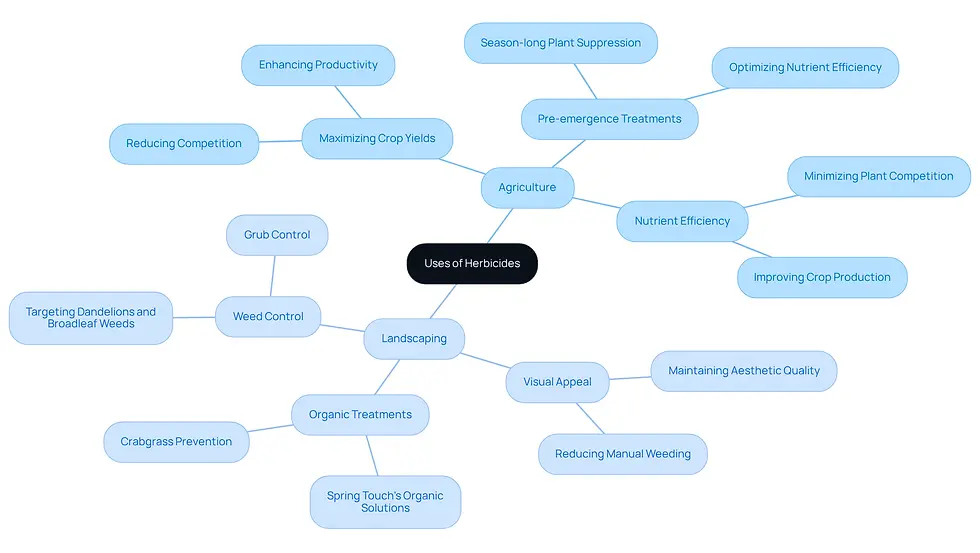
In agriculture and landscaping, herbicides are used to play a vital role in managing unwanted vegetation that competes with crops and ornamental plants. In agriculture, understanding herbicides is crucial for maximizing crop yields by significantly reducing competition from unwanted plants, which can lead to productivity losses. Imagine the peace of mind that comes from knowing that pre-emergence chemical treatments can offer season-long plant suppression, safeguarding the yield potential in crops like corn and soybeans. Research shows that efficient chemical application can enhance crop production by optimizing nutrient efficiency and minimizing plant competition.
In landscaping, it is essential to know about herbicides, as they are equally important for maintaining the visual appeal of grassy areas and gardens. They prevent unwanted plant overgrowth that can detract from outdoor aesthetics, allowing homeowners to enjoy well-kept yards with less manual weeding. For instance, 'Spring Touch's organic-based fertilizer, combined with crabgrass preventer, serves as an excellent initial treatment for spring, replenishing nutrients and stopping crabgrass from taking over your yard. As ground temperatures rise, dandelions may start to encroach, making a second treatment essential for tackling dandelions and broadleaf weeds while also incorporating grub control to manage infestations. Landscape architects emphasize that knowing about herbicides and using them thoughtfully not only supports grass health but also enhances the overall beauty of residential properties. By applying targeted weed killer solutions, homeowners can ensure their outdoor spaces remain vibrant and inviting.
Ultimately, the careful application of chemical agents, especially Spring Touch's organic solutions, is key to effective lawn care and agricultural practices. This approach balances efficient plant control with the desire for attractive, healthy landscapes, providing reassurance that your outdoor spaces can thrive.
Assess Impacts of Herbicides: Environmental and Health Considerations
Chemical weed killers can be effective in managing weeds, but their use raises important concerns about environmental and health impacts. Many people worry about how these chemicals affect non-target species, including beneficial insects, aquatic life, and soil microorganisms. For instance, runoff from treated areas can contaminate water sources, leading to ecological imbalances that affect our environment. Additionally, some studies have linked specific chemicals, like glyphosate, to potential health risks in humans, including possible carcinogenic effects. It's essential for homeowners and experts alike to understand what are herbicides and to use them responsibly, following usage guidelines and considering alternative weed management strategies whenever possible.
At Spring Touch, we understand these concerns and offer a solution. Our organic-based fertilizer, which includes bio-solids and crabgrass preventer, is designed to support your garden while being mindful of the environment. This treatment not only replenishes essential nutrients but also prevents crabgrass from taking over your lawn during the summer months. Our second application targets dandelions and broadleaf plants, while also providing grub control, ensuring a comprehensive approach to maintaining a healthy lawn. By recognizing what are herbicides and their implications, and exploring eco-friendly options like those we provide at Spring Touch, you can make informed decisions that balance effective weed control with environmental stewardship and health safety.

Conclusion
Understanding herbicides is crucial for effective lawn care and landscape management. Many homeowners face the challenge of controlling unwanted vegetation, which can hinder the growth of their beloved plants. This concern can be overwhelming, but by distinguishing between selective and non-selective herbicides, you can make informed choices that not only enhance the beauty of your outdoor spaces but also support their health. The thoughtful application of these substances can help you achieve your aesthetic goals while aligning with agricultural practices that maximize crop yields.
The article delves into the various types of herbicides, highlighting their specific applications and benefits. Selective herbicides, for example, target specific weeds without harming desirable plants, providing a solution that feels safe and effective. On the other hand, non-selective options can clear entire areas, which may seem daunting. However, advancements in herbicide technology and the introduction of organic alternatives underscore the importance of responsible usage, especially considering environmental and health implications. By employing strategies that blend both chemical and non-chemical methods, you can achieve effective weed management while feeling confident in your choices.
Ultimately, the role of herbicides goes beyond mere plant control; it reflects a broader commitment to maintaining healthy and vibrant landscapes while being mindful of ecological impacts. Embracing integrated pest management strategies and opting for eco-friendly solutions fosters a balance between effective lawn care and environmental stewardship. By taking these thoughtful steps, you can ensure that your outdoor spaces remain not only beautiful but also safe for both humans and the ecosystem.
Frequently Asked Questions
What are herbicides?
Herbicides are chemical substances specifically designed to manage unwanted plants, commonly known as weeds, that compete with desirable plants for resources like light, water, and nutrients.
How do herbicides work?
Herbicides work by disrupting vital biological processes within plants, leading to their demise or stunted growth.
What are the two main categories of herbicides?
The two main categories of herbicides are selective and non-selective herbicides.
What is the difference between selective and non-selective herbicides?
Selective herbicides target specific unwanted plants while leaving preferred plants unharmed, making them ideal for garden preservation. Non-selective herbicides eliminate all plant life they touch, requiring careful application to avoid harming desirable plants.
Why is it important to understand the difference between selective and non-selective herbicides?
Understanding the difference is essential for effective lawn maintenance, allowing you to protect your landscape while managing unwanted weeds.
What is an example of a rapidly growing weed that highlights the need for effective weed management?
An example is Palmer amaranth, which can grow up to three inches a day, emphasizing the importance of having effective weed management strategies.
How are advancements in technology impacting herbicide application?
Advancements in precision application technologies, such as the John Deere See & Spray system, are making it easier to apply herbicides efficiently, reducing overall usage and helping to prevent resistance development.
In what situations are selective and non-selective herbicides typically used?
Selective herbicides are often used in landscaped areas to protect ornamental plants, while non-selective herbicides may be employed when preparing for new planting or in areas where complete vegetation removal is necessary.
List of Sources
Define Herbicides: Understanding Their Purpose and Function
agriculture.com (https://agriculture.com/new-dicamba-rules-and-esa-changes-shape-2026-weed-plans-11917770)
What's New for Agronomic Weed Control: 2026 (https://extension.psu.edu/whats-new-for-agronomic-weed-control-2026)
agriculture.com (https://agriculture.com/new-herbicides-give-farmers-fresh-tools-against-resistant-weeds-11874762)
courthousenews.com (https://courthousenews.com/epa-releases-new-regulations-for-use-of-controversial-herbicide)
farmprogress.com (https://farmprogress.com/weeds/plan-for-2026-new-herbicide-products-worth-watching)
Explore Types of Herbicides: Selective, Non-Selective, and More
agriculture.com (https://agriculture.com/new-herbicides-give-farmers-fresh-tools-against-resistant-weeds-11874762)
lawnlove.com (https://lawnlove.com/blog/best-post-emergent-herbicides)
hsibv.com (https://hsibv.com/blogs/what-types-of-herbicides-are-used-in-crop-protection)
agweb.com (https://agweb.com/news/crops/crop-production/next-gen-herbicides-target-tough-weeds-corn-and-soybeans)
Examine Uses of Herbicides: Importance in Agriculture and Landscaping
What's New for Agronomic Weed Control: 2026 (https://extension.psu.edu/whats-new-for-agronomic-weed-control-2026)
agriculture.com (https://agriculture.com/new-dicamba-rules-and-esa-changes-shape-2026-weed-plans-11917770)
courthousenews.com (https://courthousenews.com/epa-releases-new-regulations-for-use-of-controversial-herbicide)
premiercooperative.com (https://premiercooperative.com/news/co-op-news/strong-yields-2026-1)
farmprogress.com (https://farmprogress.com/weeds/plan-for-2026-new-herbicide-products-worth-watching)
Assess Impacts of Herbicides: Environmental and Health Considerations
thenewlede.org (https://thenewlede.org/2026/03/scientists-link-glyphosate-to-cancer)
insurancejournal.com (https://insurancejournal.com/news/southcentral/2026/03/13/861795.htm)
scientificamerican.com (https://scientificamerican.com/article/glyphosate-is-driving-a-rift-in-maha-heres-what-the-science-says-about-its)
beyondpesticides.org (https://beyondpesticides.org/dailynewsblog/2026/03/study-shows-widely-used-weed-killer-to-contain-pfas-further-threatening-health-and-the-environment)
foxnews.com (https://foxnews.com/health/cancer-linked-herbicide-spotlight-after-controversial-order-toxic-design)