.png)

What Is Snow Mold? Understanding Its Impact on Your Lawn
- Spring Touch Team

- May 11
- 6 min read
Updated: 1 hour ago
Introduction
Imagine stepping onto your lawn in spring, only to find patches of dead grass where vibrant green once thrived. Understanding the hidden threats to lawn health during winter is crucial for homeowners. Snow mold, a common yet often overlooked fungus, can wreak havoc beneath layers of frost, potentially leading to unsightly patches and weakened grass come spring.
Let’s explore what snow mold is, how it thrives, and what you can do to keep your lawn healthy. Taking proactive steps now can mean the difference between a thriving lawn and a disappointing landscape come spring.
Define Snow Mold: Characteristics and Types
Are you worried about the health of your lawn during the cold months? Snow fungus can be a concern, especially when it hides beneath frost for extended periods in late winter and early spring. There are two main types of frost fungus:
Gray frost fungus, caused by Typhula incarnata
Pink frost fungus, caused by Microdochium nivale
Gray winter fungus typically shows up as circular patches of matted, grayish-white vegetation, while pink winter fungus appears as pinkish patches with a cottony texture. Both thrive in cool, damp conditions, particularly when temperatures dip below 45°F. Ignoring winter fungus can lead to significant damage to your lawn, leaving you with unsightly patches and unhealthy grass.
Understanding these signs can empower you to take action and protect your lawn from more serious issues down the line. Consistent mowing before dormancy and using the right fertilization methods can create a healthier environment for your grass and reduce the risk of fungal growth. For instance, keeping your grass at a height of 2 to 2.5 inches before winter can help prevent matting and improve ventilation, lowering the chances of ice fungus formation. Taking these simple steps can safeguard your lawn, allowing it to flourish when warmer weather returns.

Explore Environmental Factors Contributing to Snow Mold
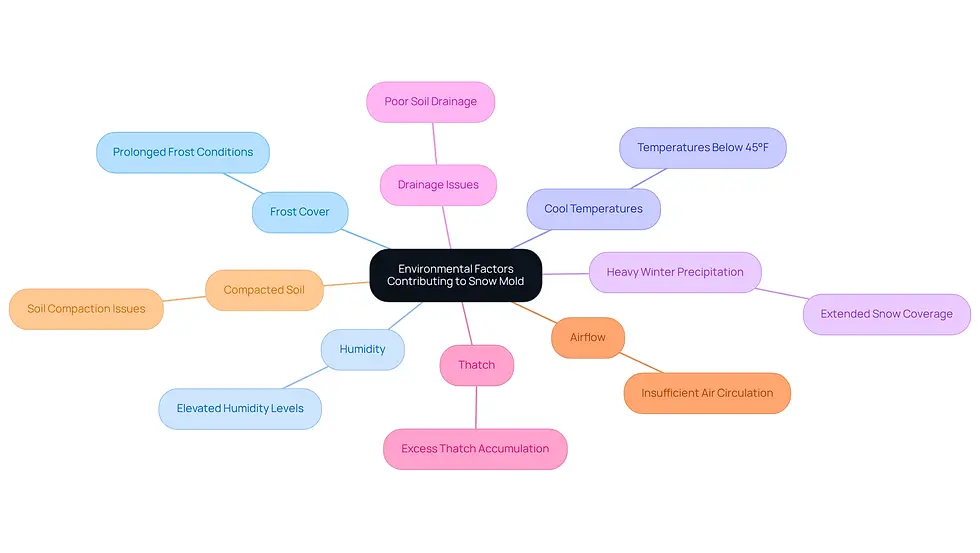
Fungal growth can be a frustrating challenge for property owners, especially when it thrives in conditions that seem unavoidable. It flourishes in environments with prolonged frost cover, elevated humidity, and cool temperatures. In Southern Minnesota, heavy winter precipitation can create a frustrating layer of frost that lingers, increasing the chances of fungus affecting your lawn.
If your lawn struggles with drainage or has too much thatch, it can hold onto moisture, making it a perfect breeding ground for fungus. Additionally, factors like insufficient airflow and compacted soil can heighten the risk of frost fungus.
By staying vigilant during late autumn and early spring, you can take proactive steps to protect your yard from frost fungus and enjoy a healthy lawn all year long.
Assess the Impact of Snow Mold on Lawn Health
Dealing with unsightly patches on your lawn can be frustrating and disheartening. Gray fungus can create noticeable damage on the surface, but pink fungus poses an even greater threat, affecting the grass's roots and making recovery much harder. If pink fungus takes hold, your lawn may take longer to bounce back in spring. Ignoring it can weaken your turf, making it more vulnerable to weeds and other problems.
After the snow melts, keep an eye on your yard for signs of what is snow mold, as catching it early can make all the difference in restoring your grass's health. Simple steps like raking matted grass to boost air circulation and applying a light fertilizer can really help your lawn recover and look better.
It's also good to be aware of other turf diseases, like Dollar Spot and Brown Patch, that can affect your lawn's health. Consider reaching out for professional help to protect your lawn and keep it healthy for the future.

Implement Prevention Strategies for Snow Mold
Winter fungus can be a daunting challenge for homeowners, but there are simple steps you can take to protect your lawn. One of the best ways to safeguard your grass is by keeping it at the right height during fall. Aim for a shorter length, ideally between 2 to 2.5 inches. This helps minimize moisture retention, which is key in reducing the risk of what is snow mold. Keeping your grass shorter helps prevent tangling, creating a less inviting environment for fungus to thrive.
In addition to mowing, raking leaves and debris from your lawn before snowfall is essential. This practice improves air circulation and decreases the likelihood of moisture buildup, which can lead to fungal growth. Applying a balanced fertilizer in the fall can also boost your grass's resilience, making it better equipped to withstand winter diseases.
If you live in an area where frost fungus is common, consider using fungicides as a precaution to keep your lawn healthy. Experts suggest applying these treatments before the first snowfall to ensure they’re effective, as they need to be absorbed by the turfgrass before it goes dormant. By adopting these strategies, you can significantly reduce the risk of what is snow mold, thus ensuring a vibrant, healthy lawn when spring arrives. Taking these proactive measures not only safeguards your lawn but also brings peace of mind as you prepare for the winter months ahead.

Conclusion
Imagine stepping into your yard only to find unsightly patches ruining the beauty of your lawn. Understanding snow mold is essential for keeping your lawn healthy during the colder months. This sneaky fungal threat can show up as gray or pink patches, but don’t worry; with the right care, you can keep it at bay. By spotting the early signs of snow mold and taking action, you can save your lawn from unsightly damage, giving you peace of mind this winter.
The article highlights the importance of proper lawn maintenance, such as:
Mowing height
Debris removal
to reduce moisture retention. Staying vigilant in recognizing the early signs of snow mold can significantly aid in recovery and prevent further damage. Plus, understanding the environmental factors that contribute to snow mold empowers you to take control of your lawn’s health.
When it comes to your lawn, being proactive about snow mold is the best way to ensure it stays healthy and vibrant. By adopting best practices like:
Maintaining optimal grass height
Ensuring good air circulation
Considering fungicide applications
you can look forward to a lush, green lawn come spring. When you take charge of your lawn’s health, you’re not just preventing damage; you’re cultivating a space that brings you joy and tranquility.
Frequently Asked Questions
What is snow mold?
Snow mold is a type of fungus that can affect lawns during cold months, particularly when it remains hidden beneath frost for extended periods in late winter and early spring.
What are the two main types of snow mold?
The two main types of snow mold are gray frost fungus, caused by Typhula incarnata, and pink frost fungus, caused by Microdochium nivale.
How can I identify gray winter fungus?
Gray winter fungus typically appears as circular patches of matted, grayish-white vegetation on the lawn.
What does pink winter fungus look like?
Pink winter fungus appears as pinkish patches with a cottony texture.
What conditions do snow molds thrive in?
Snow molds thrive in cool, damp conditions, particularly when temperatures dip below 45°F.
What are the consequences of ignoring winter fungus?
Ignoring winter fungus can lead to significant damage to your lawn, resulting in unsightly patches and unhealthy grass.
How can I protect my lawn from snow mold?
To protect your lawn, consistently mow before dormancy and use the right fertilization methods. Keeping grass at a height of 2 to 2.5 inches before winter can help prevent matting and improve ventilation.
Why is it important to manage lawn height before winter?
Managing lawn height before winter is important because it can lower the chances of ice fungus formation and create a healthier environment for grass.
List of Sources
Define Snow Mold: Characteristics and Types
shopping.yahoo.com (https://shopping.yahoo.com/home-garden/gardening/articles/snow-mold-ruin-lawn-look-221343921.html)
spectrumlocalnews.com (https://spectrumlocalnews.com/mo/st-louis/weather/2026/02/11/snow-mold-in-missouri)
kpcnews.com (https://kpcnews.com/business/latest/kpcnews/article_8f29e380-7594-5a3e-8b3b-3d7a166b9c1c.html)
spectrumlocalnews.com (https://spectrumlocalnews.com/nys/capital-region/weather/2026/02/12/prolonged-snow-coverage-leads-to-areas-of-snow-mold)
lpm.org (https://lpm.org/news/2026-02-14/a-frigid-fungus-among-us-as-louisville-thaws-snow-mold-may-remain)
Explore Environmental Factors Contributing to Snow Mold
adn.com (https://adn.com/alaska-life/gardening/2026/04/17/snow-mold-is-a-regular-but-harmless-feature-of-lawns-in-springtime)
spectrumlocalnews.com (https://spectrumlocalnews.com/mo/st-louis/weather/2026/02/11/snow-mold-in-missouri)
ksdk.com (https://ksdk.com/article/news/health/as-snow-melts-mold-makes-comeback-across-st-louis/63-3fdbbe21-3c81-40e1-8246-cbb5fe3cbf19)
spectrumlocalnews.com (https://spectrumlocalnews.com/nys/capital-region/weather/2026/02/12/prolonged-snow-coverage-leads-to-areas-of-snow-mold)
nj.com (https://nj.com/weather/2026/02/snow-mold-is-lurking-under-your-frozen-and-melting-lawn-heres-how-to-fight-the-fungus.html)
Assess the Impact of Snow Mold on Lawn Health
spectrumlocalnews.com (https://spectrumlocalnews.com/nys/capital-region/weather/2026/02/12/prolonged-snow-coverage-leads-to-areas-of-snow-mold)
Snow Mold Damage...How Bad is it and What Can be Done? | Turfgrass Science (https://buckeyeturf.osu.edu/news/snow-mold-damagehow-bad-it-and-what-can-be-done)
news.vt.edu (https://news.vt.edu/articles/2026/04/spring-lawn-recovery.html)
nbcboston.com (https://nbcboston.com/news/local/yard-snow-mold-weather-spring/3926728)
nj.com (https://nj.com/weather/2026/02/snow-mold-is-lurking-under-your-frozen-and-melting-lawn-heres-how-to-fight-the-fungus.html)
Implement Prevention Strategies for Snow Mold
shopping.yahoo.com (https://shopping.yahoo.com/home-garden/gardening/articles/snow-mold-ruin-lawn-look-221343921.html)
How to Prevent & Treat Snow Mold in Your Lawn (https://groundfxmn.com/blog/how-to-prevent-treat-snow-mold-in-your-lawn)
nj.com (https://nj.com/weather/2026/02/snow-mold-is-lurking-under-your-frozen-and-melting-lawn-heres-how-to-fight-the-fungus.html)
realgreenservices.com (https://realgreenservices.com/snow-mold-treatment-prevention)
fairwaylawns.com (https://fairwaylawns.com/snow-mold-treatment-prevention)