.png)

4 Steps to Water After Overseeding for a Thriving Lawn
- Spring Touch Team

- 8 hours ago
- 6 min read
Introduction
Creating a lush, green lawn after overseeding can feel overwhelming, especially in the unpredictable climate of southern Minnesota. Many homeowners feel overwhelmed by the challenges of maintaining a healthy lawn in this climate. Proper watering is essential for seed germination and long-term health, yet many struggle to find the right balance. But with the right approach, you can transform your lawn into a thriving oasis.
Let’s explore four essential steps together:
Assess your lawn's current condition.
Choose the right type of grass seed for your climate.
Implement a proper watering schedule.
Maintain your lawn with regular care.
By following these steps, you can confidently nurture your lawn, ensuring it thrives beautifully through every season.
Establish Frequent Watering for Seed Germination
Are you worried about your newly overseeded lawn not thriving as it should? Starting off right is crucial. Right after seeding, begin supplying water after overseeding to your lawn. Aim to water 2 to 4 times a day for the first two weeks, applying ⅛ to ¼ inches of water during each session. It is vital to water after overseeding to keep that top inch of soil damp, which helps your seeds germinate.
Each watering session should last about 5 to 10 minutes. This duration is just right to moisten the ground without causing runoff or pooling. Adjust the timing based on the weather; on hotter days, you might need to water a bit longer to keep moisture levels up.
The best times to water are early in the morning or late in the afternoon. This helps minimize evaporation. Avoid watering during the hottest part of the day to ensure that moisture seeps into the ground effectively, which enhances seed establishment.
Regularly check the ground moisture by digging a small hole to see if the top inch is damp. If it feels dry, increase the frequency or duration of your watering, particularly when you need to water after overseeding. After the first two weeks, you can cut back to once or twice daily while extending each session's length. This encourages deeper penetration as the grass begins to grow. It is essential to water after overseeding to keep the soil consistently moist for your seeds to sprout. Research shows that when the top inch of soil stays damp, seedlings establish much better. Also, keep an eye on the weather; during hot, dry spells, you may need to increase your watering intervals, while light showers might allow you to adjust your schedule accordingly.
By nurturing your lawn with the right irrigation, you’re not just watering grass; you’re cultivating a vibrant outdoor space that you can enjoy for years to come.

Adjust Watering Frequency as Grass Grows
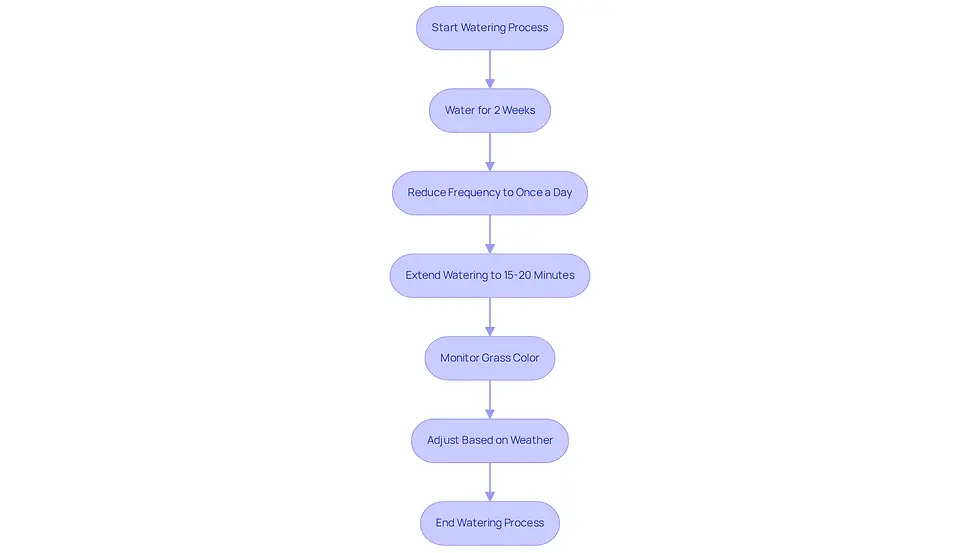
After the first two weeks of regular irrigation, consider reducing the frequency to once a day. By making this change, you’re helping your lawn develop strong roots, which is vital for its overall health and longevity.
Next, extend each irrigation session to 15-20 minutes. Watering for this length of time helps ensure that moisture reaches the roots, nurturing them for healthy growth.
Watch your grass thrive as it grows; a vibrant green color is a great sign that your efforts are paying off. If you notice any signs of stress or browning, it might be time to adjust your watering duration or intervals.
Be mindful of the weather changes; during hot spells, you may want to increase your watering a bit to keep your lawn happy.
By following these steps, you’re not just nurturing your lawn; you’re creating a lush, resilient outdoor space that can withstand the challenges of the season.
Revert to Standard Watering Schedule for Long-Term Care
When your grass stands about an inch tall, it’s time to embrace a consistent watering routine of 2-3 times a week, ensuring it grows healthy and strong. By watering this way, you’re nurturing your grass to grow resilient, without making it dependent on constant moisture. To give your grass the best start, using Spring Touch's organic fertilizer will enrich the soil and help keep pesky crabgrass at bay as the heat of summer approaches.
Aim for each watering session to last about 20-30 minutes, allowing moisture to soak deep into the soil and nourish the roots of your grass. As the seasons change, gently adjusting your watering routine will help your lawn thrive through every weather shift. During the warm summer months, you might need to increase your irrigation to about 1.5 inches weekly, while cooler months generally require around 1 inch of water each week. Keep an eye out for signs of grass diseases common in Minnesota, such as Red Thread or Dollar Spot, which can appear during humid conditions. If you notice wilting or browning, consider temporarily raising the irrigation frequency until your grass recovers.
Understanding Minnesota's climate is crucial for maintaining a healthy yard year-round. By adapting your watering practices to the seasons and using the right organic solutions, you’re setting the stage for a vibrant and thriving yard all year long.

Access Resources and Troubleshooting Tips for Effective Watering
Navigating the challenges of lawn care can feel overwhelming, especially when it comes to irrigation practices. Many homeowners encounter challenges with irrigation, leading to stress on their lawns. It's important to be aware of common issues like overwatering, which can cause fungal diseases, or underwatering, which can leave your grass looking tired and unhealthy. By staying attentive, you can ensure your lawn remains healthy and vibrant.
If you notice yellowing grass, it might be a sign of overwatering. In this case, consider reducing the irrigation intervals and allowing the ground to dry out a bit. On the other hand, if your grass appears wilted, increasing the frequency of irrigation can help restore its health.
Performing a soil analysis can provide valuable insights into nutrient levels and pH, allowing you to adjust your watering and fertilization methods for optimal grass health. This proactive approach ensures that your lawn receives the right care based on its specific needs.
With the right knowledge and attention, you can nurture a thriving lawn that brings you joy and peace of mind.

Conclusion
Imagine stepping outside to a lush, vibrant lawn that brings you peace and joy-this is possible with the right watering routine after overseeding. Nurturing your newly seeded grass with consistent moisture is essential for its growth and vitality. Without consistent watering, your newly seeded grass may struggle to establish itself, leading to patchy growth and frustration. However, with the right approach, you can transform your lawn into a lush oasis that flourishes through every season.
Key insights from this guide emphasize the need for frequent watering in the initial stages, gradually adjusting the frequency as the grass matures. Monitoring soil moisture, adapting to weather conditions, and recognizing signs of stress in the grass are crucial for maintaining a healthy lawn. Additionally, utilizing organic fertilizers and understanding Minnesota's unique climate can further enhance your lawn care efforts.
With these best practices, you can nurture a beautiful, healthy lawn that thrives through every season. With the right support and knowledge, your lawn can thrive, inviting you to enjoy its beauty every day.
Frequently Asked Questions
Why is frequent watering important after overseeding a lawn?
Frequent watering is crucial after overseeding to keep the top inch of soil damp, which helps the seeds germinate effectively.
How often should I water my lawn after overseeding?
You should aim to water your lawn 2 to 4 times a day for the first two weeks after overseeding.
How much water should I apply during each watering session?
Each watering session should apply ⅛ to ¼ inches of water.
How long should each watering session last?
Each watering session should last about 5 to 10 minutes to moisten the ground without causing runoff or pooling.
When is the best time to water my lawn?
The best times to water are early in the morning or late in the afternoon to minimize evaporation.
What should I do if the top inch of soil feels dry?
If the top inch of soil feels dry, you should increase the frequency or duration of your watering.
What should I do after the first two weeks of watering?
After the first two weeks, you can cut back to watering once or twice daily while extending each session's length to encourage deeper penetration as the grass begins to grow.
How can I check if the soil moisture is adequate?
You can check the soil moisture by digging a small hole to see if the top inch is damp.
How does weather affect my watering schedule?
During hot, dry spells, you may need to increase your watering intervals, while light showers might allow you to adjust your schedule accordingly.
List of Sources
Establish Frequent Watering for Seed Germination
Watering & Care Instructions for Overseeding Your Lawn (https://schendellawn.com/seeding-watering-instructions)
How Often Should You Water After Overseeding for Best Results? (https://springtouchlawn.com/post/how-often-should-you-water-after-overseeding-for-best-results)
How Often to Water Grass Seed (https://lawnstarter.com/blog/lawn-care-2/how-often-water-grass-seed)
An overseeding success story | Turfgrass Science (https://turf.umn.edu/overseeding-success-story)
Adjust Watering Frequency as Grass Grows
Healthy Lawns for Healthy Water - MWMO (https://mwmo.org/news/healthy-lawns-for-healthy-water)
Tips for Watering Your Lawn in Minnesota | Rainbow Lawncare (https://rainbowlawncare.com/lawn-watering-tips)
Water-saving strategies for home lawns (https://extension.umn.edu/lawn-care/water-saving-strategies-home-lawns)
Watering Your Lawn Correctly for Deep Root Growth | Teed & Brown (https://teedandbrown.com/blog/watering-your-lawn)
Revert to Standard Watering Schedule for Long-Term Care
Healthy Lawns for Healthy Water - MWMO (https://mwmo.org/news/healthy-lawns-for-healthy-water)
Master Your Lawn Care Schedule in Minnesota: Best Practices for Homeowners (https://springtouchlawn.com/post/master-your-lawn-care-schedule-in-minnesota-best-practices-for-homeowners)
Are You Watering Correctly? (https://fertilawnmn.com/are-you-watering-correctly)
How Often Should You Water Your Lawn? A Regional Guide for the U.S. (https://plowzandmowz.com/blog/how-often-to-water-your-lawn-by-region)
Proper Watering Tips for a Healthy Lawn (https://parkwaylawn.com/news/tips-for-watering-your-lawn)
Access Resources and Troubleshooting Tips for Effective Watering
5 ON YOUR SIDE: Lawn care tips to save you money (https://kstp.com/kstp-news/local-news/5-on-your-side-lawn-care-tips-to-save-you-money)
US Lawn Care Consumer Insights Report - The Freedonia Group (https://freedoniagroup.com/industry-study/lawn-care-consumer-insights)
InnerPages (https://victoriamn.gov/residents/yard_management/lawn_care_and_watering.php)
Water-saving strategies for home lawns (https://extension.umn.edu/lawn-care/water-saving-strategies-home-lawns)
InnerPages (https://ci.victoria.mn.us/news_detail_T3_R446.php)


