.png)
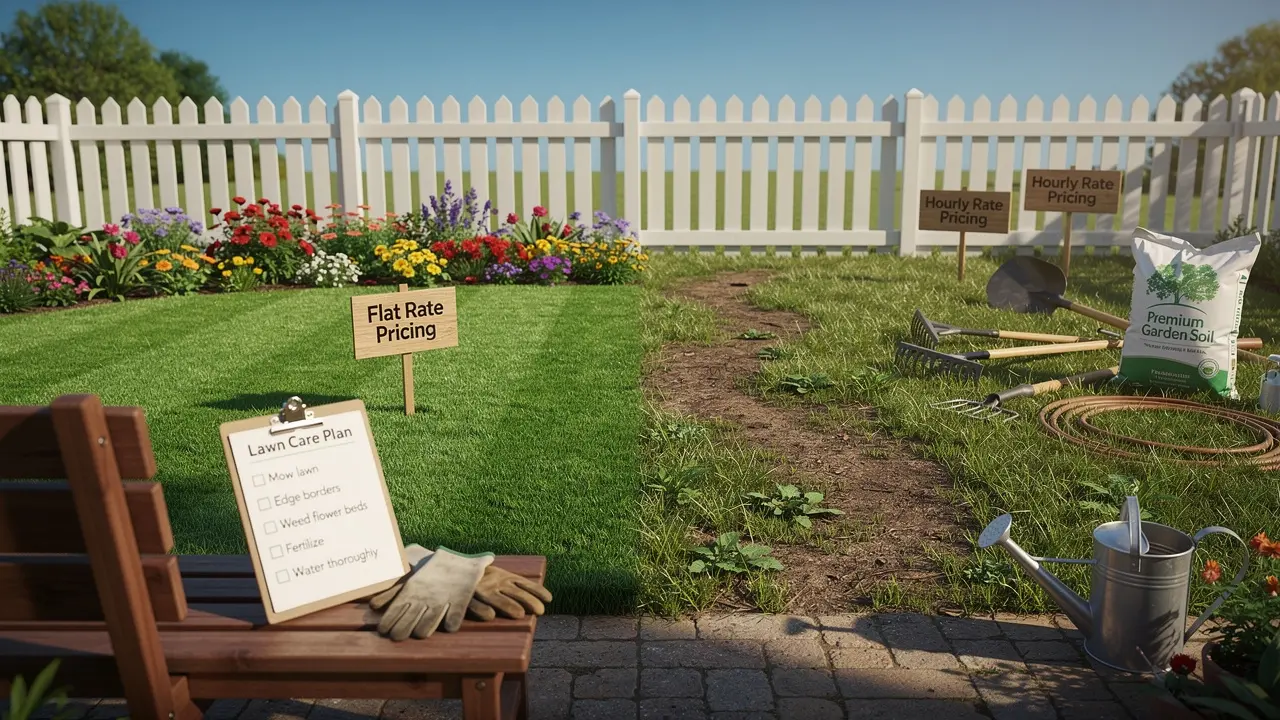
Comparing Monthly Lawn Service Costs: Flat Rate vs. Hourly Rate
- Spring Touch Team

- 5 days ago
- 8 min read
Updated: 24 hours ago
Introduction
Many homeowners feel overwhelmed by the choices they face in lawn care pricing. Each pricing model has its own pros and cons, affecting both your budget and the care your lawn receives. As homeowners in southern Minnesota explore these options, it’s important to think about:
Your yard size
How often you need services
What fits your lifestyle best
Finding the right pricing model can lead to a lawn that not only looks great but thrives all season long.
Define Flat Rate and Hourly Rate Pricing Models
Navigating the world of yard care pricing can feel overwhelming, especially when trying to find the best fit for your needs. A flat fee model offers a straightforward way to manage your yard care costs, providing peace of mind with a predictable charge for each task. It’s often the go-to choice for routine tasks like mowing or fertilization, where you can easily anticipate the work involved.
Conversely, hourly pricing can feel a bit more uncertain, as it charges based on the actual time spent on the job. This model is typically used for more complex tasks, like landscaping or extensive clean-ups, where the duration can vary significantly. Understanding the monthly lawn service cost is crucial for homeowners, as it influences your budgeting and expectations for yard care services.
Regular grass upkeep is vital for preventing common turf diseases such as:
Red Thread
Dollar Spot
Brown Patch
These diseases can thrive in Minnesota's hot and humid summers. Homeowners who choose fixed pricing often enjoy higher satisfaction due to predictable expenses and the assurance of consistent support. By choosing a consistent care plan, you not only protect your yard but also gain peace of mind knowing your investment is secure.

Evaluate Pros and Cons of Each Pricing Model
Choosing the right pricing model for lawn care can feel overwhelming, especially when considering the potential for unexpected costs and service needs.
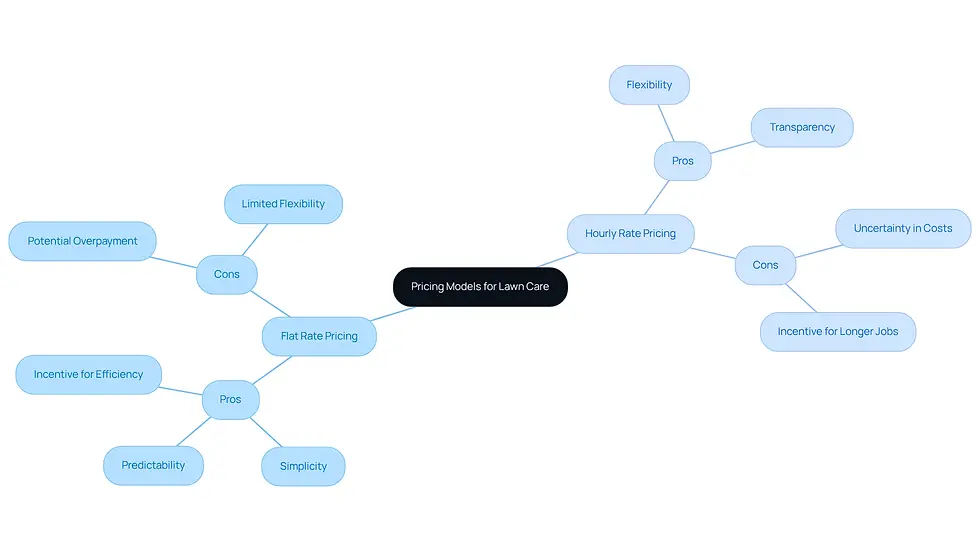
Flat Rate Pricing Pros:
Predictability: Homeowners can easily budget for lawn care expenses since the cost remains constant each month. This predictability is especially advantageous during peak seasons when demand can increase prices by 10-20%.
Simplicity: The monthly lawn service cost with flat rate pricing can really help you know what to expect each month, making budgeting a breeze.
Incentive for Efficiency: Lawn care professionals may work more efficiently, as they are incentivized to complete the job quickly without sacrificing quality. More than 75% of clients at businesses such as Steve and Steven’s Lawn Care choose annual plans, gaining from consistent support and reliability.
Cons:
Potential Overpayment: Imagine paying for services you don’t actually need, leaving you feeling frustrated and uncertain about your expenses. If the lawn requires less frequent service than anticipated, homeowners may end up paying for services they do not need.
Limited Flexibility: Flat rates may not consider variations in requirements, such as seasonal changes or unforeseen yard issues.
Hourly Rate Pricing Pros:
Flexibility: Homeowners only pay for the actual time spent on the job, which can be beneficial for unpredictable tasks or one-time services.
Transparency: Clients can observe precisely how much time is being utilized on their yard care, which can foster trust with the provider.
Cons:
Uncertainty in Costs: Hourly rates can lead to fluctuating bills, making it harder for homeowners to budget effectively. In 2026, the national average expense for fundamental lawn mowing options varies from $30 to $85 per visit for professional, insured providers, which can differ greatly based on the cost structure.
Incentive for Longer Jobs: There may be a concern that service providers could take longer to complete tasks to increase their earnings, potentially leading to dissatisfaction with the service.
Evaluating Pros and Cons of Each Pricing Model It’s important to weigh the pros and cons of flat rate versus hourly pricing to find what works best for you. Flat fee pricing offers predictability and simplicity, while hourly charges provide flexibility and clarity. However, each model has its drawbacks, including potential overpayment and cost uncertainty. Ultimately, the right choice will not only fit your budget but also ensure your lawn receives the care it truly deserves.
Identify Key Factors Influencing Pricing Model Selection
Many homeowners feel overwhelmed by the choices available for lawn care pricing, especially when considering the monthly lawn service cost, unsure of which model will truly meet their needs. Several factors can significantly influence your decision between flat rate and hourly rate pricing models for lawn care services.
Larger or more complex yards often benefit from hourly rates because the time needed for maintenance can vary widely.
Costs based on yard size can range from $0.01 to $0.06 per square foot, allowing for tailored job rates.
In contrast, smaller, simpler yards are generally better suited for flat fee structures, which provide predictability in expenses.
If you're someone who prefers regular upkeep, you might find flat fee options more appealing because they offer stable costs. On the other hand, if you need occasional or one-time assistance, hourly charges can help you avoid overpaying for infrequent tasks. Subscription options for routine lawn care can also foster customer loyalty and ensure steady revenue for providers.
Routine tasks like mowing are typically more suited to flat fee structures, offering a clear billing method. However, specialized tasks such as landscaping or pest control may be more effectively billed hourly, reflecting the unpredictable nature of these services. For instance, a flat fee for mowing a standard-sized yard can simplify billing and improve customer satisfaction.
Homeowners with strict budgets often prefer flat fee pricing for its predictability, making financial planning easier. Those with more flexibility might choose hourly rates, potentially saving costs on less frequent services. However, rising gas prices are reducing profits for landscaping companies, which may lead to higher expenses for homeowners.
Individual preferences can also play a role in your decision-making process. You might lean towards one cost model over another based on previous experiences or suggestions from friends and family, which can greatly influence your choice.
By understanding these factors and knowing that the monthly lawn service cost is expected to correlate with hourly charges ranging from $30 to $65 in 2025, homeowners can make informed choices about their yard maintenance options. This ensures you select a pricing model that aligns with your unique needs and budget, providing peace of mind in your lawn care decisions.

Summarize Insights for Homeowners Choosing a Pricing Model
Navigating the world of lawn care pricing can feel daunting, especially when trying to find the best fit for your unique needs.
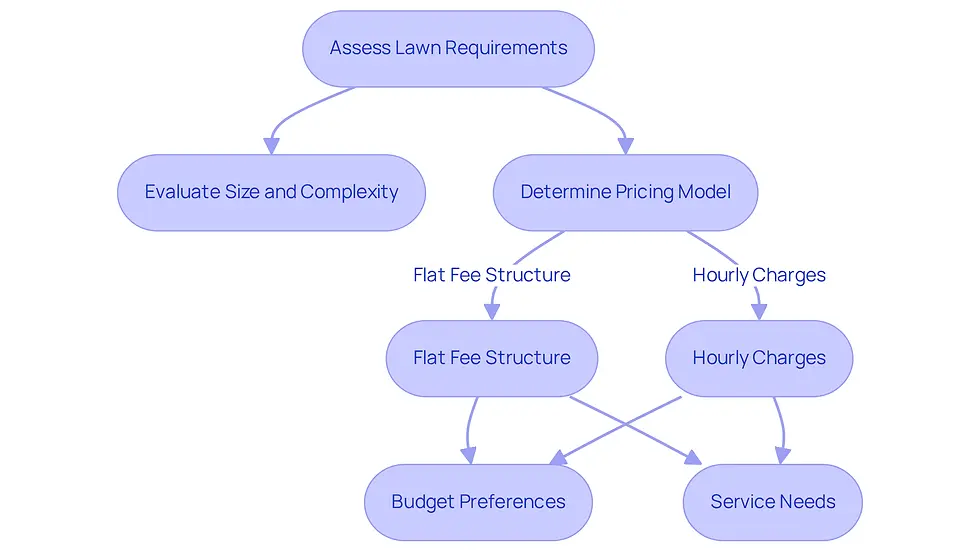
Assessing your lawn's requirements is the first step. Take a moment to evaluate its size, complexity, and specific needs. This will help you determine which pricing model aligns best with your service needs. For instance, larger or more intricate gardens may benefit from flat fee structures, offering consistent expenses that can ease your budgeting concerns.
Next, think about your budget. Do you prefer the predictability of the monthly lawn service cost tied to flat fees, or the flexibility of paying for the actual time spent on tasks with hourly charges? Most homeowners find that the monthly lawn service cost for basic lawn maintenance is between $100 and $200. On average, a professional mowing visit costs around $123, according to 2025 HomeAdvisor data.
If your lawn requires routine upkeep, fixed pricing might be more beneficial. This often includes bundled services that can help reduce overall costs. However, if you only need occasional assistance, hourly rates could be more appropriate. For example, basic mowing and trimming tasks typically range from $50 to $150 per visit, while fertilization treatments can vary between $80 and $400, depending on yard size and the products used.
It's also important to talk openly with your potential lawn care providers about what you need and prefer. Understanding how they structure their costs and what services are included can help clarify your expectations.
Lastly, take the time to review customer feedback. Look for testimonials from other homeowners to gauge the effectiveness and reliability of the provider, regardless of the pricing model. Insights from past customers can provide valuable context for your decision-making. Case studies show that homeowners who combined services and scheduled strategically often achieved better results while managing expenses effectively.
By taking the time to evaluate your options, you can ensure your lawn care choice supports both your budget and your lawn's health, leading to a thriving outdoor space you can enjoy.
Conclusion
Many homeowners feel overwhelmed by the choices available for lawn care pricing. Choosing the right pricing model is essential for maintaining a healthy and beautiful yard. By knowing the differences between flat rate and hourly rate pricing, homeowners can make choices that fit their needs and budgets. Flat rate pricing offers predictability and simplicity, while hourly rates provide flexibility and transparency.
Larger or more complex yards may benefit from hourly rates, while smaller, simpler lawns are often better suited for flat fee structures. Homeowners should consider their lawn's unique requirements, their budget preferences, and the types of services needed when selecting a pricing model. Engaging in open discussions with lawn care providers and reviewing customer feedback can further enhance decision-making, ensuring that the chosen model supports both financial planning and lawn health.
When you take the time to explore your options, you can create a beautiful outdoor space that you’ll truly enjoy. Whether you choose the stability of flat rates or the adaptability of hourly charges, the right choice will foster a successful partnership with lawn care professionals, ensuring that your yard remains a source of pride and enjoyment.
Frequently Asked Questions
What are the two main pricing models for yard care services?
The two main pricing models for yard care services are flat rate pricing and hourly rate pricing.
What is a flat rate pricing model?
A flat rate pricing model offers a predictable charge for each task, making it easier for homeowners to manage their yard care costs. It is commonly used for routine tasks like mowing or fertilization.
What is an hourly rate pricing model?
An hourly rate pricing model charges based on the actual time spent on the job. This model is typically used for more complex tasks, such as landscaping or extensive clean-ups, where the duration can vary significantly.
Why is understanding monthly lawn service costs important for homeowners?
Understanding monthly lawn service costs is crucial for homeowners as it influences their budgeting and expectations for yard care services.
What are some common turf diseases that regular grass upkeep can help prevent?
Regular grass upkeep can help prevent common turf diseases such as Red Thread, Dollar Spot, and Brown Patch, which can thrive in Minnesota's hot and humid summers.
What are the benefits of choosing a flat rate pricing model for yard care?
Homeowners who choose flat rate pricing often enjoy higher satisfaction due to predictable expenses and the assurance of consistent support, which helps protect their yard and secures their investment.
List of Sources
Define Flat Rate and Hourly Rate Pricing Models
How Much Does Lawn Care and Mowing Cost in 2026? (https://homeadvisor.com/cost/lawn-and-garden/maintain-a-lawn)
Understanding Lawn Care Cost: What You Need to Know Before Hiring (https://us.mammotion.com/blogs/news/lawn-care-cost?srsltid=AfmBOoppi_BtvszjmQUqbLT1-P4P5PQP986R2H8FbN1dTYw3t9QExsrW)
realgreen.com (https://realgreen.com/blog/lawn-care-pricing-chart)
Lawn Care Price Guide 2026: Average Mowing Rates & Costs (https://housecallpro.com/resources/how-much-charge-lawn-mowing)
How Much Does Lawn Mowing Cost in 2026? (https://lawnstarter.com/blog/cost/lawn-mowing-price)
Evaluate Pros and Cons of Each Pricing Model
Per-Cut vs Flat Rate Lawn Care in Spring Hill, FL (https://steveandstevenslawn.com/per-cut-vs-level-billing-pros-cons)
Lawn Care Price Guide 2026: Average Mowing Rates & Costs (https://housecallpro.com/resources/how-much-charge-lawn-mowing)
Understanding Lawn Care Cost: What You Need to Know Before Hiring (https://us.mammotion.com/blogs/news/lawn-care-cost?srsltid=AfmBOor-KUJp44QEacb51dEhXyz0kqj2sg194eUU-vdnhpRPqrkhHwrR)
realgreen.com (https://realgreen.com/blog/lawn-care-pricing-chart)
Lawn Service Cost in 2026: Average Prices & Rates (https://serviceagent.ai/blogs/lawn-service-cost)
Identify Key Factors Influencing Pricing Model Selection
Fuel costs pinch lawn care budgets amid rising prices (https://clickorlando.com/video/news/2026/03/14/fuel-costs-pinch-lawn-care-budgets-amid-rising-prices)
Understanding Lawn Care Prices: Key Factors and Strategies - MrTask (https://mrtask.com/blog/financial-management-for-contractors/understanding-lawn-care-prices-key-factors-and-strategies)
High gas prices force lawn care businesses to reconsider costs (https://wkyt.com/2026/05/07/high-gas-prices-force-lawn-care-businesses-reconsider-costs)
realgreen.com (https://realgreen.com/blog/lawn-care-pricing-chart)
Lawn care prices expected to spike as fuel and fertilizer costs surge: What homeowners can do (https://fox13news.com/news/lawn-care-prices-spike-fuel-fertilizer-costs-surge-homeowners)
Summarize Insights for Homeowners Choosing a Pricing Model
Pricing Strategies for Lawn Care Services Explained (https://kanelandscapes.com/pricing-strategies-lawn-care-services)
US Lawn Care Consumer Insights Report - The Freedonia Group (https://freedoniagroup.com/industry-study/lawn-care-consumer-insights)
Understanding Lawn Care Cost: What You Need to Know Before Hiring (https://us.mammotion.com/blogs/news/lawn-care-cost?srsltid=AfmBOopmjZU4cEqxl-CD-vVRHSuAt2oq3UqyHo-zE02lH6-5EtUs7lT-)
140+ Lawn Care Industry Statistics | 2026 Data Report (https://gitnux.org/lawn-care-industry-statistics)


