.png)

Master the Eastern Tent Caterpillar Life Cycle for Effective Control
- Spring Touch Team

- May 1
- 7 min read
Updated: 1 day ago
Introduction
As spring unfolds, many gardeners find themselves facing a daunting challenge: the emergence of the Eastern Tent Caterpillar, a creature that can threaten their cherished plants. This fascinating insect undergoes a remarkable transformation through four distinct life stages, each bringing its own set of challenges for gardeners.
Gardeners may feel overwhelmed and anxious as they face the potential destruction of their beloved plants. However, by learning about the caterpillar's behavior, they can feel empowered and confident in their ability to protect their gardens. Understanding its lifecycle is crucial for implementing timely and effective control measures.
With the right knowledge and strategies, you can turn this potential threat into an opportunity for a flourishing garden.
Explore the Life Cycle of the Eastern Tent Caterpillar
As spring unfolds, the Eastern Tent Caterpillar emerges, bringing both beauty and potential challenges to your garden. This fascinating creature undergoes a complete metamorphosis, comprising four distinct stages:
Egg
Larva
Pupa (cocoon)
Adult moth
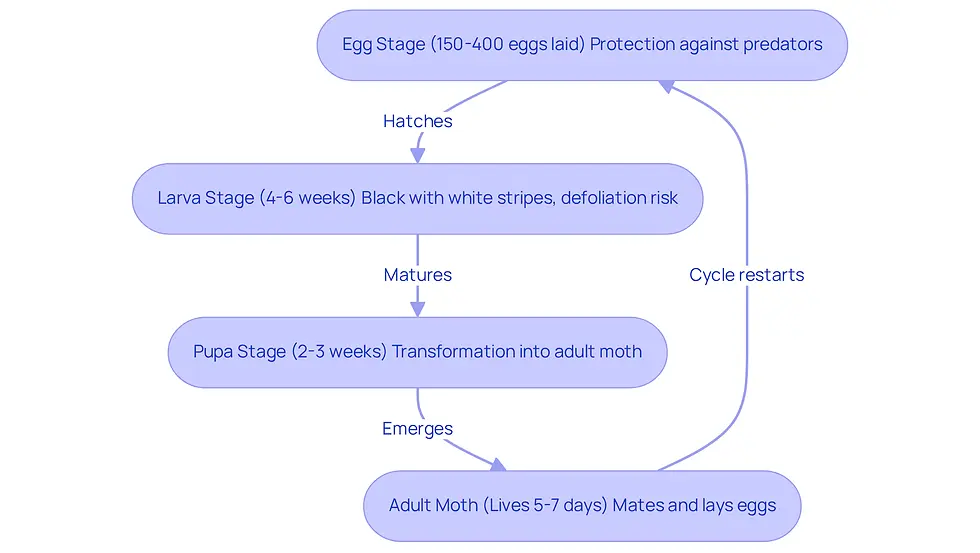
In late spring or early summer, female moths lay eggs in clusters of 150 to 400 around small twigs of host plants, primarily cherry and apple. These shiny, varnished egg masses offer some protection against predators, but they also signal the start of a cycle that can impact your plants.
When the eggs hatch in early spring, coinciding with the budding of leaves, the young larvae emerge. Initially black with white stripes, these social creatures live together in communal silk shelters. They feast on the foliage of their host plants, which can lead to considerable defoliation. This stage lasts about 4 to 6 weeks, during which they grow rapidly, reaching lengths of 4 to 5 cm. If left unchecked, these caterpillars can devastate your garden, leaving you with bare branches and stressed plants.
After reaching maturity, the larvae leave their tents to pupate in protected areas. This stage lasts approximately 2 to 3 weeks, during which they undergo a remarkable transformation into adult moths.
The adult moths emerge in late spring to early summer, mate, and the cycle begins anew. These reddish-brown moths have a short lifespan, typically living only a few days to a week. Understanding the eastern tent caterpillar life cycle enables you to time your actions perfectly to protect your plants.
This year, you might notice more Eastern Tent Caterpillars than usual, which can be concerning for your garden. Observing the hatching and growth of larvae enables you to take specific actions to safeguard your plants. This is especially important for horse owners, as adult larvae can pose a danger to pregnant mares. Efficient management techniques involve:
Moving pregnant mares away from areas near infested trees
Considering the application of insecticides like Bacillus Thuringiensis (Bt) to regulate larval populations
By understanding the eastern tent caterpillar life cycle and taking proactive measures, you can protect your plants and ensure a thriving garden.
Identify Key Behaviors and Characteristics
If you've noticed unusual silk structures in your trees, you might be dealing with Eastern Tent Caterpillars, and that can be concerning. These caterpillars are quite social, often found living together in silk shelters. This communal living not only provides them protection from predators but also raises worries for those who care for their gardens and trees.
During the day, they feast on the leaves of trees like cherry and apple, which can be a worry for gardeners and tree lovers alike. They usually feed in the morning and retreat to their shelters during the hottest parts of the day, making their presence felt in the landscape.
You may notice their large, silken shelters nestled in the branches, a sign of their presence that can be hard to miss. These structures serve as both a shelter and a shared dining space, making it easier for them to thrive.
As they grow, these caterpillars might wander away from their tents in search of fresh leaves, which can be concerning if you're trying to protect your plants. They leave behind trails of silk, which can help you track their movements and manage their impact.
You can spot young caterpillars by their striking black and white stripes, while the older ones can reach up to 2.5 inches and show a range of colors. Recognizing these features is crucial for early detection and management, giving you the power to take action and safeguard your plants. Understanding their behavior can empower you to take effective action and protect your plants from potential harm.

Assess Economic Impact and Host Plant Damage
The Eastern Tent Caterpillar poses challenges for homeowners and orchardists alike, creating concerns that can feel overwhelming.
Defoliation: Large populations can lead to extensive loss of leaves from plants. This can weaken the plants and affect their health over time. While many plants can bounce back from one or two years of damage, repeated infestations can lead to long-term stress and decline.
Impact on Fruit Production: For fruit-bearing plants, such as apples and cherries, defoliation can directly influence yield and fruit quality. Trees under stress may produce smaller or fewer fruits, which can hurt the profitability of orchards.
Aesthetic Damage: In residential areas, the presence of unsightly webs and defoliated trees can diminish property values and the overall aesthetic appeal of landscapes. Homeowners often feel the urge to take immediate control measures to restore their lawns and gardens.
Management Costs: The expenses related to managing Tent Caterpillar infestations can accumulate, including the purchase of insecticides, hiring pest control services, or investing in preventive measures. By understanding these implications, homeowners can take proactive steps to protect their investments and maintain the beauty of their landscapes.

Implement Effective Prevention and Control Measures
Dealing with Eastern Tent Caterpillars can feel overwhelming, but there are effective strategies to regain control of your landscape.
Manual Removal: If you notice small infestations, it can be distressing, but manually removing the tents and larvae is a straightforward and effective approach. Remember to wear gloves to protect yourself from irritation caused by the larvae's long defensive hairs, and dispose of them properly to prevent further issues.
Pruning: Taking the time to remove egg clusters during winter or early spring can feel like a small task, but it can significantly reduce the stress of dealing with larval populations later on. This proactive measure helps eliminate potential infestations before they start, as expert Michael J. Skvarla points out that this approach can decrease the density of certain larvae.
Biological Control: You might find comfort in knowing that introducing natural predators, like birds and parasitic wasps, can effectively help manage these pesky larvae. Additionally, using biological insecticides such as Bacillus thuringiensis (Bt) targets young larvae without harming beneficial insects, providing an eco-friendly control alternative.
Chemical Control: If you face a serious infestation, it can be concerning, but using insecticides specifically designed for larval management can be a necessary step to take. Just keep in mind that contact insecticides won't work while larvae are in their tents, so timing is crucial. Treatments should be applied when larvae are young and actively feeding to maximize effectiveness.
Cultural Practices: By maintaining your plants' health through proper watering, fertilization, and pruning, you can feel more secure knowing they are resilient against pest damage. Healthy plants can bounce back more quickly from defoliation, reducing the long-term effects of caterpillar feeding. While Tent Caterpillars can cause significant defoliation during outbreaks, healthy broadleaf plants can endure complete defoliation for several years without lasting harm.
By understanding the eastern tent caterpillar life cycle and behaviors, you can feel empowered to take control of your landscape and protect it effectively. Additionally, it's best to avoid burning caterpillar tents, as this can pose risks to both the trees and surrounding structures. By taking these steps, you can not only protect your plants but also enjoy the peace of mind that comes with a well-managed garden.

Conclusion
Imagine watching your beloved plants being devoured, leaving bare branches in their wake. Understanding the life cycle of the Eastern Tent Caterpillar can help you protect your garden from this threat. By understanding how these caterpillars grow, you can better protect your plants from their destructive appetite. Taking proactive steps can help you shield your garden from these pesky invaders.
We’ve explored how these caterpillars live and feed, and the real impact they can have on your cherished garden. We’ve also looked at ways to tackle these pests, from simple hand removal to more advanced methods, giving you the tools to protect your garden. By using these strategies, you can ease the worry of infestations and keep your plants thriving.
When you take action against these caterpillars, you’re not just saving your garden; you’re helping the entire ecosystem flourish. Being aware and acting quickly can truly save your plants from damage and promote their healthy growth. By learning about the Eastern Tent Caterpillar and how to manage it, you’re equipping yourself to create a beautiful, resilient garden.
Frequently Asked Questions
What are the stages of the Eastern Tent Caterpillar's life cycle?
The Eastern Tent Caterpillar undergoes four distinct stages: Egg, Larva, Pupa (cocoon), and Adult moth.
When do Eastern Tent Caterpillars lay their eggs?
Female moths lay eggs in late spring or early summer in clusters of 150 to 400 around small twigs of host plants, primarily cherry and apple.
What do the eggs of the Eastern Tent Caterpillar look like?
The eggs are shiny and varnished, providing some protection against predators.
When do the larvae emerge from the eggs?
The larvae hatch in early spring, coinciding with the budding of leaves.
What do Eastern Tent Caterpillar larvae look like and how do they behave?
The young larvae are initially black with white stripes and live together in communal silk shelters, feeding on the foliage of their host plants.
How long does the larval stage last, and what can happen if they are not managed?
The larval stage lasts about 4 to 6 weeks, during which they can grow rapidly and cause considerable defoliation, potentially devastating your garden.
What happens after the larvae reach maturity?
After reaching maturity, the larvae leave their tents to pupate in protected areas for approximately 2 to 3 weeks before transforming into adult moths.
When do adult Eastern Tent Moths emerge, and what is their lifespan?
Adult moths emerge in late spring to early summer and typically live only a few days to a week.
Why is it important to monitor the Eastern Tent Caterpillar's life cycle?
Understanding the life cycle helps you time your actions to protect your plants, especially if you notice an increase in their population.
What management techniques can be used to protect plants from Eastern Tent Caterpillars?
Management techniques include moving pregnant mares away from infested trees and considering the application of insecticides like Bacillus Thuringiensis (Bt) to regulate larval populations.
List of Sources
Explore the Life Cycle of the Eastern Tent Caterpillar
news.mgcafe.uky.edu (https://news.mgcafe.uky.edu/article/warm-early-spring-means-early-eastern-tent-caterpillar-egg-hatch-0)
thoroughbreddailynews.com (https://thoroughbreddailynews.com/eatern-tent-caterpillars-a-heavier-than-normal-year-in-kentucky)
animaldiversity.org (https://animaldiversity.org/accounts/Malacosoma_americanum)
Identify Key Behaviors and Characteristics
news.mgcafe.uky.edu (https://news.mgcafe.uky.edu/article/warm-early-spring-means-early-eastern-tent-caterpillar-egg-hatch-0)
messenger-inquirer.com (https://messenger-inquirer.com/features/lifestyle/eastern-tent-caterpillars-emerge-in-the-spring/article_e85bc793-061b-5790-aee2-2d72a1842eaf.html)
thoroughbreddailynews.com (https://thoroughbreddailynews.com/eatern-tent-caterpillars-a-heavier-than-normal-year-in-kentucky)
6abc.com (https://6abc.com/post/spring-brings-invasion-of-eastern-tent-caterpillars/1335700)
animaldiversity.org (https://animaldiversity.org/accounts/Malacosoma_americanum)
Assess Economic Impact and Host Plant Damage
kentuckyagconnection.com (https://kentuckyagconnection.com/news/eastern-tent-caterpillars-emerging-in-kentucky-this-spring)
cartercountytimes.com (https://cartercountytimes.com/features/agriculture/extension-notes)
fieldreport.caes.uga.edu (https://fieldreport.caes.uga.edu/publications/C1357/tent-caterpillars-defoliate-trees)
Implement Effective Prevention and Control Measures
extension.psu.edu (https://extension.psu.edu/eastern-tent-caterpillar)
mynewcastleny.gov (https://mynewcastleny.gov/m/newsflash/Home/Detail/2150)
umass.edu (https://umass.edu/agriculture-food-environment/landscape/fact-sheets/eastern-tent-caterpillar)
homegarden.cahnr.uconn.edu (https://homegarden.cahnr.uconn.edu/factsheets/eastern-tent-caterpillars)


