.png)

4 Essential Lawn Watering Tips for a Thriving Yard
- Spring Touch Team

- 6 hours ago
- 8 min read
Introduction
Many homeowners feel overwhelmed by the constant battle against the elements and the need for a perfect lawn. Watering your lawn effectively goes beyond simply turning on the sprinkler; it’s about understanding the unique needs of your grass and the environment around it. Many homeowners worry about how to give their grass the right amount of moisture while being mindful of their water usage. So, how can you tackle these challenges and create a yard that not only thrives but also becomes a source of pride?
Determine Optimal Watering Times for Your Lawn
Are you tired of watching your lawn struggle to thrive in southern Minnesota's climate? For cultivating a thriving lawn, following proper lawn watering tips is crucial. The best time for irrigation is early in the morning, ideally between 4 a.m. and 8 a.m. This timing helps reduce evaporation. It allows your grass to soak up moisture before the heat of the day kicks in. While evening irrigation can be beneficial during summer months, it can also lead to fungal diseases due to moisture lingering on grass blades overnight.
You can tailor your irrigation schedule to fit the local weather patterns. For instance, during expected heatwaves, you might need to increase your irrigation frequency to every other day to keep your grass hydrated. Conversely, in cooler weather or after rainfall, it’s wise to cut back on watering to prevent over-saturation. By keeping an eye on local forecasts, you can adjust your watering practices, ensuring your garden gets the right amount of moisture without waste.
Statistics suggest that grass areas in the Twin Cities need 1 to 1.5 inches of moisture each week, including precipitation. This guideline helps you maintain healthy grass while being mindful of water conservation, especially during dry spells. Picture yourself stepping outside to a lush, vibrant lawn that fills you with joy and pride. By following these lawn watering tips, you can achieve resilient greenery that flourishes throughout the growing season.
We understand how important a well-kept yard is to you at Spring Touch Lawn & Pest Control. Our seasonal grass care applications, including organic solutions for weeds and nutrient restoration, are designed to enhance your irrigation efforts. With over 50 years of experience and more than 1,320 five-star reviews, we are committed to transforming your yard into a beautiful, bug-free outdoor space. Don’t miss out on our exclusive offers, including a free first application when you sign up for our complete lawn care programs. With the right care, your lawn can become a source of pride and tranquility in your home.

Utilize Efficient Watering Techniques and Tools
Many homeowners find it challenging to water their gardens effectively without wasting resources. To maximize your efforts, consider implementing effective lawn watering tips and using efficient techniques and tools. A drip irrigation system is a great choice because it delivers moisture right to the roots, cutting down on evaporation and runoff. This method works wonders for flower beds and gardens, making sure moisture gets to where it’s needed most. Drip irrigation can reduce water usage by up to 80% compared to traditional methods, making it an eco-friendly option for homeowners.
Getting a rain gauge is another smart idea. This simple tool helps you track rainfall and adjust your watering schedules, preventing overwatering and ensuring your grass gets just the right amount of moisture. The EPA's WaterSense program says that homeowners can save almost 9,000 gallons of water each year by working with certified professionals for regular maintenance, further enhancing efficiency.
When using sprinklers, make sure they’re aimed at the grass, not the pavement, to avoid wasting water. If you have an automatic irrigation system, adding a smart controller that adjusts watering schedules based on the weather can help you use resources better. Smart systems can monitor soil moisture and automatically stop irrigation after it rains, keeping your garden healthy without using too much water. By utilizing these lawn watering tips, you can nurture your garden efficiently while conserving precious resources, ensuring a thriving outdoor space for years to come.

Assess Grass Type and Environmental Needs for Effective Watering
Are you struggling to keep your lawn lush and green? For effective watering, understanding the type of grass in your lawn is one of the key lawn watering tips. In southern Minnesota, typical grass varieties include:
Fine fescue
Tall fescue
Each has distinct moisture needs. Kentucky bluegrass, for instance, thrives with about 1 to 1.5 inches of water per week, while fine fescue, known for its drought tolerance, may require slightly less.
The type of ground and how much sun your lawn gets can really change how you water it. Sandy ground, which drains quickly, often needs more frequent watering-sometimes three times a week during extreme heat-to maintain moisture levels. In contrast, clay soils hold moisture longer, needing about 1 inch of water per week, supplied gradually to avoid runoff. Additionally, grassy areas in full sun usually require more water than those in shaded regions. By consistently evaluating these elements, you can implement lawn watering tips to adjust your watering methods, ensuring your grass stays healthy and vibrant.
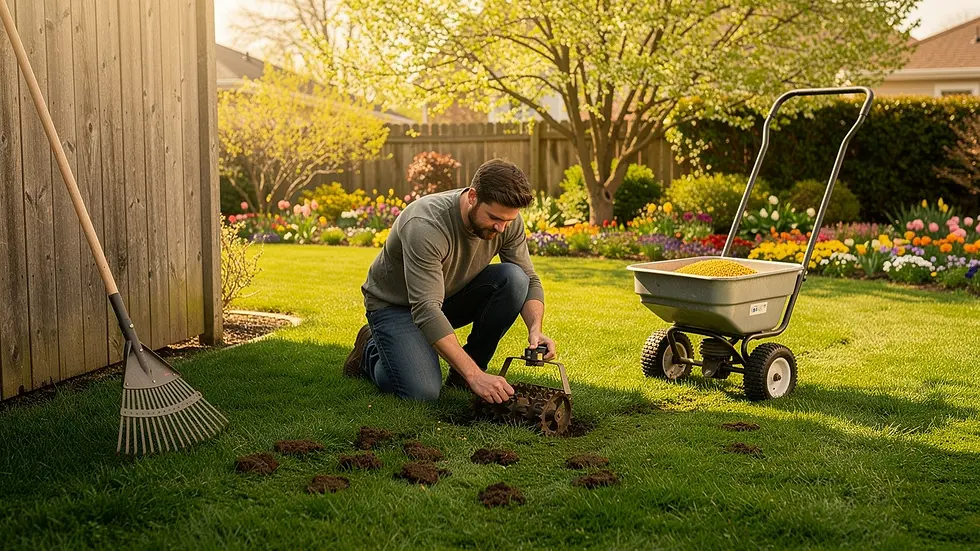
Integrating core aeration into your lawn care routine can significantly improve seed germination and ground health. By extracting plugs from the ground, aeration creates holes 2-3 inches deep, allowing seeds to make direct contact with the earth, which leads to higher germination rates. This method helps keep moisture in and makes it easier for young roots to dig deep and thrive. Furthermore, Spring Touch offers seasonal yard care applications that include organic treatments for weeds and nutrient restoration, ensuring your greenery remains healthy and beautiful throughout the year. Leaving grass clippings on the ground can also return organic matter to sandy soil, further enhancing its moisture retention capabilities.
By taking these steps, you can transform your lawn into a thriving oasis that brings joy and peace of mind.

Monitor Lawn Health and Adjust Watering Accordingly
Keeping an eye on your garden's condition is key to effective irrigation. You might notice signs that your garden needs a little extra love, like wilting or uneven growth. If you see your grass turning a blue-gray or the blades curling, it’s a gentle reminder that it might need more moisture. On the other hand, if your yard feels spongy and has standing water, it’s a sign that it might be getting too much water, which can cause problems down the line.
Seasonal changes also play a significant role in how much water your garden needs. During the warm summer months, your grass will generally require more regular irrigation, while the cooler autumn temperatures may lessen this need. By keeping an eye on local weather trends and adjusting your watering schedule accordingly, you can help maintain a healthy yard.
To nurture your yard, think about trying Spring Touch's organic-based fertilizer, which not only enriches the soil but also helps keep crabgrass at bay. Performing a moisture test is another effective strategy. You can easily check the soil by inserting a screwdriver; if it goes in smoothly, the soil is likely moist enough. If it resists, it’s time to water. By staying attuned to your garden's needs, you can ensure it remains lush and vibrant throughout the growing season.
Remember, keeping your grass well-watered helps it stay strong and resilient against pests, ensuring a healthy garden. Additionally, maintaining proper soil structure aids in moisture retention, further promoting grass health. As Spring Touch emphasizes, it’s always better to prevent your yard from becoming drought stressed than to help it recover later. By applying these monitoring techniques and utilizing Spring Touch's expert yard care solutions, you can effectively manage your lawn watering tips to promote a thriving garden. Plus, as a new customer, you’ll receive your first application for free, giving you a wonderful opportunity to experience the care your lawn deserves.

Conclusion
Maintaining a lush lawn in southern Minnesota can feel overwhelming, especially when the weather seems unpredictable. Yet, many homeowners struggle to find the right balance in their watering routines, often leading to frustration and disappointment. By understanding the optimal times for irrigation and recognizing the specific needs of different grass types, you can cultivate a vibrant outdoor space that thrives throughout the seasons.
It's essential to water early in the morning to minimize evaporation and adjust your schedule based on weather patterns. Implementing tools like drip irrigation systems and rain gauges can significantly enhance your watering efficiency. Regularly monitoring your lawn's conditions ensures that your grass receives the right amount of moisture without waste.
Without proper care, lawns can become dry and lifeless, robbing homeowners of the joy their outdoor spaces can bring. By nurturing your lawn with care and attention, you’ll not only enhance its beauty but also create a peaceful retreat for yourself and your loved ones.
Frequently Asked Questions
What is the best time to water my lawn?
The best time to water your lawn is early in the morning, ideally between 4 a.m. and 8 a.m., to reduce evaporation and allow the grass to soak up moisture before the heat of the day.
Can I water my lawn in the evening?
While evening irrigation can be beneficial during summer months, it may lead to fungal diseases due to moisture lingering on grass blades overnight.
How can I adjust my watering schedule based on weather conditions?
You can tailor your irrigation schedule to local weather patterns. Increase watering frequency during heatwaves and reduce it in cooler weather or after rainfall to prevent over-saturation.
How much moisture does grass in the Twin Cities need each week?
Grass areas in the Twin Cities need approximately 1 to 1.5 inches of moisture each week, including precipitation, to maintain healthy growth.
What should I do during dry spells to conserve water while caring for my lawn?
During dry spells, ensure you are providing the right amount of moisture without waste by monitoring local forecasts and adjusting your watering practices accordingly.
How can Spring Touch Lawn & Pest Control assist with lawn care?
Spring Touch Lawn & Pest Control offers seasonal grass care applications, including organic solutions for weeds and nutrient restoration, to enhance your irrigation efforts and maintain a beautiful lawn.
Are there any special offers available for lawn care services?
Yes, Spring Touch Lawn & Pest Control provides exclusive offers, including a free first application when you sign up for their complete lawn care programs.
List of Sources
Determine Optimal Watering Times for Your Lawn
Water Wisely: Start in your own backyard (https://extension.umn.edu/how/water-wisely-start-your-own-backyard)
Tips for Watering Your Lawn in Minnesota | Rainbow Lawncare (https://rainbowlawncare.com/lawn-watering-tips)
Frequently Asked Questions (FAQ) | BioLawn (https://getbiolawn.com/maintenance-tips)
Five Lawn-Watering Tips for Summer in Minnesota (https://delanomn.us/blog/2026/04/02/five-lawn-watering-tips-for-summer-in-minnesota)
Summer Lawn Watering Schedule by Grass Type and Climate (https://whatgrassisthis.com/blog/beat-summer-heat-watering-tips-grass-type)
Utilize Efficient Watering Techniques and Tools
Lawn & Landscaping Trends to Expect in 2026 (https://fortsmithlandscaping.com/blog/lawn-and-landscaping-trends-to-expect-in-2026)
Drip Irrigation vs. Soaker Hoses | Rain Bird (https://rainbird.com/homeowners/blog/drip-irrigation-vs-soaker-hoses)
Irrigation Guide 2026 | Drip vs. Spray vs. Smart Systems (https://truedesignlandscape.com/irrigation-comparison-guide-2026-drip-spray-and-smart-systems)
Drip Irrigation System vs. Soaker Hoses: Which is Better for Your Garden (https://dripworks.com/blog/drip-irrigation-system-vs-soaker-hoses-which-is-better-for-your-garden?srsltid=AfmBOoqyFXsNCfmx3fxkmiE6ivhWZvfm2qr90Q2TPg4IlzKb6GIDVdd5)
US Outdoor Water Use | WaterSense | US EPA (https://19january2017snapshot.epa.gov/www3/watersense/pubs/outdoor.html)
Assess Grass Type and Environmental Needs for Effective Watering
Are you watering your lawn wrong? A common springtime trap - East Idaho News (https://eastidahonews.com/2026/05/are-you-watering-your-lawn-wrong-a-common-springtime-trap)
Irrigation for Clay Soil vs Sandy Soil (https://blog.greenmeadowlawncare.com/irrigation-for-clay-soil-vs-sandy-soil?hs_amp=true)
How Your Soil Type Changes Everything About Watering Your Lawn (https://lawnlove.com/blog/how-soil-type-changes-watering-lawn)
3 Best Grass Types for Minneapolis (https://lawnlove.com/blog/best-grass-types-minneapolis)
Monitor Lawn Health and Adjust Watering Accordingly
Managing Lawns During Drought (https://extension.illinois.edu/lawns/managing-lawns-during-drought)
Lawn care industry statistics to watch out for — Method (https://method.me/blog/lawn-care-industry-stats)
Turfgrass expert offers tips to keep a lawn healthy during drought (https://news.vt.edu/articles/2026/06/lawn-drought-best-care-irrigation-watering-mowing-expert-brown-yellow-grass.html)
Early Signs Your Lawn is Struggling This Summer and What to do About It (https://oasisturf.com/blog/early-signs-lawn-struggling-summer-what-to-do)
140+ Lawn Care Industry Statistics | 2026 Data Report (https://gitnux.org/lawn-care-industry-statistics)