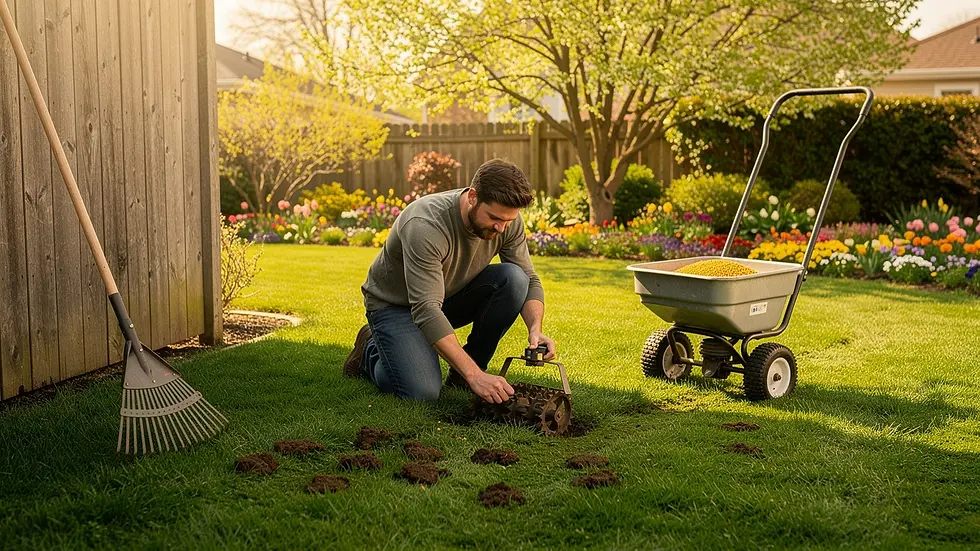
.png)

When is the Best Time to Fertilize Your Lawn? A Step-by-Step Guide
- Spring Touch Team

- Jul 11
- 8 min read
Updated: 4 hours ago
Introduction
Many homeowners in southern Minnesota find themselves puzzled about the best time to fertilize their lawns, unsure of how to achieve that lush, healthy yard they desire. By choosing the right times to fertilize, you can boost your grass's health, creating a vibrant outdoor space that flourishes all year long.
However, many homeowners feel overwhelmed by the conflicting advice on when to fertilize, leading to uncertainty and frustration. Let’s explore the key factors that can help you decide when to fertilize your lawn, offering practical steps to create a tailored schedule that aligns with local conditions and maximizes lawn health.
With the right timing and approach, you can cultivate a lawn that not only looks beautiful but also enhances your outdoor living experience.
Understand the Importance of Timing in Lawn Fertilization
Understanding when is the best time to fertilize your lawn is essential for ensuring your grass thrives. Applying fertilizers at the wrong time can lead to runoff, wasting valuable nutrients. It can also encourage growth when your lawn is dormant, resulting in weak and unhealthy grass. Did you know that when is the best time to fertilize your lawn is late in the season, from September to December, which can really boost your turf’s quality? It helps your grass look vibrant in the fall and winter and speeds up spring green-up by 2 to 6 weeks. This timing allows your lawn to build energy reserves and strengthen its roots, which are essential for resilience against pests and diseases. Plus, studies show that turf fertilized in late fall recovers more effectively from summer stress, leading to thicker, healthier grass with fewer bare spots.
By understanding these dynamics and using Spring Touch Lawn & Pest Control’s yard care solutions, including a second application for dandelions and grub management, homeowners in southern Minnesota can ensure their gardens get what they need when it matters most. This promotes vibrant growth and strong health all year round.

Identify Key Factors Influencing Fertilization Timing
Are you feeling uncertain about when is the best time to fertilize your lawn? You're not alone; many homeowners share this concern, especially in southern Minnesota. Several key factors influence the timing of lawn fertilization, particularly in this region.
First, let's talk about soil temperature. Grass growth typically begins when soil temperatures reach around 50°F. To get the best results, keep an eye on soil temperatures with a thermometer. Fertilizing at the right temperature helps your grass absorb nutrients better. Cool-season plants thrive optimally when soil temperatures range from 55°F to 65°F, leading to the question of when is the best time to fertilize your lawn, with early spring and autumn being ideal. It's best to avoid fertilizing during extreme temperatures, as this can stress your lawn and reduce treatment effectiveness.
Next, consider the type of vegetation in your yard. Different plant species have distinct growth cycles. Cool-season plants, like Kentucky bluegrass, flourish in early spring and autumn, needing nourishment during these times. On the other hand, warm-season grasses prefer late spring through summer, which leads to the consideration of when is the best time to fertilize your lawn.
Local climate also plays a significant role. Weather patterns in southern Minnesota can greatly affect how well your lawn absorbs essential nutrients. For instance, applying fertilizer just before light rain can help wash nutrients into the soil, while heavy rain can wash them away, leading to runoff. Keeping an eye on local weather conditions is crucial for effective lawn care.
Evaluating the health of your grass is essential too. Take a moment to look at your grass; if it seems stressed or unhealthy, it might need some extra care compared to a thriving lawn. Spring Touch Lawn & Pest Control offers organic-based fertilizer containing bio-solids and crabgrass preventer as part of their spring application. This replenishes essential elements and stops crabgrass from taking over your lawn. One homeowner in Mankato successfully restored their grass health within three months after prompt fertilization and treatment, showing just how important timely intervention can be.
Lastly, think about the type of fertilizer you use. Slow-release fertilizers, like those provided by Spring Touch Lawn & Pest Control, offer a consistent supply of nutrients over time and minimize the risk of over-fertilization. This approach can enhance the overall health of your garden while also being kinder to the environment.
By considering these factors and the benefits of Spring Touch's organic solutions, you can create a tailored feeding schedule that meets your grass's unique needs, ensuring your outdoor space is vibrant and healthy.

Establish Your Fertilization Schedule Based on Local Conditions
Are you worried about your lawn’s health as the seasons change? Here’s how to ensure it thrives with the right fertilization schedule:
Start by keeping an eye on your soil temperature; it’s a key indicator of when to fertilize. Begin monitoring soil temperatures in early spring. When is the best time to fertilize your lawn? Aim to fertilize when temperatures consistently reach 50°F, as this is when turf begins to actively grow.
Let’s create a timeline that works for your lawn’s unique needs. For cool-season turf, plan to fertilize in early spring (March-April) with Spring Touch Lawn & Pest Control's organic-based fertilizer, which includes bio-solids and crabgrass preventer. This initial application replenishes nutrients and prevents crabgrass from dominating your yard during the summer. Follow up with a second application in late spring (May-June) targeting dandelions and broadleaf weeds, along with grub control to tackle both weeds and grub infestations. If you have warm-season grasses, focus on late spring (May-June) and early fall (September-October). Most yards in Minnesota benefit from two to three nutrient applications annually, with early spring and autumn feedings being priorities.
Stay attuned to local weather; it can greatly impact your lawn’s health and your fertilization efforts. If heavy rain is predicted, consider delaying fertilization to avoid runoff of essential elements. On the other hand, during dry periods, ensure your lawn is sufficiently watered before applying fertilizer to improve absorption. Remember, over-fertilization can lead to fertilizer burn, causing grass to turn yellow or brown.
Before you fertilize, consider conducting a soil test to understand your lawn’s specific needs better. This step is essential for customizing your nutrient application strategy to your grass's requirements and ensuring adherence to Minnesota's phosphorus fertilizer regulation, which limits phosphorus usage unless a soil test shows a deficiency.
Keep a log of your fertilization dates and observations; it’s a great way to learn what works best for your lawn. This documentation will assist you in refining your schedule in future years, allowing adjustments based on your garden's specific needs.
By following these steps and using Spring Touch Lawn & Pest Control's organic treatments, you can establish a nutrient application schedule that enhances nutrient absorption and fosters a healthy, vibrant lawn throughout the growing season. Imagine stepping outside to a vibrant lawn that reflects your care and attention, inviting you to enjoy your outdoor space to the fullest.

Troubleshoot Common Fertilization Issues
Even with the best intentions, fertilization can sometimes lead to unexpected challenges that leave you feeling concerned about your lawn's health. Here are some common problems and their solutions:
Over-Fertilization: Symptoms include yellowing turf or burnt patches. If you suspect over-fertilization, thoroughly water the lawn to help dilute the fertilizer and reduce its concentration. Over-fertilization can create a frustrating situation for homeowners, leading to unsightly patches and increased maintenance worries. To prevent this, think about utilizing Spring Touch Lawn & Pest Control's organic-based fertilizer, crafted to replenish essential elements without the danger of harmful accumulation.
Uneven Growth: This can result from inconsistent application or varying soil conditions. To address this, ensure even distribution of fertilizer using a calibrated spreader and consider aerating the grass to improve soil health. Irregular growth can also be worsened by swift grass growth, which may surpass root development, impacting hydration and mineral absorption. Spring Touch's applications include crabgrass preventer and weed control solutions that help promote uniform growth across your yard.
Nutrient Shortage: If your grass looks sparse or faded, it may be missing vital elements. Why not consider a soil test? It can help you spot any nutrient gaps and fine-tune your fertilization plan. Spring Touch Lawn & Pest Control provides customized solutions that tackle nutrient deficiencies efficiently, ensuring your grass flourishes.
Timing Issues: If you fertilized too early or late, observe your grass's response and modify your schedule for the next season. Learning from these experiences will help you refine your approach. Proper timing is crucial, particularly when considering when is the best time to fertilize your lawn, as fertilizing during sunny weather can lead to rapid growth, which may create maintenance challenges. Spring Touch suggests particular timing for their organic treatments, including the second application aimed at dandelions and broadleaf weeds, to enhance effectiveness and ensure your grass stays healthy throughout the growing season.
As Dan Collins, a franchise owner, remarked, "Comprehending the particular requirements of your yard is crucial for efficient nourishment." By addressing these common issues proactively, you can cultivate a thriving lawn that brings you joy and satisfaction throughout the seasons. Remember, over-fertilization can disrupt the pH balance of soil, affecting nutrient availability, so it's essential to follow recommended application rates. Consulting a lawn care expert from Spring Touch Lawn & Pest Control can help speed up recovery through proper soil testing.

Conclusion
Many homeowners struggle with knowing when to fertilize their lawns, leading to frustration and less vibrant grass. Understanding the optimal timing for lawn fertilization is essential for achieving a healthy and thriving lawn. When fertilization is done at the wrong time, lawns can suffer, leaving homeowners disappointed with patchy, unhealthy grass. However, by applying fertilizers at the right moments, particularly from September to December, you can significantly enhance your grass's resilience and overall health, ensuring it thrives throughout the seasons.
Key factors influencing fertilization timing include:
Soil temperature
Local climate conditions
The specific needs of different grass types
By monitoring these elements, homeowners in southern Minnesota can create a tailored fertilization schedule that aligns with their lawn's unique requirements. Additionally, utilizing organic-based treatments from Spring Touch Lawn & Pest Control not only supports effective nutrient absorption but also promotes environmental sustainability.
Your lawn’s health is a direct reflection of the love and care you put into it. By implementing the strategies outlined in this guide and seeking assistance from local experts, you can cultivate lush, green spaces that enhance your outdoor enjoyment. By taking these steps, you’re not just nurturing your lawn; you’re investing in the beauty and value of your home, creating a space you can truly enjoy.
Frequently Asked Questions
Why is timing important in lawn fertilization?
Timing is crucial in lawn fertilization because applying fertilizers at the wrong time can lead to nutrient runoff and encourage growth when the lawn is dormant, resulting in weak and unhealthy grass.
When is the best time to fertilize my lawn?
The best time to fertilize your lawn is late in the season, from September to December. This timing helps boost turf quality, making grass look vibrant in the fall and winter and speeding up spring green-up by 2 to 6 weeks.
How does late-season fertilization benefit my lawn?
Late-season fertilization allows your lawn to build energy reserves and strengthen its roots, which are essential for resilience against pests and diseases. It also helps the turf recover more effectively from summer stress, leading to thicker, healthier grass with fewer bare spots.
What services does Spring Touch Lawn & Pest Control offer to support lawn health?
Spring Touch Lawn & Pest Control offers yard care solutions, including a second application for dandelions and grub management, to ensure that homeowners in southern Minnesota can provide their gardens with the necessary nutrients at the right time.
How can I ensure my lawn stays healthy year-round?
By understanding the importance of timing in fertilization and utilizing the services of Spring Touch Lawn & Pest Control, homeowners can promote vibrant growth and strong health for their lawns throughout the year.
List of Sources
Understand the Importance of Timing in Lawn Fertilization
When to Fertilize for a Greener Lawn | ScottsMiracle-Gro US (https://scottsmiraclegro.com/en-us/learn/lawn-care/when-to-fertilize-for-a-greener-lawn.html)
Fertilizing Your Lawn (https://extension.illinois.edu/lawns/fertilizing-your-lawn)
Benefits of Late Fall Fertilization (https://turfdisease.osu.edu/news/benefits-late-fall-fertilization-0)
Best Time to Fertilize Your Lawn: Why Fall Is Ideal - SeaScape, Inc. (https://seascapeinc.com/lawn-care/best-time-to-fertilize-your-lawn-why-fall-is-ideal)
Avoid Fertilizing Your Lawn Too Early - Wayne County Center | N.C. Cooperative Extension (https://wayne.ces.ncsu.edu/news/avoid-fertilizing-your-lawn-too-early)
Identify Key Factors Influencing Fertilization Timing
How Ground Temperatures Impact Your Lawn Treatments: | Barrett Lawn Care (https://barrettlawncare.com/2025/07/20/how-ground-temperatures-impact-your-lawn-treatments-timing-is-everything)
Best Time to Fertilize Your Lawn: Before or After Rain? (https://springtouchlawn.com/post/best-time-to-fertilize-your-lawn-before-or-after-rain)
The Best Time to Fertilize Your Lawn: Seasonal Tips - DIY Pest Control (https://diypestcontrol.com/blog/the-best-time-to-fertilize-your-lawn-seasonal-tips.html?srsltid=AfmBOootzq_r4A66ewMzluuhYdIwRb7adtj5b7BCPfZiFxF0Y_W_ABLN)
Turfgrass Fertilization: A Basic Guide for Professional Turfgrass Managers (https://extension.psu.edu/turfgrass-fertilization-a-basic-guide-for-professional-turfgrass-managers)
Establish Your Fertilization Schedule Based on Local Conditions
When to Fertilize Your Lawn in Minnesota (https://lawnlove.com/blog/when-to-fertilize-lawn-minnesota)
When to Fertilize for a Greener Lawn | ScottsMiracle-Gro US (https://scottsmiraclegro.com/en-us/learn/lawn-care/when-to-fertilize-for-a-greener-lawn.html)
Minnesota Homeowner’s Guide to Lawn Fertilization | Rainbow Lawncare (https://rainbowlawncare.com/fertilization-homeowners-guide)
Minnesota Lawn Fertilizer Schedule (https://jlcturfservices.com/post/minnesota-lawn-fertilizer-schedule)
The Best Minnesota Lawn Care Schedule (https://lawnstarter.com/blog/minnesota/lawn-care-schedule-mn)
Troubleshoot Common Fertilization Issues
News (https://naturalawn.com/news)
THE DANGERS OF OVER-FERTILIZING YOUR LAWN | Green Sphere Lawn Care (https://greenspherelawn.com/blog/the-dangers-of-over-fertilizing-your-lawn_1)
Avoid Over-Fertilization When Caring for Lawns (https://corvallisoregon.gov/publicworks/page/avoid-over-fertilization-when-caring-lawns)