.png)
4 Essential Weed Control Practices for Lawns Near You
- Spring Touch Team

- 2 days ago
- 6 min read
Updated: 13 hours ago
Introduction
Homeowners often face the challenge of weeds that can disrupt the beauty of their lawns. Taking care of weeds is important not just for looks, but for keeping your outdoor space healthy and vibrant. In this article, we’ll explore four key practices that help homeowners take back their lawns:
Spotting common weeds
Using herbicides effectively
Implementing preventive measures
Maintaining a healthy lawn
With various methods available, it can be overwhelming to choose the best strategy for your lawn.
Identify Common Lawn Weeds
Many homeowners feel overwhelmed when faced with the invasion of unwanted plants in their yards, prompting them to seek weed control for lawns near me. In Southern Minnesota, many homeowners find that effective weed control for lawns near me is necessary to manage broadleaf plants like dandelions and clover, along with grassy types such as crabgrass, quackgrass, and creeping Charlie.
It's important to familiarize yourself with their appearance, growth habits, and life cycles. For instance:
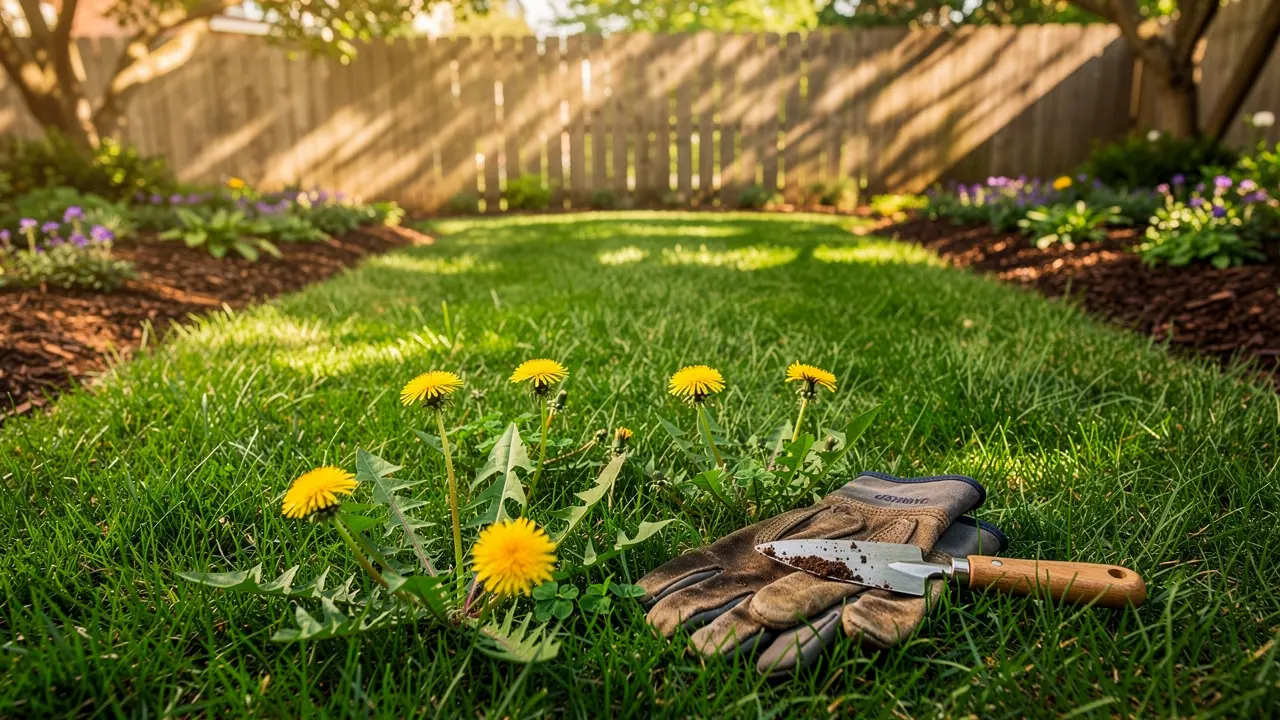
Dandelions are easily recognized by their bright yellow flowers and jagged leaves.
Crabgrass has a distinctive spreading growth pattern, often found in thin or bare spots.
Creeping Charlie, identifiable by its scalloped leaves and purple flowers, thrives in moist, shady areas and can choke out grass if not controlled.
Quackgrass, with its coarse blades and aggressive underground rhizomes, is particularly challenging to remove.
You can find helpful resources, like local extension services or online guides, that offer images and descriptions to make identification easier. Furthermore, sustaining a healthy yard through adequate watering, mowing, and fertilization is essential for effective weed control for lawns near me and in averting plant infestations.
Spring Touch offers expert solutions, including organic-based fertilizers and crabgrass prevention treatments, as part of their weed control for lawns near me to help nourish your grass and effectively combat these unwanted plants. By understanding these plants and implementing effective strategies, you can reclaim your lawn and enjoy a thriving outdoor space.

Implement Diverse Weed Control Methods
Many homeowners struggle with the frustration of unwanted plants taking over their lawns, leaving them feeling overwhelmed and unsure of how to restore their outdoor spaces. To tackle this issue effectively, it’s important to use a variety of control methods.
Hand removal works well for small infestations, especially with annual plants, and it can be a practical approach for homeowners. By pulling plants out by the roots, you can prevent them from regrowing and ensure you remove them before they have a chance to produce seeds.
For larger areas, mulching is a fantastic option. Not only does it hinder plant growth, but it also helps retain soil moisture, leading to a healthier lawn. Mulching not only helps keep those pesky plants at bay but also nurtures your lawn, making it lush and vibrant.
In addition to manual techniques, pre-emergent chemicals can be strategically used to stop plant seeds from sprouting, while post-emergent treatments effectively target existing plants. It’s important to pick the right pesticide for the job. For instance, a selective pesticide can target those broadleaf plants without harming your beautiful grass.
By integrating these techniques, you can improve your lawn’s health and reduce the risk of developing plant resistance, ensuring a flourishing yard throughout the growing season.
By combining these methods, you can reclaim your yard and enjoy a vibrant, healthy lawn that brings you peace of mind.

Optimize Timing for Herbicide Applications
Getting the timing right for herbicide use can feel overwhelming, but it’s crucial for a healthy lawn. Timing is essential, especially when considering the seasonal yard care services provided by Spring Touch.
For pre-emergent treatments, apply them in early spring when soil temperatures consistently reach 55°F. This is when those pesky plant seeds start to germinate. Spring Touch's first product features an organic-based fertilizer with bio-solids and crabgrass preventer, which not only restores nutrients but also stops crabgrass from taking over your lawn this summer. Make sure to wait at least 12 weeks after applying pre-emergent herbicide before overseeding your yard. This helps ensure effective plant control.
On the other hand, post-emergent treatments should focus on actively growing plants, usually in late spring or early summer. Spring Touch's second treatment effectively targets dandelions and broadleaf weeds, now including grub control to tackle both weeds and grub infestations.
It’s best to skip the weed killers when it’s really hot or dry. Those conditions can put extra stress on your lawn and make the treatments less effective. Also, keep an eye on the weather; using herbicides before light rain can improve absorption, while heavy rainfall soon after can lead to runoff and decreased effectiveness.
By staying informed and planning your applications carefully, you can ensure your lawn remains healthy and vibrant all season long.

Maintain Lawn Health to Prevent Weeds
Unwanted plants can quickly take over if your grass isn't healthy. To effectively stop them from taking root, prioritize the health of your lawn through consistent upkeep and appropriate treatments, including weed control for lawns near me. Spring Touch's organic-based fertilizer, combined with crabgrass prevention, is crucial for spring turf care. It replenishes nutrients and establishes a strong base for your grass.
Mowing your grass to a height of 3 to 4 inches is essential. This height shades the soil, making it harder for weed seeds to germinate. Turf pathologist Lee Miller points out that maintaining this height blocks sunlight from reaching the soil, which helps keep unwanted plants at bay. Additionally, ensure your yard receives about 1.5 inches of water weekly, which is vital for robust grass growth.
Fertilization plays a key role in promoting a healthy lawn, while aeration enhances soil health by allowing nutrients and water to penetrate deeper. Spring Touch prioritizes aeration in their services, ensuring that grass seed has direct contact with the soil for optimal germination. It's important to avoid cutting the grass too short, as this can weaken its ability to compete with unwanted plants.
By nurturing your lawn, you not only enhance its beauty but also facilitate better weed control for lawns near me.

Conclusion
Many homeowners struggle with persistent weeds that disrupt their lawn's beauty. Understanding the types of weeds that invade your yard is the first step in reclaiming your outdoor space. Dandelions and crabgrass can quickly take over, leaving your lawn looking unkempt. If left unchecked, these weeds can take over, leaving your lawn looking unkempt and unhealthy.
Employing a variety of management strategies can help you effectively tackle these invaders. Techniques include:
Hand removal
Mulching
Applying pre-emergent herbicides
Applying post-emergent herbicides at the right times
Additionally, maintaining optimal lawn conditions through proper mowing, watering, and fertilization can significantly reduce the likelihood of weed infestations.
By embracing these strategies, you can transform your lawn into a vibrant oasis that brings joy and pride to your home. Investing time and effort into these weed control practices not only enhances the aesthetic appeal of your lawn but also promotes a healthier environment for grass to thrive.
Frequently Asked Questions
What are common lawn weeds homeowners face in Southern Minnesota?
Homeowners in Southern Minnesota commonly face broadleaf plants like dandelions and clover, as well as grassy types such as crabgrass, quackgrass, and creeping Charlie.
How can I identify dandelions?
Dandelions are recognized by their bright yellow flowers and jagged leaves.
What does crabgrass look like?
Crabgrass has a distinctive spreading growth pattern and is often found in thin or bare spots in the lawn.
How can I identify creeping Charlie?
Creeping Charlie is identifiable by its scalloped leaves and purple flowers. It thrives in moist, shady areas and can choke out grass if not controlled.
What are the characteristics of quackgrass?
Quackgrass has coarse blades and aggressive underground rhizomes, making it particularly challenging to remove.
Where can I find resources to help identify lawn weeds?
Helpful resources for identifying lawn weeds include local extension services and online guides that offer images and descriptions.
What practices can help in effective weed control for lawns?
Sustaining a healthy yard through adequate watering, mowing, and fertilization is essential for effective weed control and preventing plant infestations.
What services does Spring Touch offer for weed control?
Spring Touch offers expert solutions including organic-based fertilizers and crabgrass prevention treatments as part of their weed control services to help nourish grass and combat unwanted plants.
List of Sources
Identify Common Lawn Weeds
New Changes to Minnesota Weed List (https://minnesotaagconnection.com/news/new-changes-to-minnesota-weed-list)
10 Common lawn weeds in Minnesota and how to manage them — Monson Lawn and Landscaping (https://monsonlawnandlandscape.com/blog/10-common-lawn-weeds-in-minnesota-and-how-to-manage-them)
Guide to 7 Common Lawn Weeds | ScottsMiracle-Gro US (https://scottsmiraclegro.com/en-us/learn/lawn-care/guide-to-7-common-lawn-weeds.html)
Weeds in Minnesota - Most Common - Capital Lawn Care (https://caplawnc.com/weeds-in-minnesota)
Implement Diverse Weed Control Methods
Herbicides Reduce Hand-Weeding in Africa - Pesticide Facts (https://pesticidefacts.org/perspectives/herbicides-reduce-hand-weeding-in-africa)
Manual Weed Control - an overview | ScienceDirect Topics (https://sciencedirect.com/topics/agricultural-and-biological-sciences/manual-weed-control)
New methods to fight weeds - Ohio Ag Net | Ohio's Country Journal (https://ocj.com/2025/11/new-methods-to-fight-weeds)
Master Summer Lawn Weed Control: Key Practices for Homeowners (https://springtouchlawn.com/post/master-summer-lawn-weed-control-key-practices-for-homeowners)
Eco-Friendly Herbicides - a New Era in Home Weed Control - Henderson County Center | N.C. Cooperative Extension (https://henderson.ces.ncsu.edu/news/eco-friendly-herbicides-a-new-era-in-home-weed-control)
Optimize Timing for Herbicide Applications
Herbicides: Time of day you spray can make a difference (https://farmprogress.com/cotton/herbicides-time-of-day-you-spray-can-make-a-difference)
We Asked Pros If It's Too Early for Pre-Emergent Herbicide—Here's What They Said (https://thespruce.com/when-to-apply-pre-emergent-herbicide-11896644)
When To Apply Pre-Emergent If You Want Fewer Weeds This Year (https://southernliving.com/when-to-apply-pre-emergent-11911278?srsltid=AfmBOorn-CNaUfp2IAhW3FiZuTKHJBMjR7thxADqrsM9MpSXVTbGTkxj)
When to Apply Pre-Emergent Herbicides (https://lawnstarter.com/blog/lawn-care-2/when-to-apply-pre-emergent-herbicide)
FAQ: Optimal time of day for herbicide application (https://topcropmanager.com/faq-optimal-time-of-day-for-herbicide-application)
Maintain Lawn Health to Prevent Weeds
To prevent crabgrass, maintain a healthy lawn (https://chicagotribune.com/2025/09/07/crabgrass-lawn-care-weeds)
Raise the Mowing Height for Weed and Grub Defense (https://canr.msu.edu/resources/mow_high_for_weed_and_grub_control)
City’s tall grass and weed ordinances protect community health and safety (https://normanok.gov/news/citys-tall-grass-and-weed-ordinances-protect-community-health-and-safety)
Master Summer Lawn Weed Control: Key Practices for Homeowners (https://springtouchlawn.com/post/master-summer-lawn-weed-control-key-practices-for-homeowners)
Mow high to keep weeds under control | MU Extension (https://extension.missouri.edu/news/mow-high-to-keep-weeds-under-control)


