.png)

Master Grub Prevention: Essential Steps for a Healthy Lawn
- Spring Touch Team

- May 20
- 8 min read
Updated: 14 hours ago
Introduction
Homeowners often feel helpless as their once-thriving lawns succumb to the relentless advance of grubs, turning vibrant green spaces into unsightly patches of brown. By learning about the lifecycle of these pests, you can take control and protect your cherished yard. Implementing effective grub prevention strategies not only shields your lawn from damage but also enhances its overall health and resilience.
With countless products and techniques on the market, it’s easy to feel overwhelmed when trying to find the best way to protect your lawn from these invaders. Taking proactive steps now can save you from the heartache of a damaged lawn later on.
Understand Grubs: Lifecycle and Damage Potential
If you’ve noticed your lawn struggling, implementing grub prevention might help identify the hidden culprit. These larvae, particularly from Japanese and June beetles, can cause significant damage to your grass. Understanding their lifecycle is essential for effective grub prevention and ensuring peace of mind.
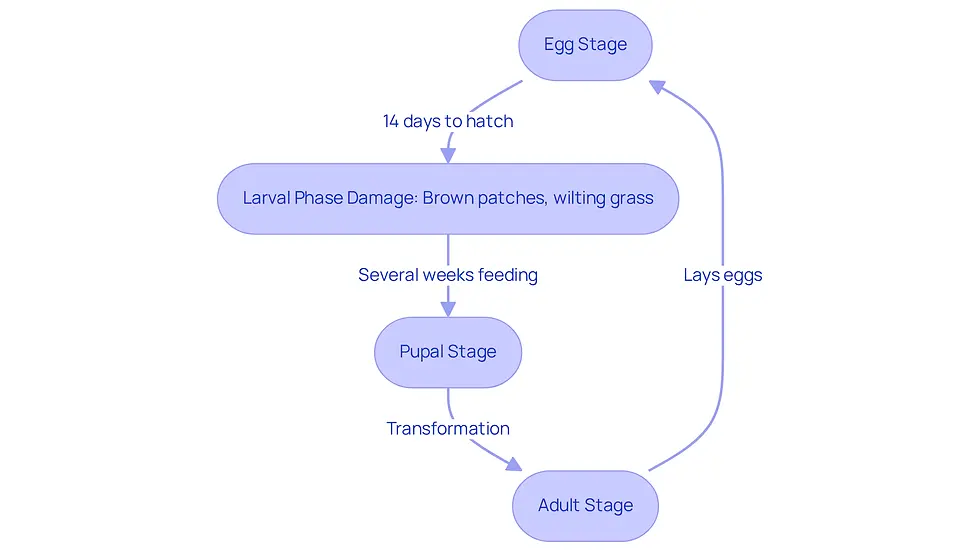
Egg Stage: Adult beetles lay eggs in the soil from June to August. Under optimal circumstances, these eggs develop into larvae within roughly 14 days.
Larval Phase: During this phase, which lasts several weeks, larvae consume root fibers. This damage can leave your lawn looking unhealthy and uninviting, resulting in brown patches and wilting grass as the roots are compromised.
Pupal Stage: After their feeding period, grubs enter the pupal stage, where they undergo transformation into adult insects.
Adult Stage: The lifecycle concludes when adult beetles emerge, ready to lay eggs and perpetuate the cycle.
Damage Potential: Grubs can create soft, spongy patches that are easily lifted, indicating their presence. You might also notice increased activity from creatures like raccoons and skunks, which search for these larvae. Identifying these signs early can help you protect your lawn. Research shows that healthy grass areas can endure challenges such as drought and disease, but considerable insect infestations-defined as over ten pests per square foot-can overpower even the most resilient turf. Taking proactive steps now for grub prevention can ensure your lawn remains vibrant and healthy for years to come.
Choose and Apply Preventive Treatments Effectively
Many homeowners dread the sight of their once-lush lawns turning brown and patchy due to grub infestations. To effectively prevent grubs, follow these essential steps:
Select the Right Product: Choose treatments with active ingredients like Imidacloprid or Thiamethoxam to effectively target grubs before they hatch. Spring Touch also offers organic-based fertilizers that improve soil health while deterring crabgrass and other weeds, fostering a strong environment for your garden.
Timing is Key: Apply preventive treatments during late spring to early summer, ideally from June to July, when beetles are actively laying eggs. Applying treatments at the right time is crucial for grub prevention, as it can prevent grubs from feeding and causing significant damage to your lawn. As yard care experts stress, 'This scheduled method guarantees applications target the appropriate phase of the insect lifecycle.' Spring Touch's first application involves organic-based fertilizer with crabgrass preventer, which sets the foundation for effective grub prevention.
Application Method: Utilize a broadcast spreader for granular products to ensure even distribution across your yard. For liquid treatments, adhere to the manufacturer's instructions regarding dilution and application techniques to maximize effectiveness. Spring Touch's seasonal turf care strategy integrates these methods to ensure optimal results.
Irrigation: After applying the treatment, lightly water the grass to facilitate product penetration into the soil, reaching the root zone where pests feed. This step is vital for activating the treatment and enhancing its efficacy. We suggest this practice to help ensure you get the best results possible.
Observe and Reiterate: Frequently check your yard for indications of insect activity, such as uneven areas of withered or yellowing grass. Reapply treatments as instructed by the product guidelines, usually once a year for grub prevention, to maintain a healthy yard. Remember, using the right timing can control about 80 percent of the grubworm infestation for the next season.
By taking these proactive steps, you can protect your yard and enjoy a vibrant garden all season long.

Maintain Lawn Health: Best Practices for Grub Prevention
Maintaining a healthy lawn can feel overwhelming, especially when considering grub prevention to combat the threat of grubs that jeopardize its beauty and vitality. Here are some best practices to help you cultivate a thriving outdoor space:
Proper Mowing: Imagine your lawn thriving at a height of 3-4 inches, where each blade of grass stands strong against pests. Taller grass develops deeper roots, making it more resilient. Cutting it too short can weaken it, leading to thinning and increased vulnerability to pests.
Watering Techniques: Picture your grass roots reaching deep into the soil, thriving with each deep watering session that nurtures their strength. Watering deeply but infrequently encourages robust root growth, while excessive watering can attract beetles to lay eggs in your yard, thereby increasing the risk of larval infestations and highlighting the importance of grub prevention.
Aeration: Think of aeration as giving your lawn a breath of fresh air, allowing it to absorb nutrients and water more effectively. Aerating your lawn annually contributes to grub prevention by relieving soil compaction, promoting a healthier environment for your grass and reducing the habitat suitable for larvae.
Fertilization: Nurture your lawn with a balanced fertilization program, helping it grow strong and resilient against pests. Healthy grass benefits from grub prevention, making it better prepared to endure insect feeding and recover from any damage.
Overseeding: By overseeding in the fall, you can create a lush, thick lawn that naturally deters pests, giving you confidence in your outdoor space. A thicker lawn is beneficial for grub prevention as it is less appealing to larvae and other pests, forming a natural barrier against infestations.
Natural Predators: Invite nature into your yard by encouraging beneficial insects and wildlife, creating a balanced ecosystem that protects your lawn without chemicals. Birds and predatory beetles can help manage insect populations, giving you peace of mind.

Identify and Address Grub Damage: Troubleshooting Tips
Noticing your lawn's health decline can be distressing, especially when effective grub prevention is necessary to combat the damage. If you suspect grub damage in your lawn, follow these troubleshooting tips to regain control and restore your outdoor space.
Start by gently inspecting your lawn for any signs of larvae. Pull back a section of turf, about one square foot, and check for larvae. If you discover six or more larvae in that area, it’s time to take action, as a serious infestation is indicated by counting 10 or more larvae per square foot.
Next, look for signs of damage. Wilting turf, irregular brown patches, and soft, spongy areas that lift easily are clear indicators of insect activity. Damaged grass will often pull out very easily at the roots, which can be frustrating to see.
Once you confirm damage, consider applying a treatment with ingredients like Trichlorfon or Carbaryl to effectively eliminate the larvae. These treatments work best when used in late summer or early fall, so be sure to follow the manufacturer's instructions for application. Additionally, explore Spring Touch's seasonal grass treatment solutions, which incorporate integrated insect management and dandelion control to address infestations efficiently.
After addressing the pests, it’s time to restore the affected areas. Rake out the dead grass, loosen the soil, and reseed with suitable grass seed. Regular watering is essential to promote growth and recovery, giving your lawn the best chance to bounce back.
To achieve grub prevention and prevent future infestations, implement preventive measures by applying insecticides containing imidacloprid or chlorantraniliprole during the early summer months. This will help safeguard your grass from future grub and dandelion issues. Consistent monitoring and upkeep are crucial for preserving a healthy garden. Rest assured, with our customer satisfaction guarantee, you can feel confident that our solutions will help your lawn flourish.
Follow the arrows to see the steps for identifying and addressing grub damage. Each box represents an action you can take, from inspecting your lawn to applying treatments and preventing future issues.
Conclusion
Imagine stepping outside to a lawn that not only looks beautiful but also thrives, free from the worry of grubs and pests. Taking the right steps to prevent grubs can truly make a difference in keeping your lawn vibrant and healthy. When you understand how grubs can harm your lawn, you can take steps to protect your cherished outdoor space. This guide shows you how timely treatments and caring for your lawn can help you avoid the stress of grub damage. Key points discussed include:
Selecting the right products with effective active ingredients
Applying treatments during the optimal window of late spring to early summer
Maintaining lawn health through practices such as proper mowing, watering, and aeration
Additionally, recognizing signs of grub damage and addressing infestations promptly can help restore lawns to their former glory. Each of these steps reinforces the idea that a healthy lawn is less susceptible to grub damage and other challenges.
By taking these steps, homeowners can transform their lawns into vibrant spaces that bring joy and satisfaction, rather than stress and worry. Grub prevention isn’t just about a pretty lawn; it’s about creating a healthy environment for everyone to enjoy. When you prioritize grub prevention, you’re not just protecting your lawn; you’re nurturing a sanctuary for both your family and the environment.
Frequently Asked Questions
What are grubs and why are they a concern for lawns?
Grubs are larvae from beetles, particularly Japanese and June beetles, that can cause significant damage to grass by consuming root fibers, leading to unhealthy and uninviting lawns.
What are the stages of the grub lifecycle?
The grub lifecycle consists of four stages: 1. Egg Stage - Adult beetles lay eggs in the soil from June to August, which develop into larvae within about 14 days. 2. Larval Phase - Lasts several weeks during which larvae feed on root fibers, causing damage. 3. Pupal Stage - Grubs undergo transformation into adult insects. 4. Adult Stage - Adult beetles emerge to lay eggs and continue the cycle.
What signs indicate the presence of grubs in my lawn?
Signs of grubs include soft, spongy patches of grass that can be easily lifted and increased activity from animals like raccoons and skunks, which search for the larvae.
How do grubs affect the health of my lawn?
Grubs compromise the roots of the grass, resulting in brown patches and wilting grass. High infestations, defined as over ten pests per square foot, can overwhelm even resilient turf.
What can I do to prevent grub damage to my lawn?
Proactive steps for grub prevention, such as monitoring for signs of infestation and implementing preventive measures, can help ensure your lawn remains vibrant and healthy.
List of Sources
Understand Grubs: Lifecycle and Damage Potential
Understanding Grubs: Lifecycle, Treatment, and Timing (https://lawnscience.com/understanding-grubs-lifecycle-treatment-and-timing)
Grub Problems in Turf | Home Garden Education Office | College of Agriculture, Health and Natural Resources | University of Connecticut (https://homegarden.cahnr.uconn.edu/factsheets/grub-problems-in-turf)
When Do Grubs Come Out? Life Cycle, Lawn Damage Signs & Treatment Timing (https://spring-green.com/learn/blogs/blog-grub-control-time-treat-grubs)
How do I treat for grubs in my lawn? (https://extension.unh.edu/blog/2019/09/how-do-i-treat-grubs-my-lawn)
Choose and Apply Preventive Treatments Effectively
When To Apply Grub Control: Best Months To Treat Grubs (https://blog.lushlawn.com/when-to-apply-grub-control-treat-grubs)
Grub Problems in Turf | Home Garden Education Office | College of Agriculture, Health and Natural Resources | University of Connecticut (https://homegarden.cahnr.uconn.edu/factsheets/grub-problems-in-turf)
How to choose and when to apply grub control products for your lawn (https://canr.msu.edu/news/how_to_choose_and_when_to_apply_grub_control_products_for_your_lawn)
spsonline.com (https://spsonline.com/when-to-apply-grub-control)
Best Treatment for Grubs in Your Lawn and When To Apply It (https://senske.com/blog/best-treatment-for-grubs-in-your-lawn-and-when-to-apply-it)
Maintain Lawn Health: Best Practices for Grub Prevention
Grub Control 101: Understanding the Life Cycle and Habits of Lawn Grubs (https://kappslawn.com/grub-control-101-understanding-the-life-cycle-and-habits-of-lawn-grubs)
Proper Mowing Height and How it Affects the Health of Your Lawn (https://shadesofgreenlawncare.com/blog/proper-mowing-height-how-affects-health-of-lawn)
mowcow.com (https://mowcow.com/grub-control-essential-strategies-to-keep-your-lawn-lush-and-protected)
How to choose and when to apply grub control products for your lawn (https://canr.msu.edu/news/how_to_choose_and_when_to_apply_grub_control_products_for_your_lawn)
Identify and Address Grub Damage: Troubleshooting Tips
How do I treat for grubs in my lawn? (https://extension.unh.edu/blog/2019/09/how-do-i-treat-grubs-my-lawn)
How to choose and when to apply grub control products for your lawn (https://canr.msu.edu/news/how_to_choose_and_when_to_apply_grub_control_products_for_your_lawn)
luvalawn.com (https://luvalawn.com/how-to-identify-treat-and-prevent-lawn-grubs)
3 Signs You May Have Grubs in Your Lawn | TruGreen (https://trugreen.com/lawn-care-101/blog/lawn-care-tips/signs-of-lawn-grubs)
Managing White Grubs In Turfgrass (https://extension.entm.purdue.edu/publications/E-271/E-271.html)


