.png)

Master Lawn Grub Treatment: Steps for Effective Control
- Spring Touch Team

- May 11
- 8 min read
Updated: 7 days ago
Introduction
If you’ve noticed patches of brown grass in your yard, you might be facing a hidden threat: lawn grubs. These little invaders can damage your grass roots, causing those frustrating brown patches that can make any yard look unhealthy. In this article, we’ll explore how to spot the early signs of grub damage and the best ways to treat and prevent these issues, so you can keep your lawn thriving. But with so many options available, how can you choose the right approach at the right time to safeguard your lawn?
Understand Grubs: Lifecycle and Types
Grubs, the larvae of scarabs like the Japanese beetle, can pose a challenge to your lawn's health. Understanding their lifecycle can help you manage them effectively, especially since Spring Touch offers targeted solutions for larval infestations. Grubs go through four stages: egg, larva, pupa, and adult insect.
Egg Stage: Adult beetles lay eggs in the soil during late spring to early summer.
Larval Stage: The eggs hatch into larvae, which consume grass roots. Without proper management, your lawn could suffer significant damage from these pests, highlighting the need for lawn grub treatment. Spring Touch's second application specifically provides lawn grub treatment while also targeting dandelions and broadleaf weeds, ensuring that your lawn remains healthy and vibrant.
Pupal Stage: Grubs change into pupae, where they prepare to emerge as adult insects.
Adult Stage: The cycle concludes when the mature insects appear, prepared to lay eggs and perpetuate the cycle.
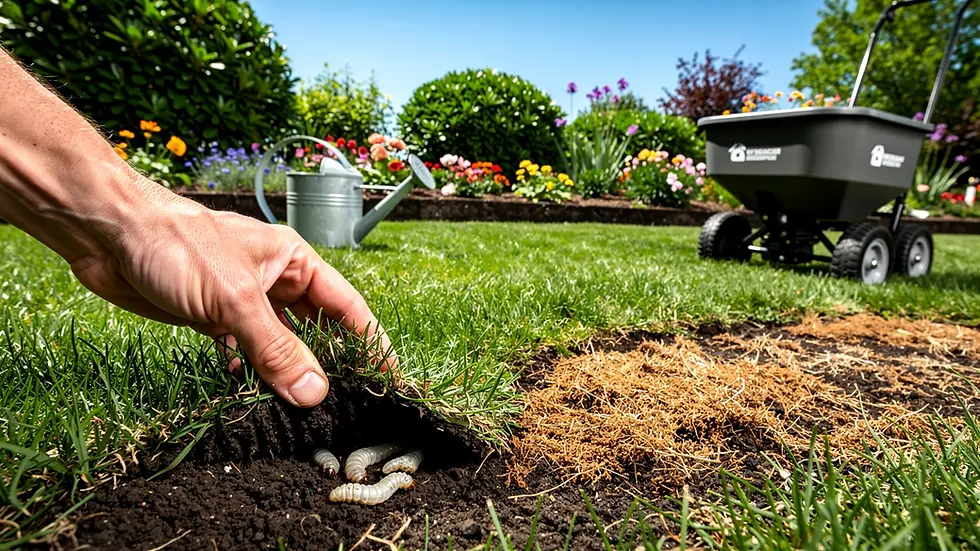
It's also helpful to know what these grubs look like and what they feed on. Japanese beetle larvae are C-shaped, creamy white, and can grow up to an inch long. Understanding these stages empowers you to take proactive steps in safeguarding your lawn's beauty.

Identify Signs of Grub Infestation
Ignoring early signs of pest infestations can lead to extensive damage to your lawn, leaving you frustrated and overwhelmed. Let’s explore some signs that can help you identify these pests before they wreak havoc on your lawn.
Brown Patches: Irregular patches of dead or dying grass are often the first visible indicators of insect damage. These patches can spread quickly if not addressed.
Spongy Turf: A yard that feels spongy or rises easily when tugged may indicate a high insect population feeding on the roots. This can weaken your grass and lead to further issues.
Heightened Animal Activity: The presence of birds, raccoons, and other creatures burrowing in your lawn can indicate the presence of larvae, as these animals frequently look for them. Their activity can signal that something is amiss beneath the surface.
Wilting Grass: Grass that wilts or turns yellow, especially in patches, may suggest that the roots are being harmed by larvae. This wilting can be distressing, as it affects the overall appearance of your lawn.
Visible Grubs: Peeling back a section of turf may reveal C-shaped, white grubs in the soil. Finding these grubs is a clear sign that action is needed.
By recognizing these signs early, you can take action with lawn grub treatment to protect your lawn and ensure its health. Taking proactive steps now can save you time, money, and the beauty of your lawn in the long run.

Explore Treatment Options: Preventive and Curative
Dealing with grubs can feel overwhelming, especially when you need to consider lawn grub treatment to protect the beauty of your lawn. These pests can quickly turn a lush landscape into a patchy mess, leaving you feeling defeated. But don’t worry; there are effective strategies to tackle this problem head-on.
Preventive Treatments are your first line of defense. Applied before larvae hatch, these treatments aim to stop infestations before they start. Key active ingredients include:
Imidacloprid: Best applied in late spring to early summer, it effectively disrupts grub development.
Chlorantraniliprole: Another robust preventive choice, it targets the larval lifecycle without harming beneficial insects.
Application Timing: For optimal results, preventive measures should be applied between late April and early June, coinciding with the egg-laying period of adult beetles.
If you find yourself facing an existing problem, Curative Treatments come into play. These are employed when larvae are already present and causing damage. Effective curative options include:
Trichlorfon (Dylox): This fast-acting treatment kills grubs on contact, providing quick relief.
Carbaryl (Sevin): Another viable curative option, though its effectiveness can vary.
Application Timing: Curative methods are most effective when utilized in late summer to early fall, targeting larvae that are actively feeding near the soil surface.
Finding the right solution for your yard means considering when to act and the unique challenges you face. Preventive measures are essential when observing for pest populations, as implementing them during the appropriate period can greatly decrease future infestations. Conversely, curative treatments should be applied quickly upon identifying pest damage to mitigate further harm to your lawn. Acting promptly can save your lawn from further damage and restore its vibrant health.

Timing Your Grub Treatments for Maximum Effectiveness
Pest infestations can quickly turn a beautiful lawn into a source of frustration and worry for homeowners. Timing is essential for effective pest management. Here’s a detailed guide on when to apply treatments:
Preventive Treatments:
Ideal Timing: Late April to early June, just before adult beetles lay their eggs. This timing is crucial for lawn grub treatment to disrupt the lifecycle before grubs hatch, significantly reducing their population. The organic-based fertilizer with crabgrass preventer from Spring Touch not only nourishes your lawn but also prepares it for this critical period.
Monitoring: Stay vigilant about local beetle activity to pinpoint the optimal application window.
Curative Treatments:
Ideal Timing: Late summer to early fall (August to September) is the best period for applying curative treatments, as grubs are actively feeding near the surface and are most susceptible to these interventions. Studies show that curative solutions such as carbaryl and trichlorfon work effectively, achieving up to 80% success in September. Spring Touch's second application, which features pest control, effectively targets dandelions, broadleaf weeds, and larval infestations.
Post-Application Care: After applying curative treatments, make sure to give your grass a good watering-about half an inch-to help the product work its magic and reach the larvae in the soil.
By adhering to these timing recommendations and employing Spring Touch's extensive lawn care solutions, homeowners can improve the efficiency of their pest control strategies, resulting in healthier lawns and fewer insect problems. Furthermore, examining natural methods like beneficial nematodes can offer an eco-friendly alternative for controlling insect populations. By taking proactive steps now, you can ensure a thriving lawn and peace of mind for the future.

Utilize Resources and Tools for Effective Grub Control
Dealing with grub infestations can be overwhelming, but with lawn grub treatment, you’re not alone in this struggle. To effectively manage these pesky invaders, consider the following resources and tools, including lawn grub treatment, that can make a real difference in your lawn care journey.
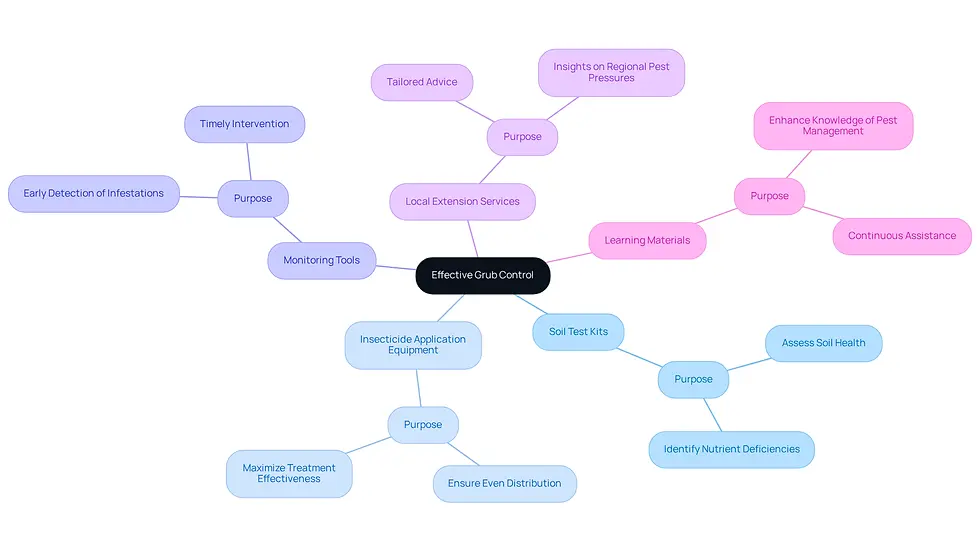
Soil Test Kits: Understanding your soil's health is crucial for determining the best treatment options. Soil tests can reveal nutrient deficiencies that may weaken your grass, making it more susceptible to grub damage. Testing your soil regularly allows you to tailor your yard care, keeping it healthy and strong.
Insecticide Application Equipment: Using a spreader for granular insecticides or a sprayer for liquid treatments ensures even distribution across your yard. Proper application of lawn grub treatment is essential for maximizing its effectiveness and achieving the results you desire.
Monitoring Tools: Take a moment to dig up a few sections of your turf with a shovel or trowel to check for any signs of insect activity. This hands-on method allows for early detection of infestations, enabling timely intervention before significant damage occurs.
Local Extension Services: Don’t hesitate to reach out to local agricultural extension services for tailored advice on the best products and practices specific to your region. These services provide valuable insights based on current pest pressures and environmental conditions, helping you make informed decisions about lawn grub treatment.
Learning Materials: Engage with online tutorials, webinars, and nearby workshops to enhance your knowledge of pest management and turf care best practices. These resources provide continuous assistance and information, enabling you to uphold a healthy, vibrant yard.
With the right tools and knowledge, you can reclaim your lawn and enjoy a thriving outdoor space.
Conclusion
Lawn grubs can silently wreak havoc on your outdoor space, leaving you with a lawn that’s far from vibrant. But what happens when these grubs invade your lawn, threatening its beauty and health? Recognizing the signs early can make all the difference. Taking action with the right treatments at the right times can help your lawn bounce back, keeping it lush and green.
Every step you take, from identifying grub stages to applying treatments, plays a vital role in your lawn’s health. By leveraging resources like soil testing kits and local extension services, you can enhance your pest management efforts, ensuring you’re well-equipped to tackle grub issues.
Imagine stepping outside to a lush, green lawn, free from the worry of grubs. That’s the peace of mind you can achieve with the right approach. Embrace these strategies and reclaim your outdoor space, transforming it into a thriving oasis free from the threat of grubs.
Frequently Asked Questions
What are grubs and why are they a concern for lawns?
Grubs are the larvae of scarabs, such as the Japanese beetle, and they can damage lawns by consuming grass roots, leading to significant lawn health issues.
What are the stages of the grub lifecycle?
The grub lifecycle consists of four stages: egg, larva, pupa, and adult insect.
When do adult beetles lay eggs?
Adult beetles lay eggs in the soil during late spring to early summer.
What happens during the larval stage of grubs?
In the larval stage, the eggs hatch into larvae that consume grass roots, which can cause damage to the lawn if not managed.
What is the pupal stage?
In the pupal stage, grubs transform into pupae as they prepare to emerge as adult insects.
How can you identify a grub infestation in your lawn?
Signs of grub infestation include brown patches of dead or dying grass, spongy turf, heightened animal activity, wilting grass, and visible grubs when peeling back turf.
What do Japanese beetle larvae look like?
Japanese beetle larvae are C-shaped, creamy white, and can grow up to an inch long.
What should you do if you notice signs of grub infestation?
If you notice signs of infestation, it is important to take action with lawn grub treatment to protect your lawn's health and beauty.
List of Sources
Understand Grubs: Lifecycle and Types
Stop Japanese beetles early: Apply grub killer to lawns now for healthy gardens (https://9news.com/article/life/home-garden/proctors-tips/stop-japanese-beetles/73-e5f61070-be55-46f2-b088-c693752458b6)
New Methods Improve Monitoring of Biocontrol for Invasive Beetle (https://entomologytoday.org/2026/01/07/new-methods-improve-monitoring-of-biocontrol-invasive-japanese-beetle)
Neighborhood Proposal to the Japanese Beetle Infestation - Neighborhood Gazette (https://ngazette.com/neighborhood-proposal-to-the-japanese-beetle-infestation)
Grub Problems in Turf | Home and Garden Education Center | College of Agriculture, Health and Natural Resources | University of Connecticut (https://homegarden.cahnr.uconn.edu/factsheets/grub-problems-in-turf)
The 4 Stages of the White Grub Lifecycle | Nature's Select Sandhills (https://naturesselect.com/blog/the-4-stages-of-the-white-grub-lifecycle)
Identify Signs of Grub Infestation
Grub damage to lawns is being reported now in drought-stricken parts of Michigan (https://canr.msu.edu/news/grub_damage_to_lawns_is_being_reported_now_in_drought_stricken_parts)
Grub Damage is On the Rise in 2025! - Reder Landscaping - Landscape Design & Lawn Care (https://rederlandscaping.com/lawns/grub-damage-is-on-the-rise-in-2025)
A Patchy Lawn Could Be a Sign of Grubs—Here's How to Check (https://bhg.com/signs-of-grubs-in-lawn-11758482)
Lawn Turning Brown This Fall? How to Tell if Grubs Are to Blame - SeaScape, Inc. (https://seascapeinc.com/healthy-lawns-with-dr-jim/lawn-turning-brown-this-fall-how-to-tell-if-grubs-are-to-blame)
‘Devastating’ find destroying Aussie lawns (https://news.com.au/finance/real-estate/expert-warns-common-pests-can-destroy-your-perfect-lawn-in-days/news-story/57ee2b865320d40c1a1942f7587af6a7)
Explore Treatment Options: Preventive and Curative
How to choose and when to apply grub control products for your lawn (https://canr.msu.edu/news/how_to_choose_and_when_to_apply_grub_control_products_for_your_lawn)
Current Insecticide Approaches for White Grub Control : Turf : Center for Agriculture, Food, and the Environment (CAFE) at UMass Amherst (https://umass.edu/agriculture-food-environment/turf/fact-sheets/current-insecticide-approaches-for-white-grub-control)
Best Treatment for Grubs in Your Lawn and When To Apply It (https://senske.com/blog/best-treatment-for-grubs-in-your-lawn-and-when-to-apply-it)
The Lawn Care Nut Ultimate Guide To Preventing Lawn Grubs (https://thelawncarenut.com/blogs/news/may-30th-newsletter?srsltid=AfmBOorCkTkCJI3Quk4NhL0EyQn4aRMKgwGsZRLfqVWcsY4SEjfBxn3y)
How To Get Rid Of Grubs Before They Destroy Your Lawn (https://southernliving.com/how-to-get-rid-of-grubs-11936708?srsltid=AfmBOopD6NYVSnQxXVWPOkagfI7OPnj0h75BuSnv1--6yq1pvY9Cn3MY)
Timing Your Grub Treatments for Maximum Effectiveness
Best Time to Apply Grub Control in Wisconsin (https://lawnlove.com/blog/when-to-apply-grub-control-wisconsin)
When should you apply grub control? The experts reveal the best time to tackle these lawn pests (https://homesandgardens.com/gardens/when-to-apply-grub-control)
How to choose and when to apply grub control products for your lawn (https://canr.msu.edu/news/how_to_choose_and_when_to_apply_grub_control_products_for_your_lawn)
Understanding Grubs: Lifecycle, Treatment, and Timing (https://lawnscience.com/understanding-grubs-lifecycle-treatment-and-timing)
White Grub Control in Turfgrass (https://hort.extension.wisc.edu/articles/grub-control-home-lawn)
Utilize Resources and Tools for Effective Grub Control
Envu Launches Horizon Advantage Lawn Program (https://pctonline.com/news/envu-horizone-advantage-lawn-program)
How to choose and when to apply grub control products for your lawn (https://canr.msu.edu/news/how_to_choose_and_when_to_apply_grub_control_products_for_your_lawn)
Is Your Soil Safe? We Sent Samples to Labs to Find the Best Soil-Testing Method. (https://nytimes.com/wirecutter/reviews/soil-test-kit-review)
US Farms Study Shows Positive Impact - Soil Health Institute (https://soilhealthinstitute.org/news-events/nationwide-study-on-30-u-s-farms-shows-positive-economic-impact-of-soil-health-management-systems)
Why Testing Your Lawn’s Soil This Month Will Be the Key to Better Grass This Summer (https://homesandgardens.com/gardens/a-lawn-soil-test-is-key-to-better-summer-grass)