.png)

When to Treat for Grubs: A Homeowner's Step-by-Step Guide
- Spring Touch Team

- 2 hours ago
- 8 min read
Introduction
Are you worried about the hidden threats lurking beneath your lawn's surface? Understanding the lifecycle of grubs is crucial for homeowners in southern Minnesota who want to maintain a vibrant lawn. These pests can wreak havoc on grass health if not addressed promptly, leading to a lawn that looks more like a patchy wasteland than a lush paradise.
With so many treatment options available, how can you determine the most effective approach to safeguard your lawn from potential damage? Finding the right treatment can mean the difference between a thriving lawn and one that suffers from unsightly damage.
With the right knowledge and approach, you can ensure your lawn remains a vibrant and inviting space for your family and friends.
Understand Grub Lifecycle and Damage Indicators
If you’ve noticed your lawn looking less than vibrant, it’s important to know when to treat for grubs, as they might be the hidden culprit behind the scenes. Grubs, the larval stage of beetles like Japanese beetles and June bugs, undergo a four-stage lifecycle: egg, larva, pupa, and adult. Understanding this lifecycle is key for homeowners in southern Minnesota who want to keep their yards healthy and beautiful, and Spring Touch Lawn & Pest Control is here to help.
Egg Stage: Adult beetles lay eggs in the soil from late spring to early summer.
Larval Stage: The eggs hatch into larvae, which start consuming grass roots. This phase can be particularly harmful, as larvae can significantly impact grass health. While healthy grass can handle about 10 larvae per square foot, it’s important to know when to treat for grubs if you spot more than five, as it means it’s time to act quickly to protect your lawn. Spring Touch offers comprehensive lawn care solutions, including organic treatments like our organic-based fertilizer that is safe for families and pets, to help combat these pests effectively.
Pupal Stage: After feeding, larvae pupate in the soil.
Adult Stage: Adult beetles emerge in late summer to lay eggs, perpetuating the cycle.
Damage Indicators: Homeowners should be vigilant for signs of grub damage, which include:
Brown patches: Areas of grass that turn brown and die, often confused with drought stress.
Spongy turf: A spongy feel underfoot indicates root damage from insect feeding.
Animal activity: Increased digging by birds, skunks, or raccoons searching for larvae can signal an infestation.
Spotting these signs early empowers you to take action and safeguard your lawn’s beauty. In Minnesota, it is crucial to know when to treat for grubs by monitoring for insect damage, particularly in June or July. Furthermore, identifying the specific type of white larvae is essential, as different species can differ in their lifecycle and potential harm. Alternative pest control solutions, such as Integrated Pest Management (IPM) strategies, can also be considered for a more environmentally friendly approach to managing larval infestations. With more than 50 years of expertise, Spring Touch Lawn & Pest Control is committed to turning your yard into a stunning, pest-free outdoor area, providing special offers such as a complimentary initial service for new clients who enroll in comprehensive programs. By staying vigilant and proactive, you can ensure your lawn remains a beautiful sanctuary for your family and friends.

Identify Optimal Timing for Grub Treatments
Are you feeling overwhelmed by the thought of pests damaging your yard? The timing of pest treatments is crucial for successful control, and knowing when to treat for grubs can make all the difference.
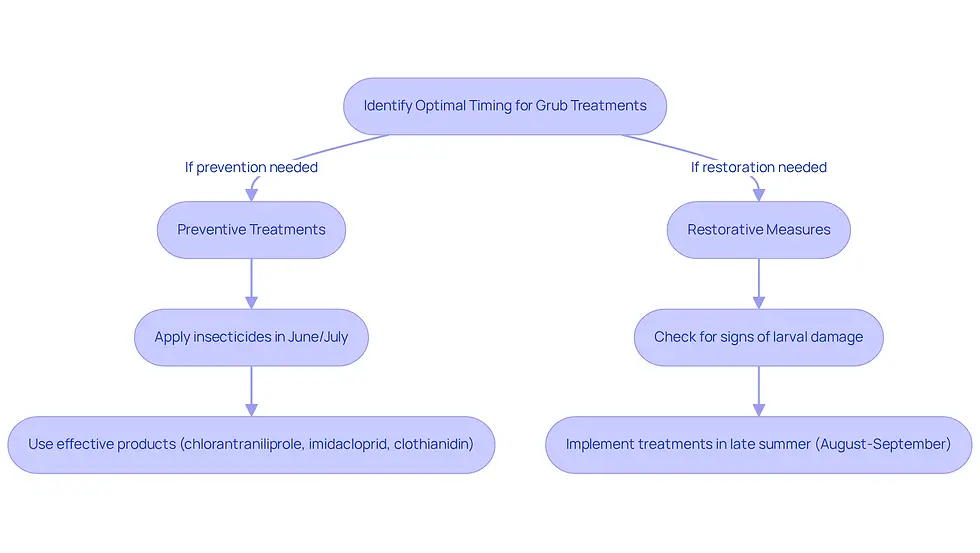
Preventive treatments are your first line of defense. Applying insecticides in June or July, just before the larvae hatch, can significantly reduce the risk of infestation. Products containing chlorantraniliprole, imidacloprid, or clothianidin are particularly effective during this period, giving you peace of mind as you protect your lawn.
If you notice signs of larval damage, don’t panic. Restorative measures should be implemented in late summer, particularly from August to early September, when larvae are actively feeding. Taking action at this stage can help you reclaim your yard and restore its health.
It is essential to know when to treat for grubs by regularly checking your yard for signs of grub activity, especially during peak beetle activity in late summer. Take a moment to check for:
Spongy turf
Increased digging by animals
It’s a simple step that can make a big difference.
Also, keep an eye on soil temperatures. Treatments are most effective when soil temperatures range between 60°F and 70°F, ensuring that your efforts yield the best results.
After applying insecticides, remember to water the grass with at least 0.5 inches of irrigation. This step enhances the effectiveness of your application, providing an extra layer of assurance.
With these strategies in place, you can rest easy knowing your yard is protected from pests.
Explore Treatment Options for Grub Control
Are you worried about grubs ruining your beautiful lawn? Let’s explore some effective ways to tackle this issue together.
Effective treatment options for controlling grubs in your lawn include a mix of preventive insecticides, curative treatments, organic methods, and cultural practices.
Preventive Insecticides:
Chlorantraniliprole: Best applied from late April to early June, this insecticide prevents grubs from hatching and is effective against various species.
Imidacloprid: Another reliable preventive option, it should be applied during the same timeframe to ensure maximum effectiveness.
Neonicotinoids: These systemic insecticides, such as imidacloprid and thiamethoxam, are ideally used from mid-June to early August for successful larval control.
Curative Insecticides:
Trichlorfon: This treatment is effective for existing infestations and should be applied when grubs are actively feeding, typically in late summer. Effectiveness can vary, ranging from 20 to 25%.
Carbaryl: Similar to Trichlorfon, this option is effective when larvae are present and can help manage severe infestations.
Beneficial Nematodes: These microscopic worms target grubs in the soil without harming beneficial insects, making them a safe choice for eco-conscious homeowners.
Milky Spore: This natural bacterium aids in managing Japanese beetle larvae over time, although it may take several years to achieve significant results.
Cultural Practices:
Aeration: Aerating your lawn improves soil health and can reduce grub populations by enhancing root growth and water penetration.
Proper Watering and Fertilization: Maintaining a healthy turf through appropriate watering and fertilization practices makes it less vulnerable to insect damage.
Mowing Height: Keeping grass mowed to a height of 3.5 to 4 inches encourages deeper root growth, enhancing resilience against pests.
By selecting the right approach based on the timing and type of infestation, you can feel confident in your ability to know when to treat for grubs effectively. Additionally, after applying insecticides, it is crucial to irrigate the lawn with at least 0.5 inches of water to ensure effectiveness. Always follow safety precautions, such as wearing personal protective equipment (PPE) and avoiding application on windy days, to protect both yourself and the environment. By taking these steps, you can enjoy a lush, healthy lawn that stands strong against pests, giving you peace of mind all season long.

Troubleshoot Common Grub Treatment Issues
Even the most dedicated homeowners can feel overwhelmed when grubs invade their lawns, leaving them unsure of how to regain control. Here are some common problems and their solutions:
Ineffective Treatment: It can be frustrating when treatments don’t seem to work, but there are ways to turn things around. Consider the following:
Timing: Ensure treatments were applied at the correct time for maximum efficacy.
Watering: After applying insecticides, water the lawn lightly to help the product penetrate the soil.
Reinfestation: It can be disheartening to see grubs return after your hard work, but staying vigilant can make all the difference. Keep an eye on adult beetle activity in late summer, as they can lay eggs that lead to new infestations.
Environmental Factors: If your lawn is still showing signs of damage, it’s important to address the underlying issues.
Soil Health: Test soil health and consider aeration or fertilization to promote stronger grass growth.
Thatch Management: Excess thatch can shelter larvae; consider dethatching if necessary.
By taking these proactive steps, you can not only combat grubs effectively but also nurture a thriving lawn that brings you joy and peace of mind.

Conclusion
Recognizing the signs of grub damage can feel overwhelming, but it’s a crucial step in maintaining a healthy lawn. By understanding the lifecycle of these pests, you can feel more confident in taking proactive measures to protect your outdoor space. This guide has highlighted the importance of monitoring for damage indicators like brown patches and spongy turf, along with the optimal timing for preventive and restorative treatments.
Utilizing a combination of chemical and organic methods, along with cultural practices, can significantly enhance the health of your lawn and reduce the risk of future infestations. Staying vigilant about soil conditions and pest activity empowers you to act swiftly when necessary, ensuring your lawn remains vibrant and lush.
Taking these steps not only protects your lawn but also creates a welcoming space for your loved ones to enjoy together. By partnering with experts like Spring Touch Lawn & Pest Control, you can access tailored solutions and support, ensuring your lawn remains lush and pest-free. Embrace the opportunity to safeguard your yard and enjoy the peace of mind that comes with a well-maintained landscape.
Frequently Asked Questions
What is the lifecycle of grubs?
Grubs undergo a four-stage lifecycle: egg, larva, pupa, and adult. Adult beetles lay eggs in the soil from late spring to early summer, which hatch into larvae that consume grass roots. After feeding, larvae pupate in the soil, and adult beetles emerge in late summer to lay eggs, continuing the cycle.
What are the signs of grub damage in lawns?
Signs of grub damage include brown patches of grass that may be confused with drought stress, a spongy feel underfoot indicating root damage, and increased digging activity by animals like birds, skunks, or raccoons searching for larvae.
When should homeowners in southern Minnesota treat for grubs?
Homeowners should monitor for signs of insect damage, particularly in June or July, and treat for grubs if they spot more than five larvae per square foot, as this indicates a potential threat to lawn health.
How can Spring Touch Lawn & Pest Control help with grub infestations?
Spring Touch Lawn & Pest Control offers comprehensive lawn care solutions, including organic treatments that are safe for families and pets, to effectively combat grub infestations and maintain lawn health.
What is Integrated Pest Management (IPM)?
Integrated Pest Management (IPM) is an environmentally friendly approach to managing pest infestations, which may include various strategies to control pests while minimizing harm to the environment.
What should homeowners do if they notice grub damage?
Homeowners should act quickly upon spotting signs of grub damage to protect their lawn's health. This may involve contacting a professional service like Spring Touch Lawn & Pest Control for assistance.
What special offers does Spring Touch Lawn & Pest Control provide for new clients?
Spring Touch Lawn & Pest Control offers a complimentary initial service for new clients who enroll in comprehensive lawn care programs, helping them get started on maintaining a healthy lawn.
How can homeowners contact Spring Touch Lawn & Pest Control?
Homeowners can contact Spring Touch Lawn & Pest Control at 507-934-5296 for Southern Minnesota or 952-898-5296 for the Twin Cities to schedule services or inquire about treatments.
List of Sources
Understand Grub Lifecycle and Damage Indicators
As snow recedes, white grub damage is revealed | The Drummer and The Wright County Journal Press (https://thedrummer.com/drummer/ground/snow-recedes-white-grub-damage-revealed)
How to Kill Grubs in Your Lawn (https://saferbrand.com/articles/how-to-kill-grubs-in-lawn?srsltid=AfmBOooPie_YQHXuee0TYwMTVZChnJmR-7YrRW-ThAItU2igpOmc7MHx)
Grub Problems in Turf | Home Garden Education Office | College of Agriculture, Health and Natural Resources | University of Connecticut (https://homegarden.cahnr.uconn.edu/factsheets/grub-problems-in-turf)
In gardens across Minnesota, the beetle battle begins (https://mprnews.org/story/2024/07/09/gardens-minnesota-invasive-japanese-beetle-battle)
Identify Optimal Timing for Grub Treatments
When To Treat For Grubs (https://jointhegreenteam.com/blog/when-to-treat-for-grubs)
The Best Time to Treat for Grubs in Your Lawn | KG Landscape (https://kglandscape.com/best-time-treat-grubs-lawn)
How to choose and when to apply grub control products for your lawn (https://canr.msu.edu/news/how_to_choose_and_when_to_apply_grub_control_products_for_your_lawn)
Understanding Grubs: Lifecycle, Treatment, and Timing (https://lawnscience.com/understanding-grubs-lifecycle-treatment-and-timing)
Explore Treatment Options for Grub Control
The Lawn Care Nut Ultimate Guide To Preventing Lawn Grubs (https://thelawncarenut.com/blogs/news/may-30th-newsletter?srsltid=AfmBOoryJhRzkyDYFHapiV9Vkpw0Ijvq2s7ta7851eSI5durdcO9EHgZ)
Comprehensive Grub Control Services for Your Lawn (https://naturalawn.com/our-services/grub-control)
How do I treat for grubs in my lawn? (https://extension.unh.edu/blog/2019/09/how-do-i-treat-grubs-my-lawn)
How to choose and when to apply grub control products for your lawn (https://canr.msu.edu/news/how_to_choose_and_when_to_apply_grub_control_products_for_your_lawn)
Master Lawn Grub Killer Techniques for a Healthy Lawn (https://springtouchlawn.com/post/master-lawn-grub-killer-techniques-for-a-healthy-lawn)
Troubleshoot Common Grub Treatment Issues
How to prevent grub worms from tearing up your lawn (https://kstp.com/kstp-news/top-news/how-to-prevent-grub-worms-from-tearing-up-your-lawn)
Grub Problems in Turf | Home Garden Education Office | College of Agriculture, Health and Natural Resources | University of Connecticut (https://homegarden.cahnr.uconn.edu/factsheets/grub-problems-in-turf)
8 Common Questions About Lawn Grub Damage in Idaho Falls (https://lawnbuddies.com/blog/common-questions-about-lawn-grub-damage-in-idaho-falls)
Master Liquid Grub Control for Lawns: A Step-by-Step Guide (https://springtouchlawn.com/post/master-liquid-grub-control-for-lawns-a-step-by-step-guide)


